
The Taj Mahal at Dawn
And dawn came swiftly
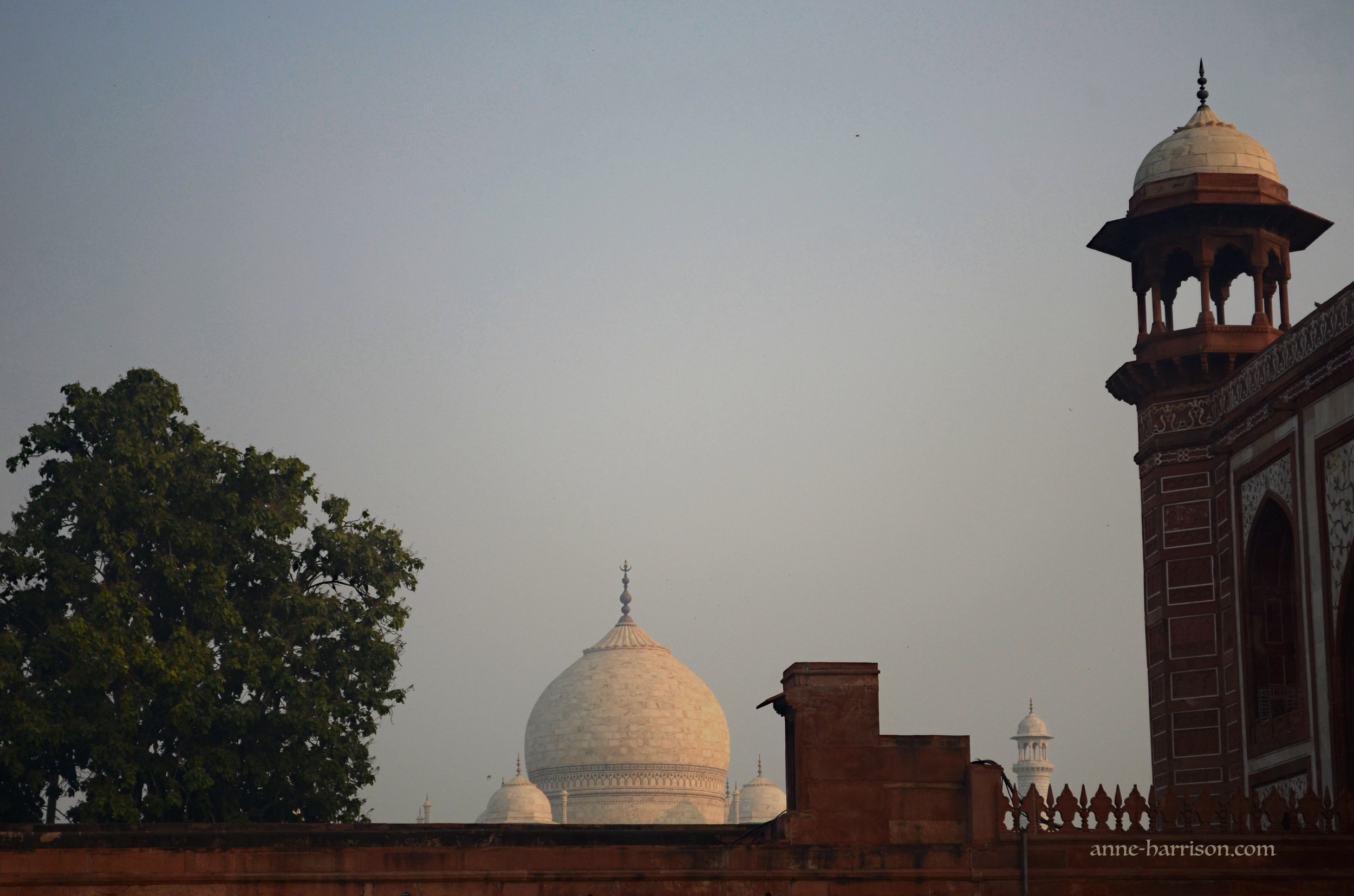
Pre-dawn darkness is different everywhere. In summer in Australia I often watch cicadas crawl from the ground before emerging from their shells, hoping their wings will dry before the first birds of the day find them. In Cambodia I’ve battled my way through overgrown bush to see Angkor Wat suddenly silhouetted before me. In Florence I’ve wandered the streets as the world woke up, many an elegantly dressed person stopping for a coffee fix in a bar on the way to work.
It was still dark when I left Delhi, yet that didn’t stop women with their babies knocking on the car window at every red light. The gulf between rich and poor spreads across the world, but is so very much on display here. Despite the early hour cows wandered at will, oblivious to both the traffic and the troubles of the world.
Cars can only travel to within a certain distance of the Taj; the final stretch to the Western Gate was running a gauntlet through a park, where those not out exercising were selling tours, souvenirs or simply touting for business. (There is also an Eastern Gate and a Southern Gate. Make sure to buy a ticket which includes entry into the Taj Mahal itself, not just for the grounds. Plus the complex is closed on a Friday.)
On joining the queue waiting for the gates to open — with separate lines for foreign and domestic visitors– I was finally left alone, as if protected by an invisible barrier.
The ticket booths open anywhere from an hour to 30 minutes before sunrise. Dawn slowly stretched her fingers across the sky, but it was still dark when the gates finally opened and I could enter.
The Taj Mahal sits in a 42 acre complex; it required an impressive turn of speed, but somehow I was the first within this most gracious of buildings. The attendant called out my name, the sound echoing for some 13 seconds around me due to the building’s double dome. The light crept through the door and the windowpanes of the upper story. Exquisite marble screens filled with panes of glass and translucent gems surround the cenotaphs, illuminating the room. (The actual tombs are in a room below.) Precious stones glittered all around me.
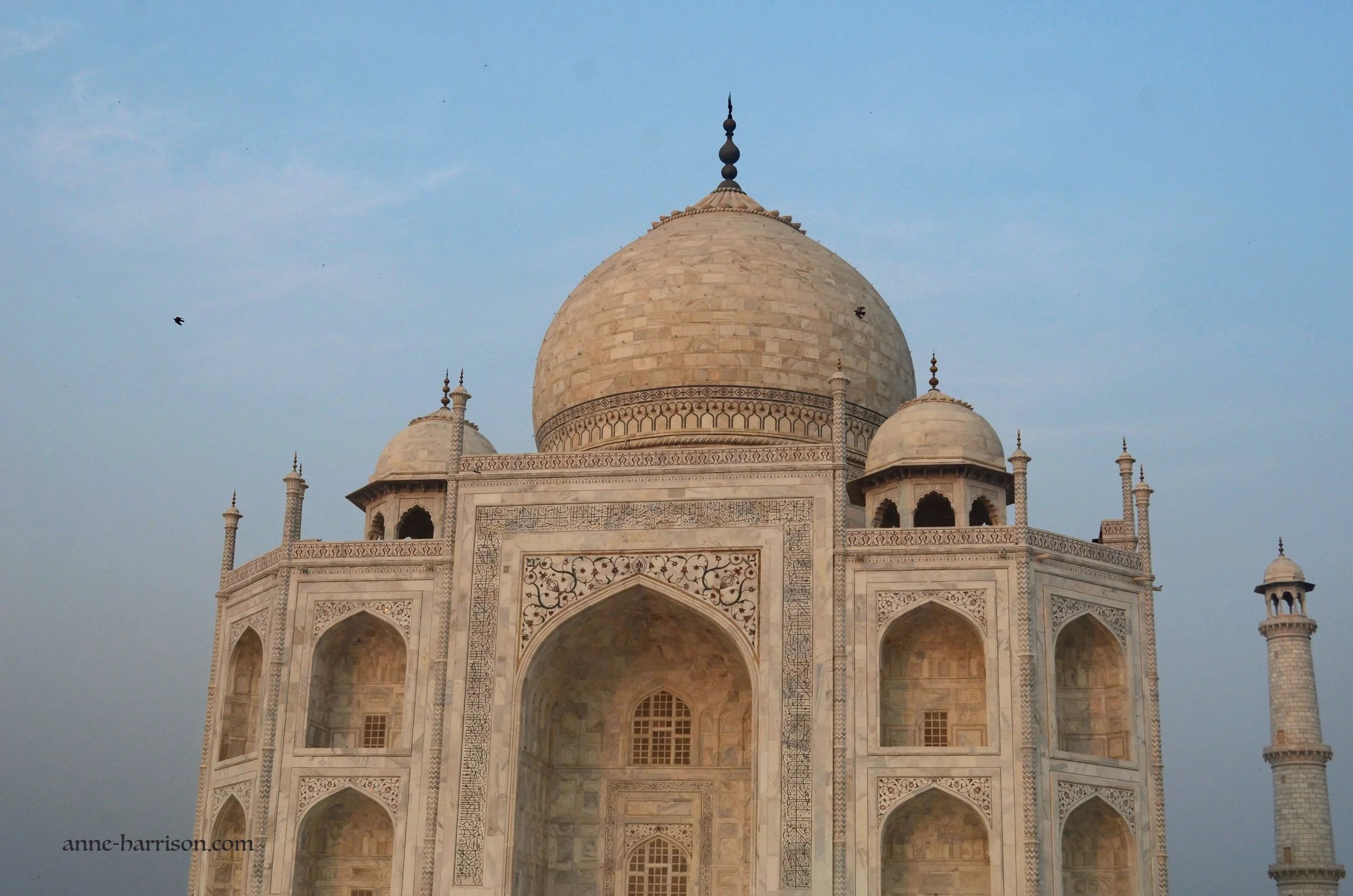
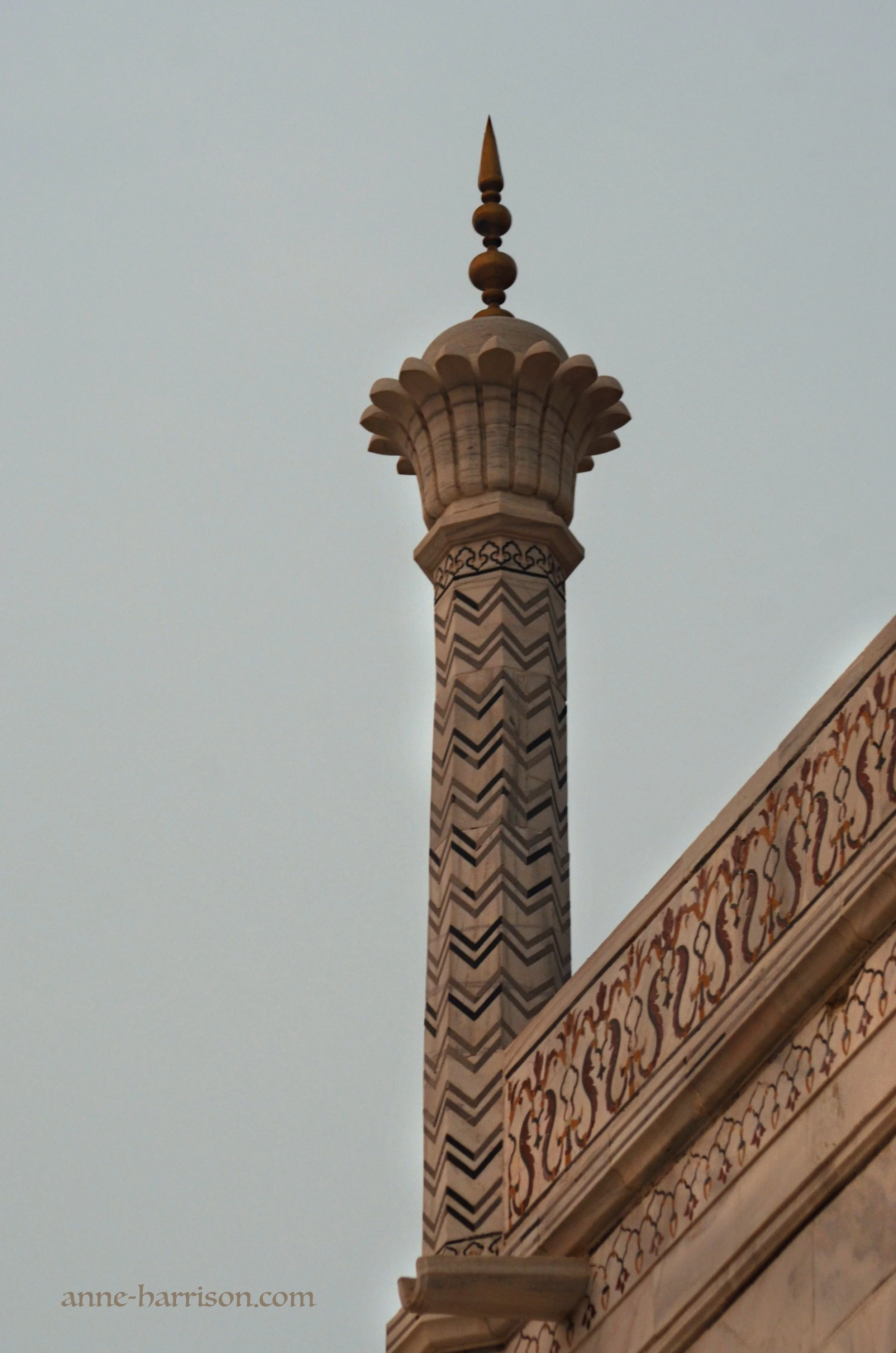
I left before the crowds came with their endless noise bouncing off the walls to ruin my memory. Once outside, I could now take my time to simply admire the beauty of the building, the details of the marble inlay, the colours glistening under the touch of the rising sun.
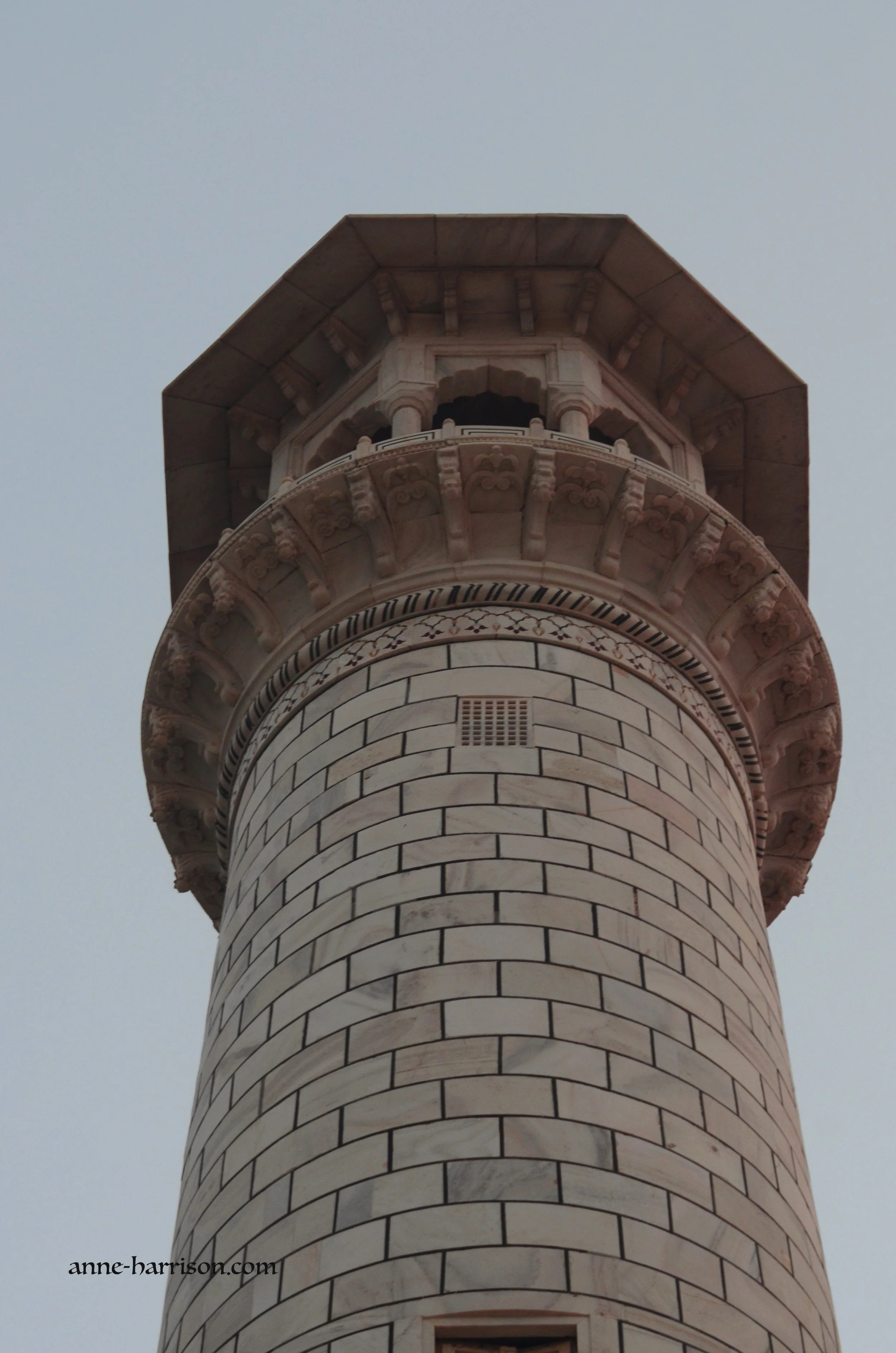
Floral motifs and symmetrical, repeating patterns dominate the design, as does calligraphy. I walked slowly around the building, watching the colours of the marble change as the sun rose further into the sky. The marble is non-porous, and despite her age and the threat of modern pollution, the Taj Mahal simply glows.
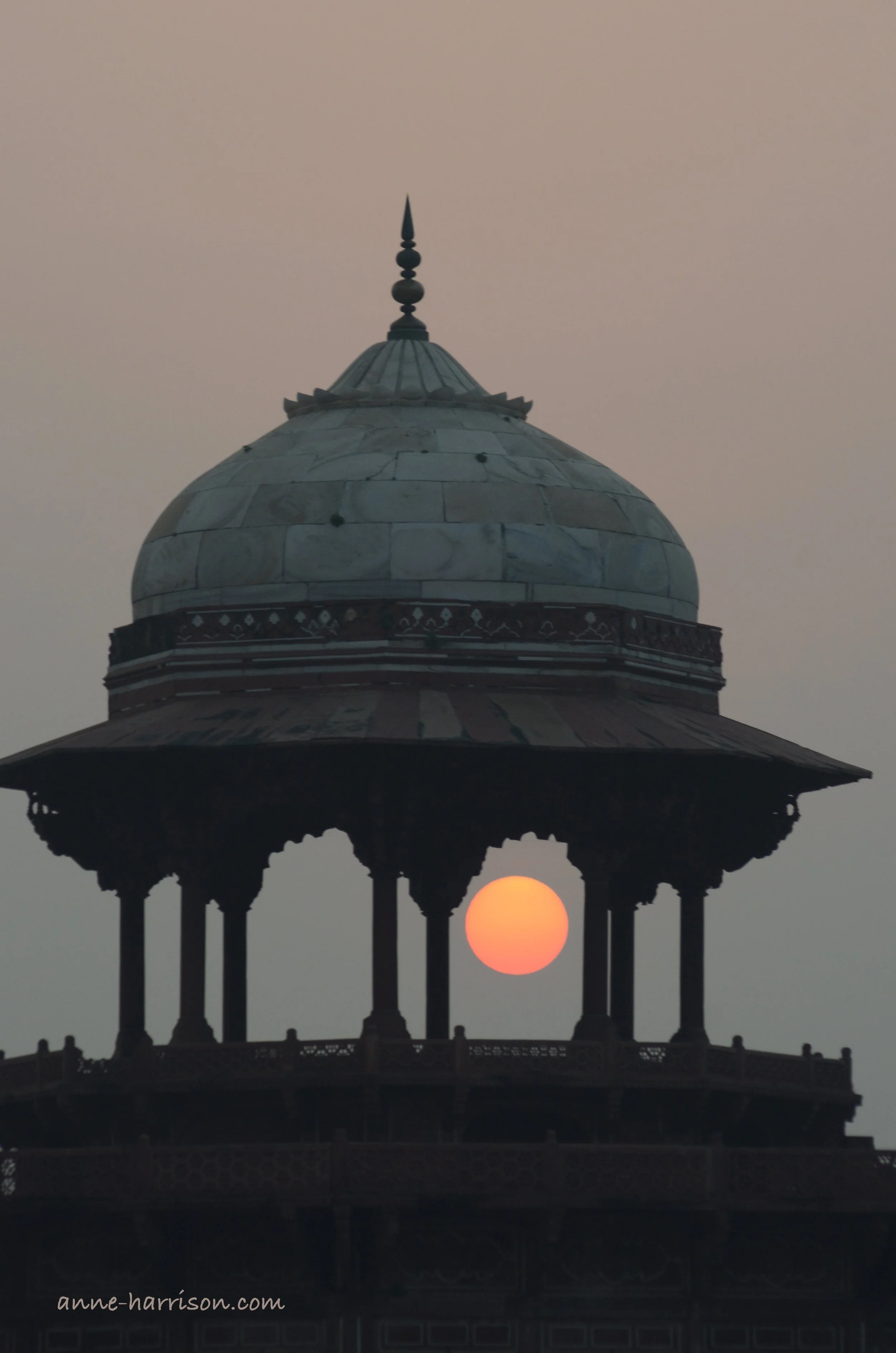
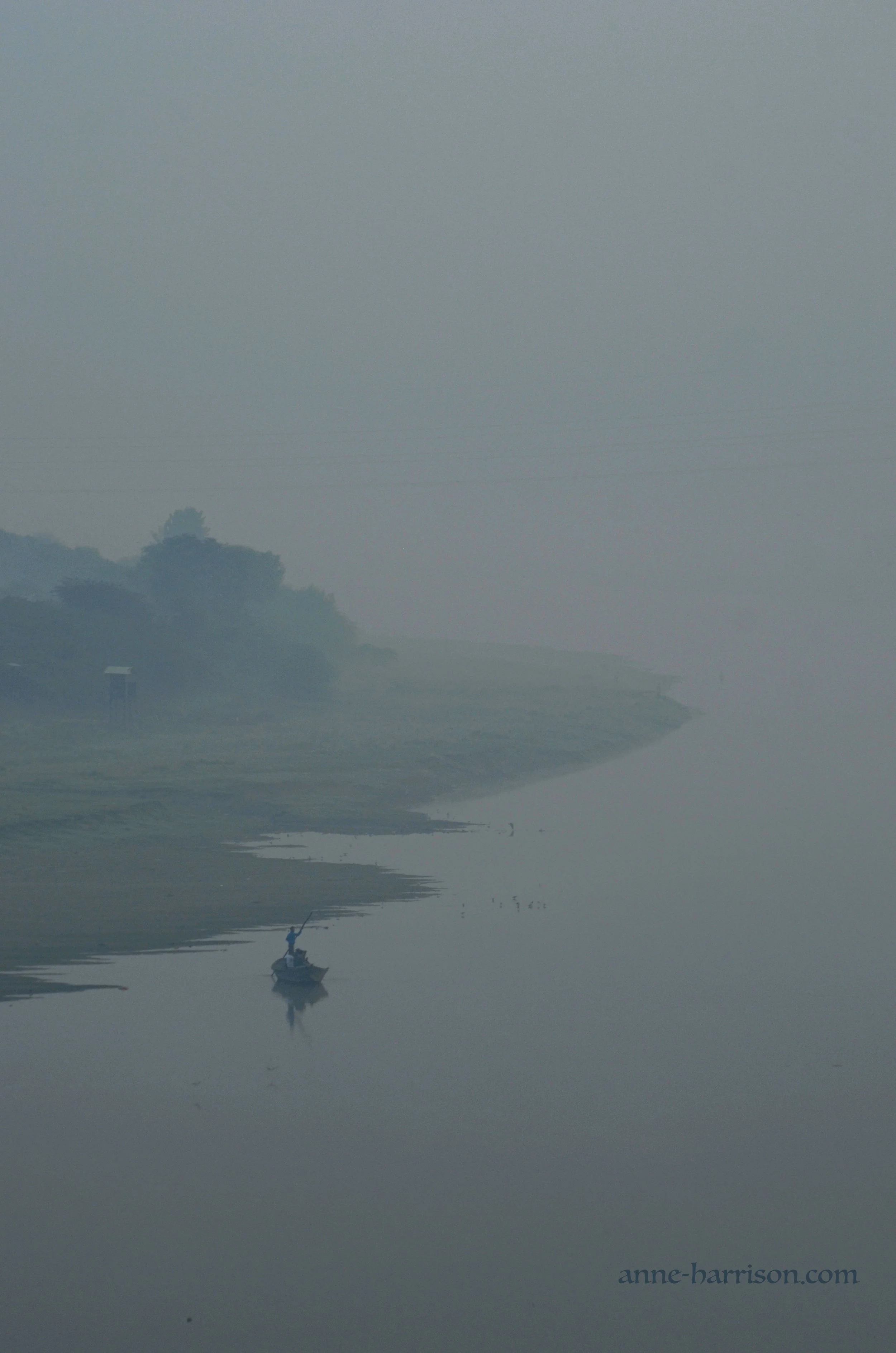
At one point a mist filled the sky, turning the sun into a golden orb. I walked behind the building and looked over the Yamuna River. The mist had turned the fishermen standing in their boats into images from a distant time.
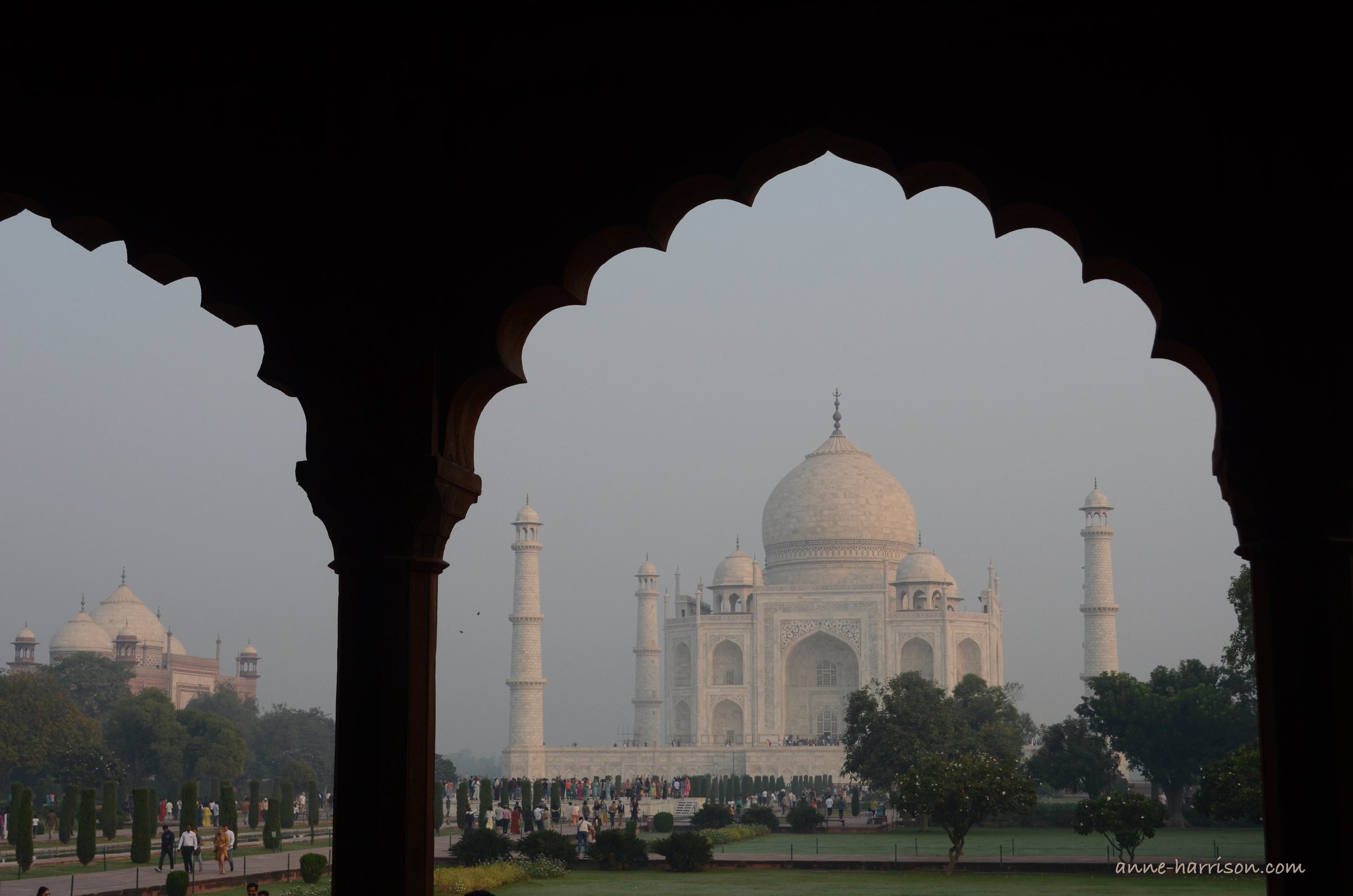
I hadn’t realised the extent of the grounds before visiting. Which ever gate is used for entering, they all lead to the Chowk-i-Jilo Khana forecourt with its four gardens. An arched gateway of delicate red stone guards the entrance, shielding the Taj from prying eyes until you pass through. This is where visitors once dismounted from their elephants and horses before entering. None were tied up waiting for their owners when I arrived, and I’m glad I didn’t have to outrun an elephant to be first inside.
Unusual for designs at the time, the Taj Mahal stands at the far end of the gardens, the Yamuna River flowing behind her. (Some postulate the Taj actually does stand in the centre, with the formal gardens on the far side of the river once being part of the complex.)
In the middle of the gardens resides the seat made famous by the Princess of Wales – by the time I left people were queueing to have their photo taken sitting there. I even saw a man balancing his business card on the seat, using the Taj Mahal as a back drop.
To one side of the Taj is a mosque of red sandstone; a similar building, once used as an Assembly Hall, completes the symmetry on the other side. The gardens themselves are filled with trees, sunken flower beds and flowing water, all connected by walkways. A reflecting pool runs from the centre of the gardens to the Taj Mahal.
As I left, I turned to look at the Taj for a final time. I walked towards her, and she seemed to retreat; if I walked backwards, she floated towards me, a gracious lady in the most beautiful of settings.
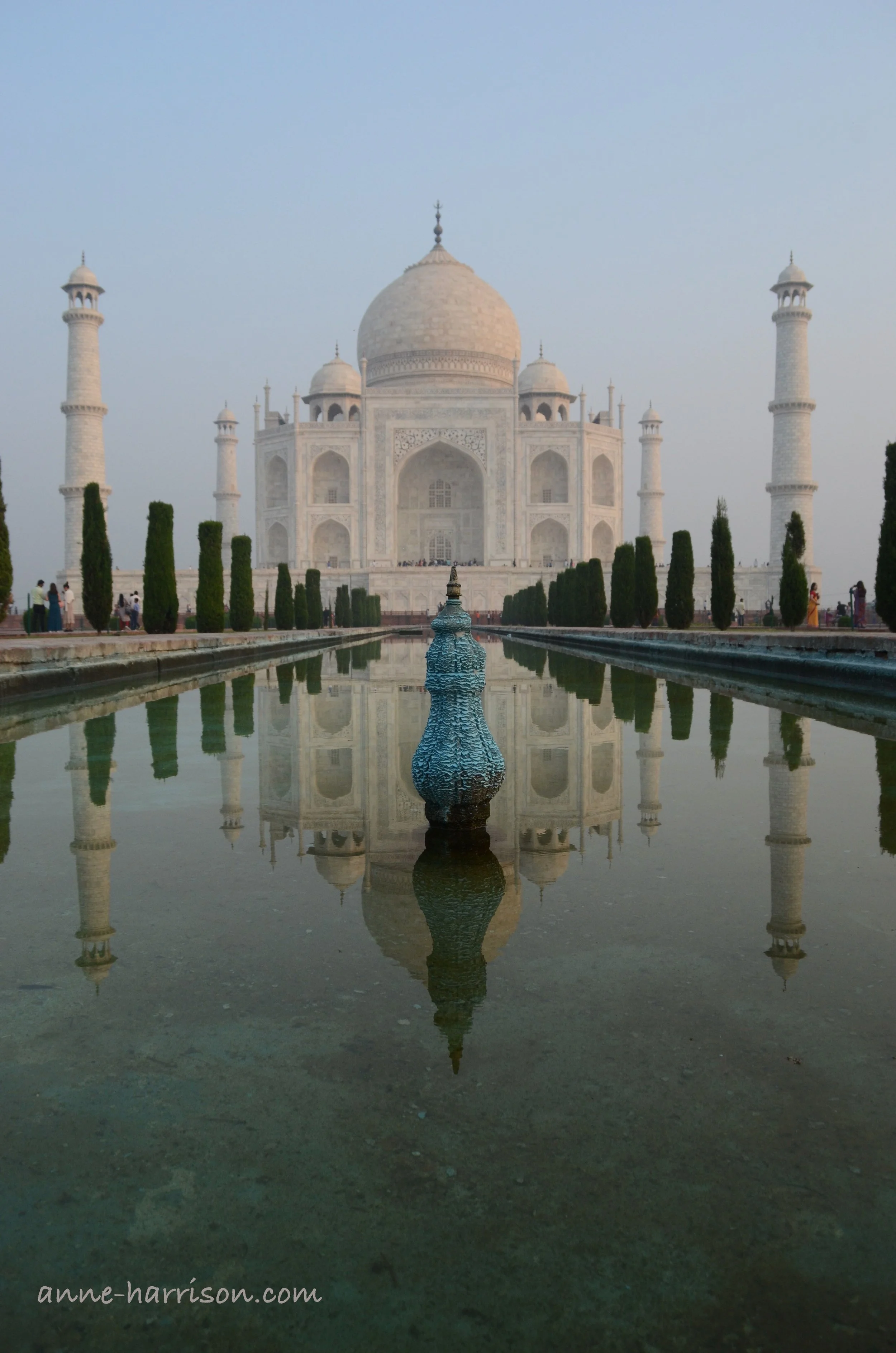
The stunningly beautiful Taj Mahal © A. Harrison
Enjoy my writing? Please subscribe here to follow my blog. Or perhaps you’d like to buy me a coffee? (Or a pony?)
If you like my photos please click either here or on the link in my header to buy (or simply browse) my photos. Or else, please click here to buy either my poetry or novel ebooks. I even have a YouTube channel. Thank you!
Plus, this post may contain affiliate links, from which I (potentially) earn a small commission.
Some of my publications – a short story and poetry – you may enjoy
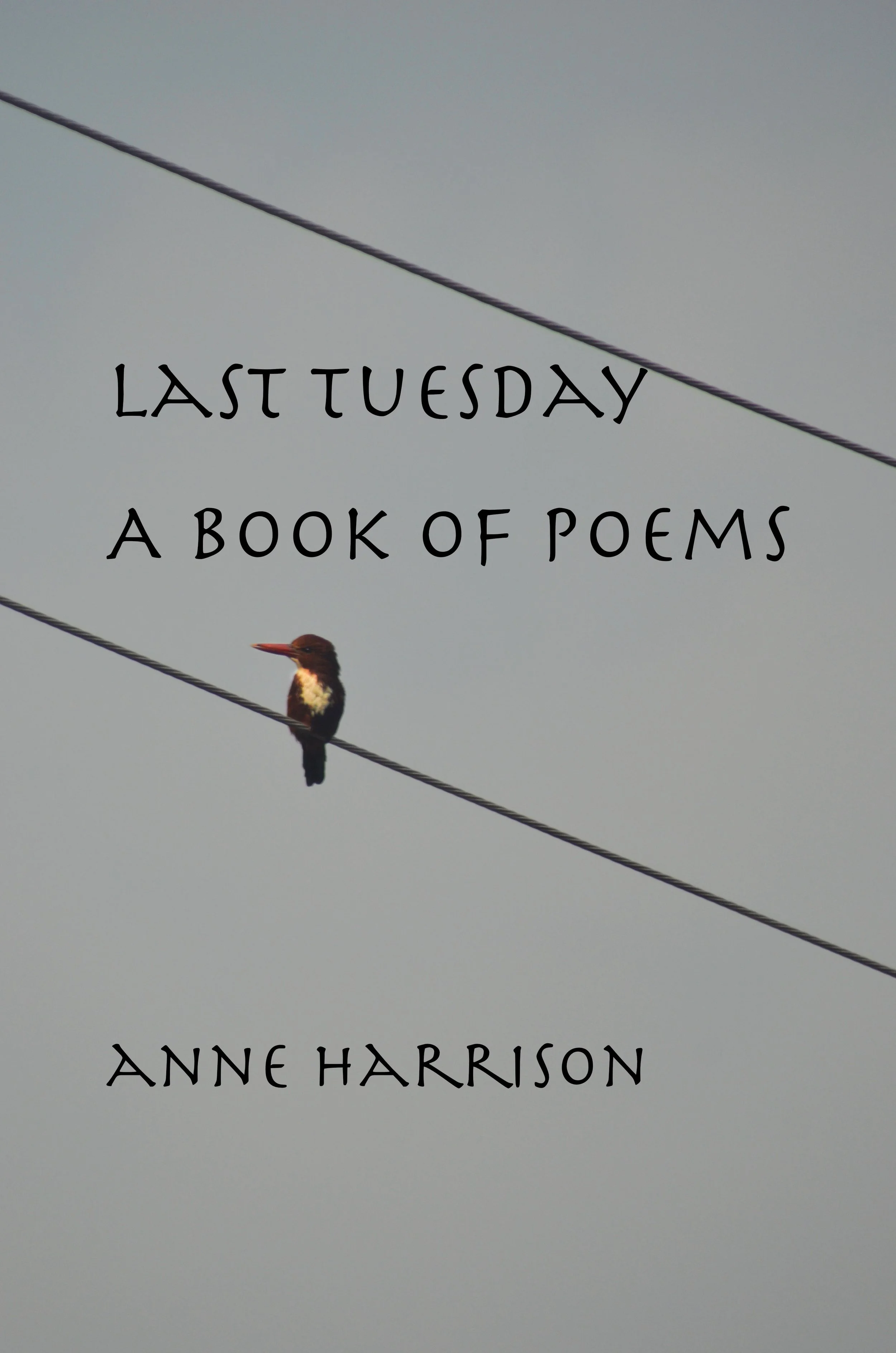


I peered around in the darkness. Neither the light of the stars, nor a streetlight, filled the blank void. I actually hadn’t rolled into the wall; I wasn’t even in bed. I’d hit the back of the couch — the short one.
As Caitlyn''s week of working nights draws to a close, she comes to question her belief that her past decisions have brought her to where she is; is she now too far along the her chosen road to have a choice? Or is it time itself which holds her prisoner in a place she no longer wishes to be.
The lift doors opened onto the tunnel. Like any entrance to hell, it smelt stale. Stale vomit, stale urine. Stale bodies, everywhere. A winter of rain couldn’t cleanse it. Tattered posters clung at odd places to the walls, reminding everyone to be alert, not alarmed. Despite two security guards sharing a smoke, the tunnel remained a perfect place for a murder.
Over the course of just one work shift, Caitlyn discovers it takes but a packet of Twisties, a ghost, and thoughts of a minotaur for her to break free.
Also available on Amazon (kindle or paperback)