
The Marble Quarries of Carrara

Marble mountains behind my brekkie hut © A. Harrison
Standing in the marble quarries of Carrara, I felt a world away from the rest of Tuscany. All week I’d been sweltering in +30 C temperatures in Florence, but the up here in the mountains the air is cool. A mist had rolled in over the mountain tops, and droplets of water sweep by in the breeze.
Breakfast was in a makeshift hut – a strong espresso, and some lardo di Colonnata on bread. Essentially seasoned pork fat, lardo di Colonnata is an acquired taste, but very filling. The strong coffee cut through the fat perfectly. An invigorating start to the day.
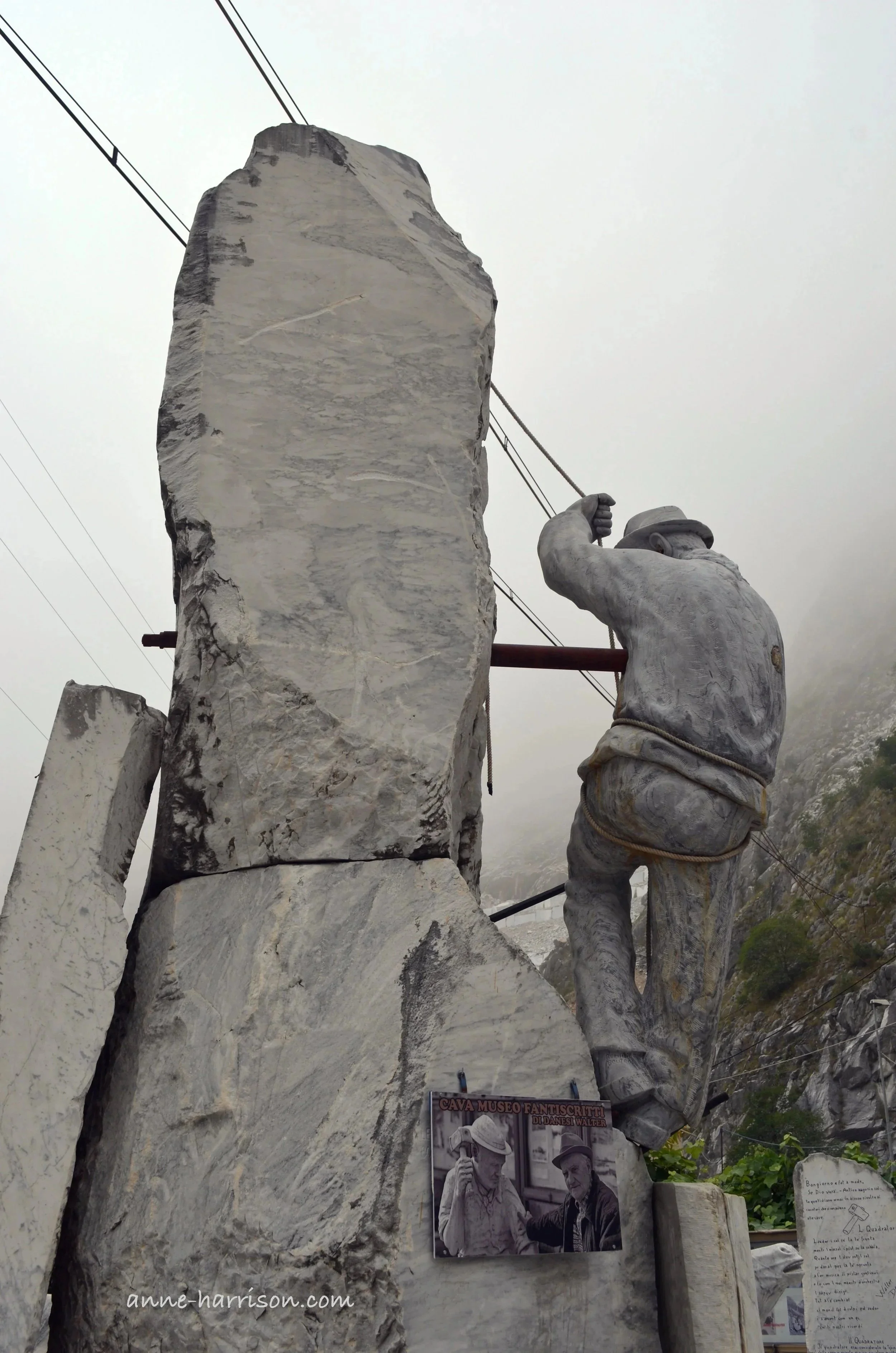
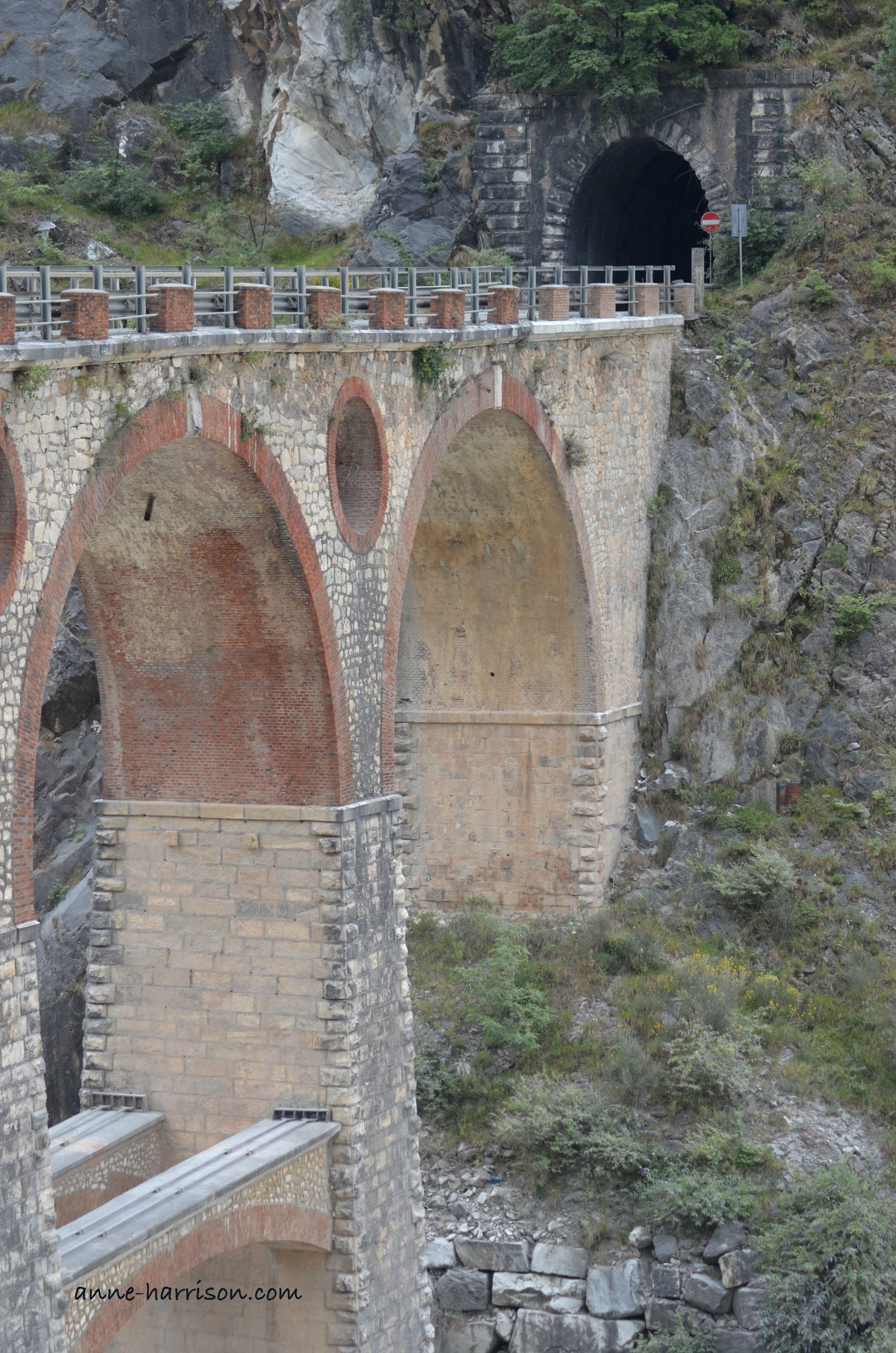
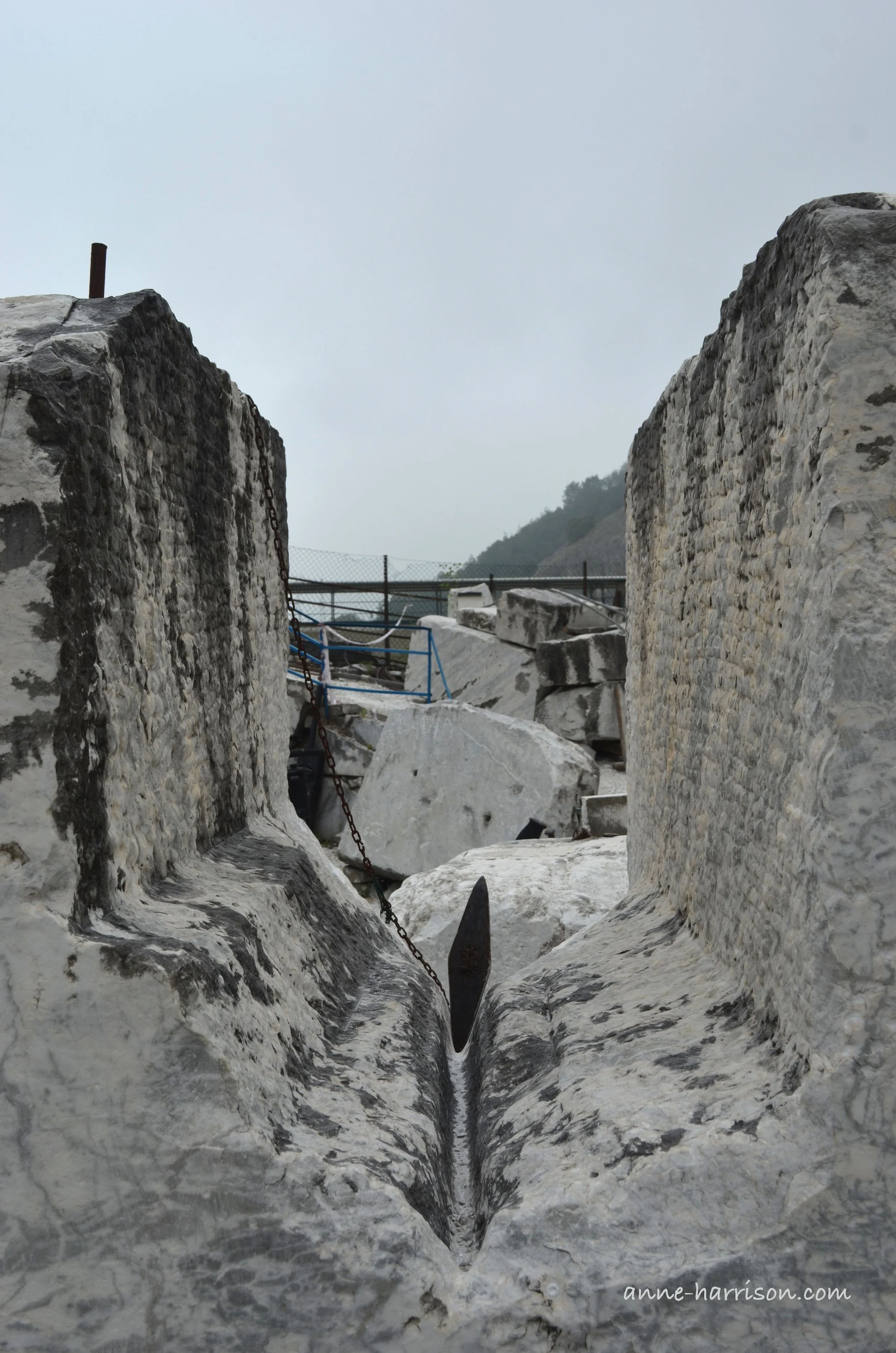
The Italian city of Carrara is world-renowned for its prized white marble, which has been quarried in the Apuan Alps since Roman times. There have been settlements in the area as early as the ninth century BC, when the Apuan Ligures lived in the region. The current town of Carrara originated from the borough built to house workers in the marble quarries created by the Romans after their conquest of Liguria in the early second century BC. Carrara has been linked with the process of quarrying and carving marble ever since.
This "white gold" has been a central material for countless famous sculptures, and the city remains a significant centre for the international marble industry. Carrara is also known for its deep-rooted anarchist traditions and serves as a unique destination where history, art, and nature intersect. The difficult working conditions of the miners and their poor pay acting as a starting point, which continued through the 20th C, with occupation during WWII and the social unrest which followed. (Personally, I wouldn’t be surprised if the undercurrent of anarchy can be traced back to the Romans occupation – not the most compassionate nor understanding of invaders.)

Mist and mountains © A. Harrison
Wandering through the outdoor museum near the mines, I looked in awe at the sheer size of these marble blocks. It seems the entire mountain range is made from marble. It has been mined since antiquity, with no obvious end to the supply in sight. Think Roman Forum, or Michelangelo's David. Both were made from marble from this quarry. (In the near-by town of Pietrasanta, many buildings have a plaque outside stating Michelangelo once stayed there while choosing his marble.)
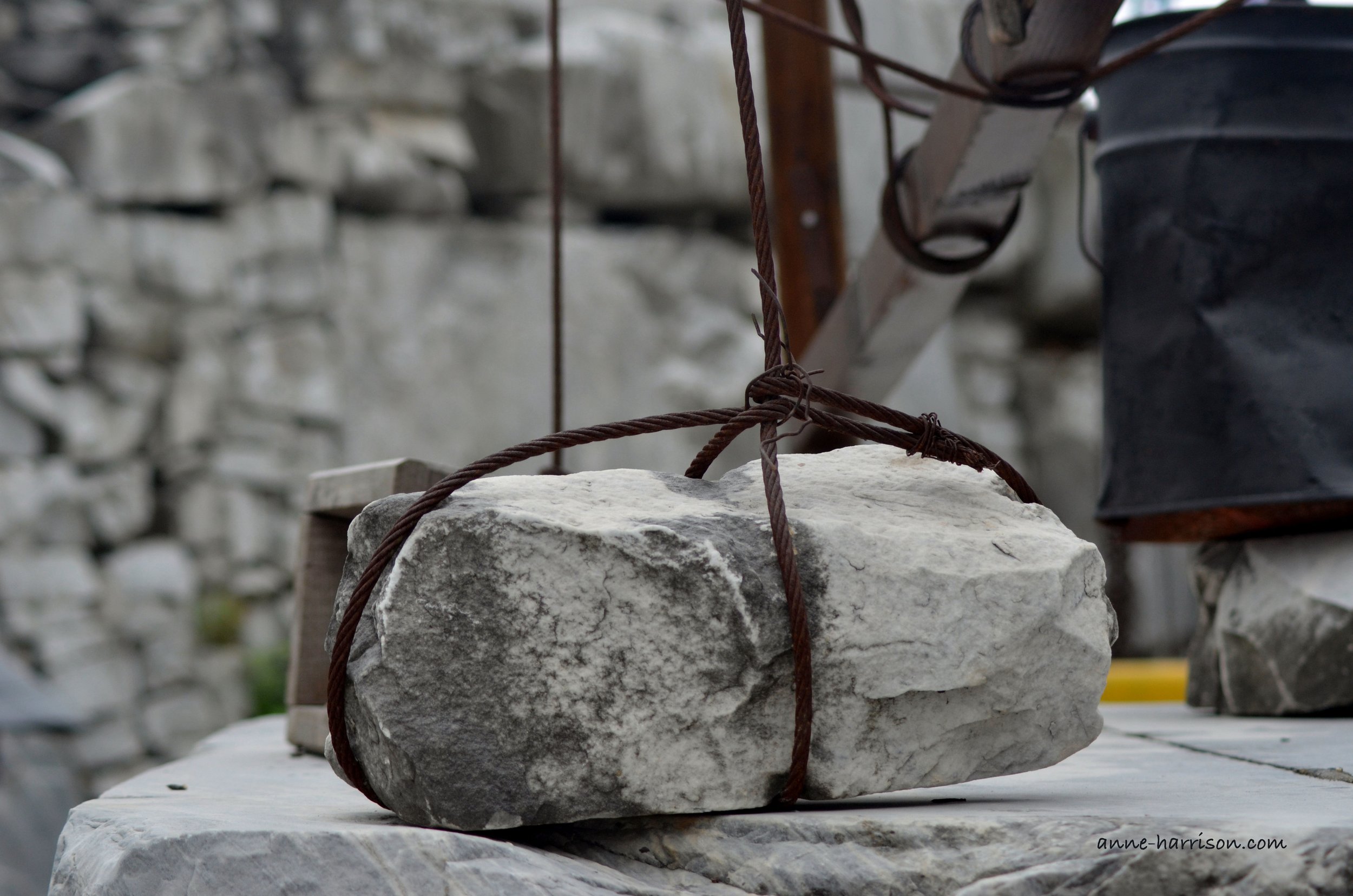
Blocks of marble weighing up to 30 ton were hewn by hand, then transported down the mountain. This dangerous process – called lizzatura – was still used until 1966. The blocks were guided down the slope on a ‘sleigh’ which glided down wooden beams (parati) greased with soap and fat. The rate of descent was controlled by ropes - These were initially hemp but later made from wire. The whole process was extremely dangerous, and many were injured or killed in the process.

The morning passes, and it is time for coffee in Carrara. Later I will visit the Arts Academy, and wander past the Duomo where art students are busy with hammer and chisel. The whole town, it seems, is made of marble, and filled with artists. Has it has been for centuries.
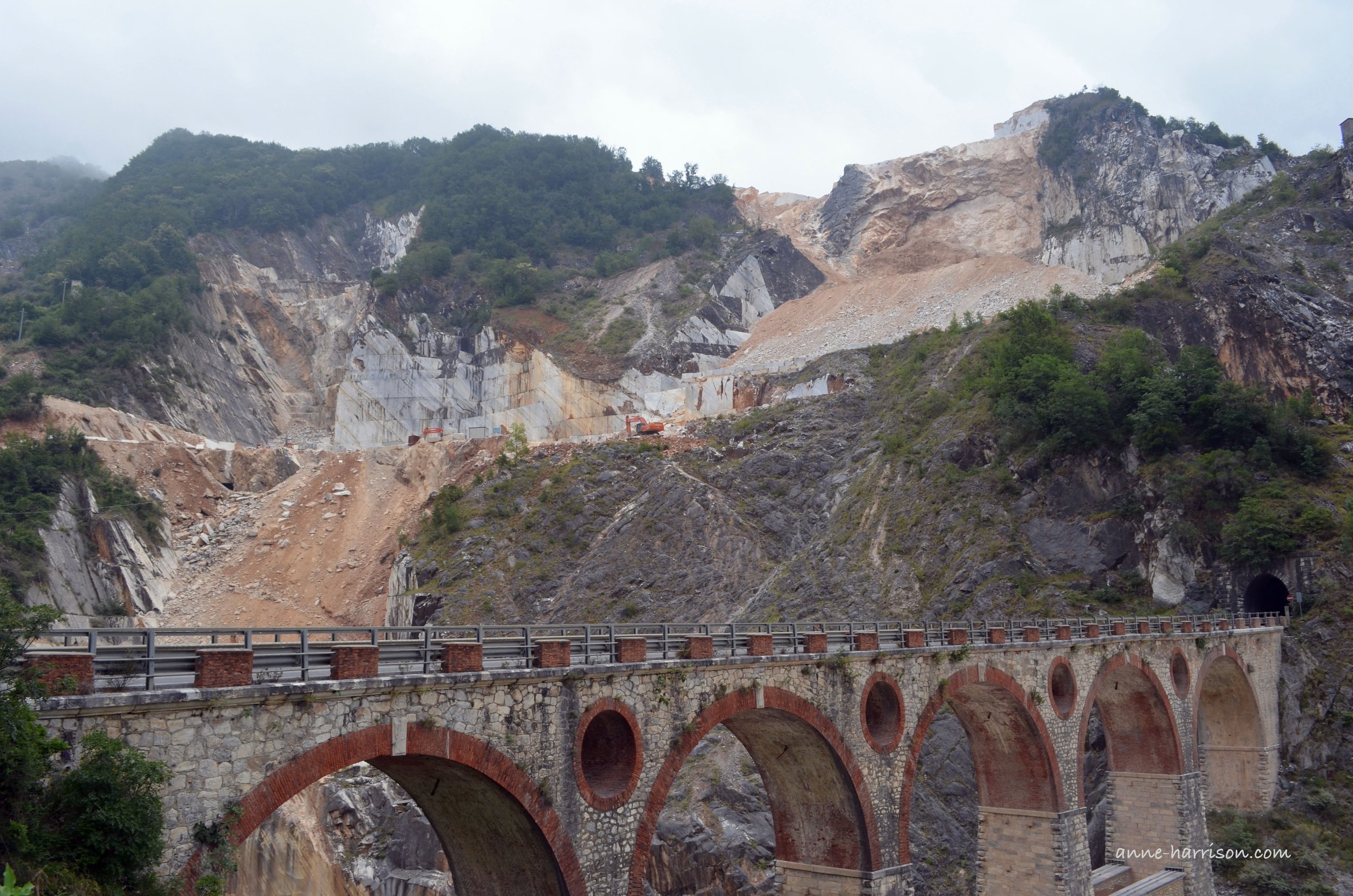
An old transport road © A. Harrison
Enjoy my writing? Please subscribe here to follow my blog. Or perhaps you’d like to buy me a coffee? (Or a pony?)
If you like my photos please click either here or on the link in my header to buy (or simply browse) my photos. Or else, please click here to buy either my poetry or novel ebooks. I even have a YouTube channel. Thank you!
Plus, this post may contain affiliate links, from which I (potentially) earn a small commission.
Some of my other blogs you may enjoy:
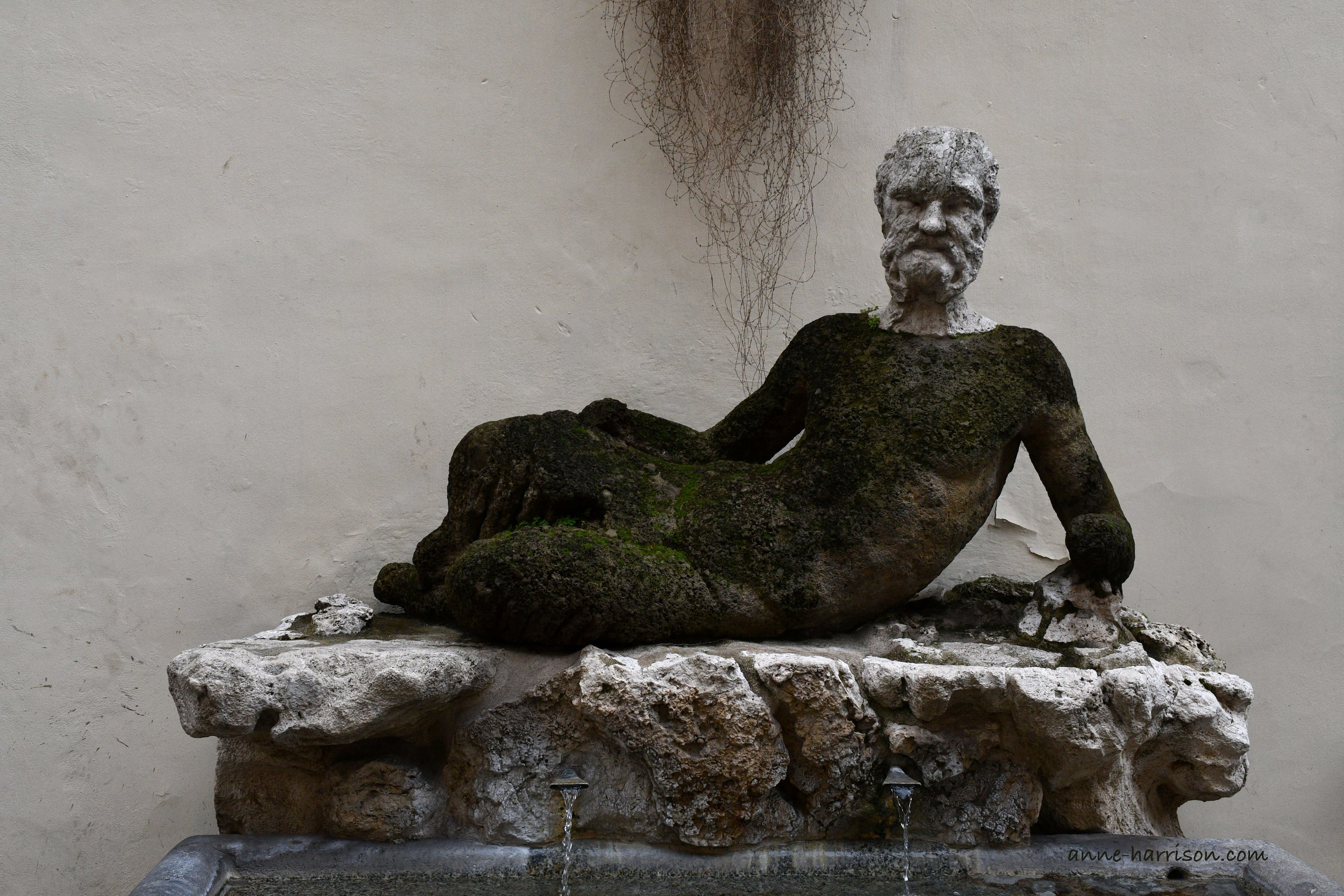

The marble quarries above Carrara have been mined from before the Romans. Both the Roman Forum and Michelangelo’s David used marble from here.