
In the Footsteps of St Francis
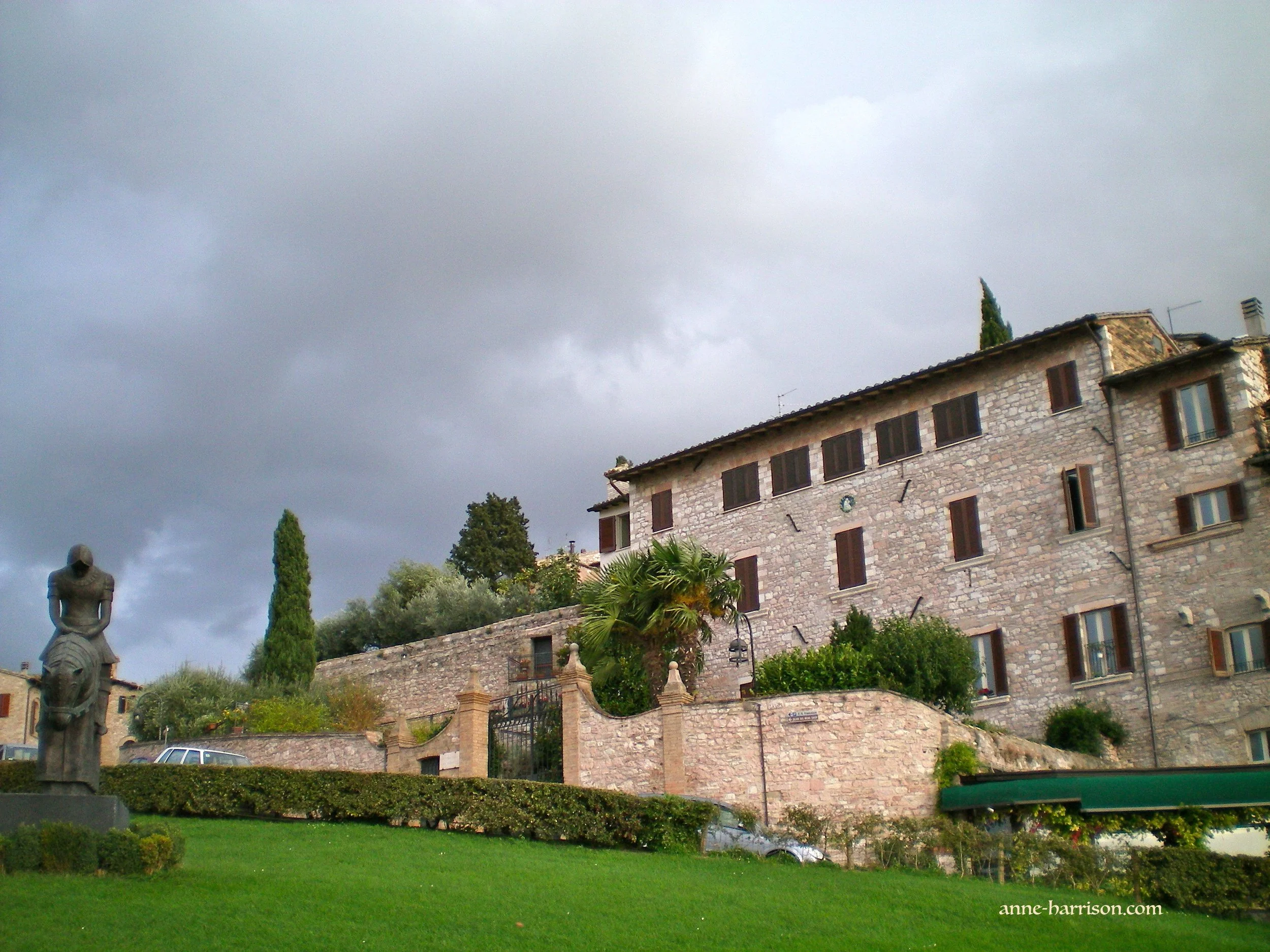
St Francis astride his horse, hearing the voice of God © A. Harrison
I woke to a watery sun creeping through the window. Outside, spires and steeples appeared and disappeared as a breeze stirred the early mist. A sonata of morning bells called the faithful to mass.
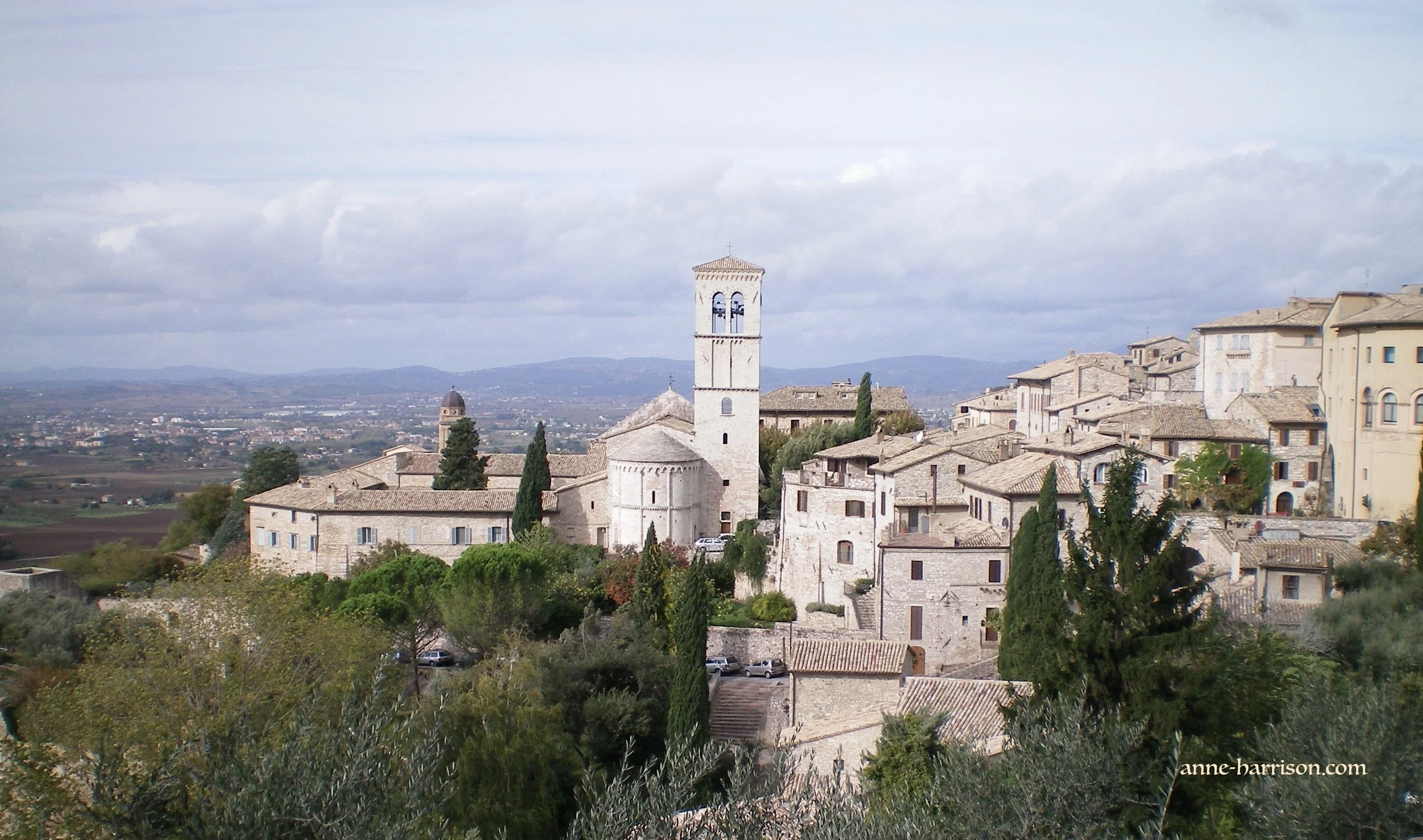
Despite the millions of tourists and pilgrims who flock here each year, Assisi remains a place for contemplation. With cars banned from the centre of the town, it’s also a place for walking. Geraniums tumble outside the windows, and the buildings are of the soft pink and grey stone typical of Umbria. Every street, it seems, offers a view over terracotta rooftops to a countryside so classically beautiful as to be breathtaking.
As I wandered the cobbled streets the words of St Francis become tangible: pax et bonum, peace and goodwill. The spirit of St Francis is everywhere, and it is easy to follow his footsteps through the town.
The most obvious place to begin is at the Basilica di San Franscesco. I won’t add to the plethora of books regaling the beauty of the cathedral, the work of Giotto, the birth of the Renaissance, it’s survival of the earthquake. Pope Gregory IX laid the foundation stone of the Lower Basilica on 17th July 1228, the day after the canonisation of St Francis.
In a crypt below the lower cathedral is the tomb of St Francis, and this is the heart of Assisi. Whatever the time of day, there’s always someone venerating his tomb. In the darkness and the quiet, the peace and spirituality is palpable.
Unlike other cathedrals in Italy, the Basilica remains quiet even when crowded. At dusk, when the last tourists of the day have gone, or in the first light of morning, it is truly a magical place.
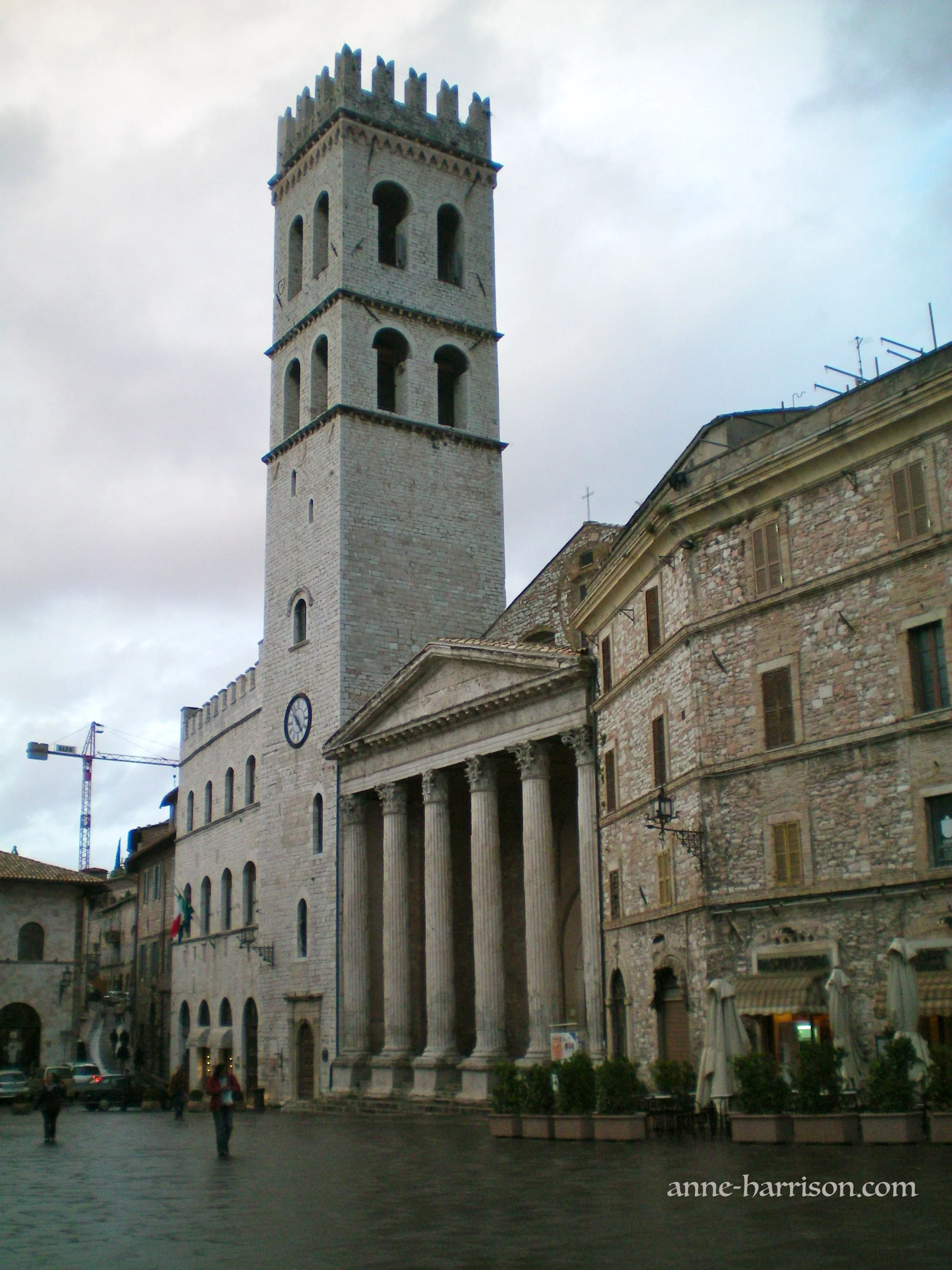
From the Basilica, the via San Francesco leads to the main square of Assisi, the Piazza del Comune. Here a 1st century BCE Roman temple to Minerva was converted to the Chiesa Sana Maria sopra Miverva in 1539. Just off the Piazza is the New Church – the Chiesa Nuova – built some 400 years ago. It is built on the site of St Francis’ family home; tradition holds he was baptised in the nearby Oratorio di San Francesco Piccolino.
From the church a passageway leads to a warehouse believed to have been owned by St Francis’ father. There is also a tiny room used as a cell by his parents, who locked up St Francis to prevent him from denouncing his life of wealth to follow God.
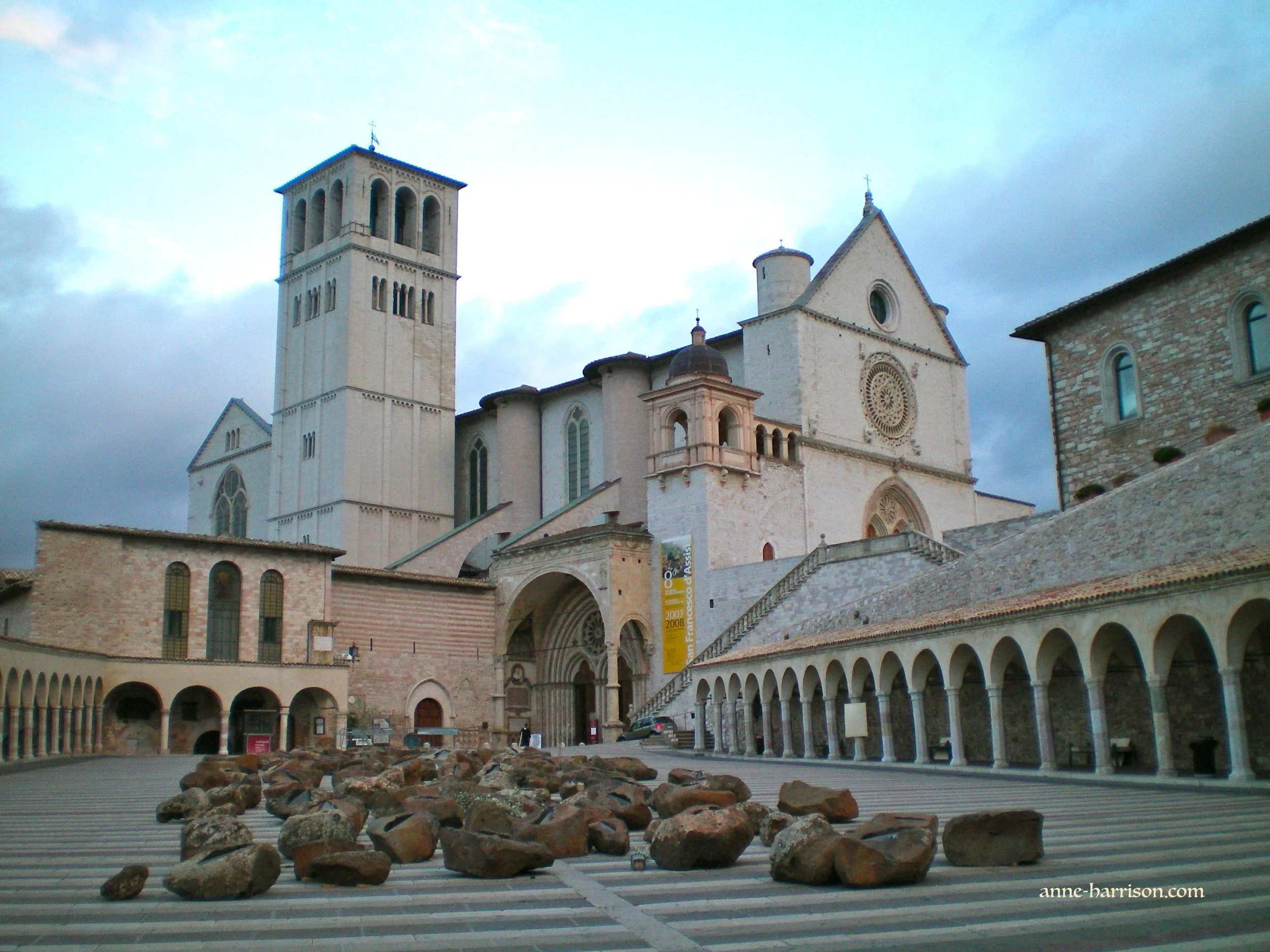
The Basilica of Saint Francis of Assisi © A. Harrison
On the Corso Mazzini, but easily reached from the Piazza del Comune, is the Chiesa San Clare. This pink and white church is the burial place of St Clare. Born in 1193, she was a friend and follower of St Francis and founder of the Order of the Poor Clares. Built in 1257, the church is in typical early gothic Assisi style, complete with a large rose window. The church occupies the site of the Church of San Giorgio, where St Francis lay buried until his remains were moved to the Basilica in 1230.
The Piazza San Chiara gives a lovely view over the terraced hills below Assisi. Inside, on the right, is displayed the Oratorio del Crocifisso, reputedly the 12th century crucifix from San Damiano which spoke to St Francis, commanding him to ‘rebuild my church’.
A display of relics on the back wall includes a shirt embroidered by St Clare, tunics belonging to St Francis and St Clare, and some of the hair St Francis shaved from St Clare’s head when she embraced a life of poverty and devotion to God.
The Duomo, or Church of San Rufino, houses the font where both St Francis and St Clare, as well as the future Emperor Frederick II, were baptized. The portal is guarded by two Christian-devouring lions, plus a collection of animals carved into the frame, including griffins and winged crocodiles. Continuing the animal theme, the font is fronted by a winged ox and a lion.
Originally built around 412 AD to house the bones of St Rufus, (Assisi’s first martyr), a succession of bishops and their visions saw the church rebuilt in 1028 and again in 1134. Some historians believe it covers the site of Assisi’s ancient Roman Forum.
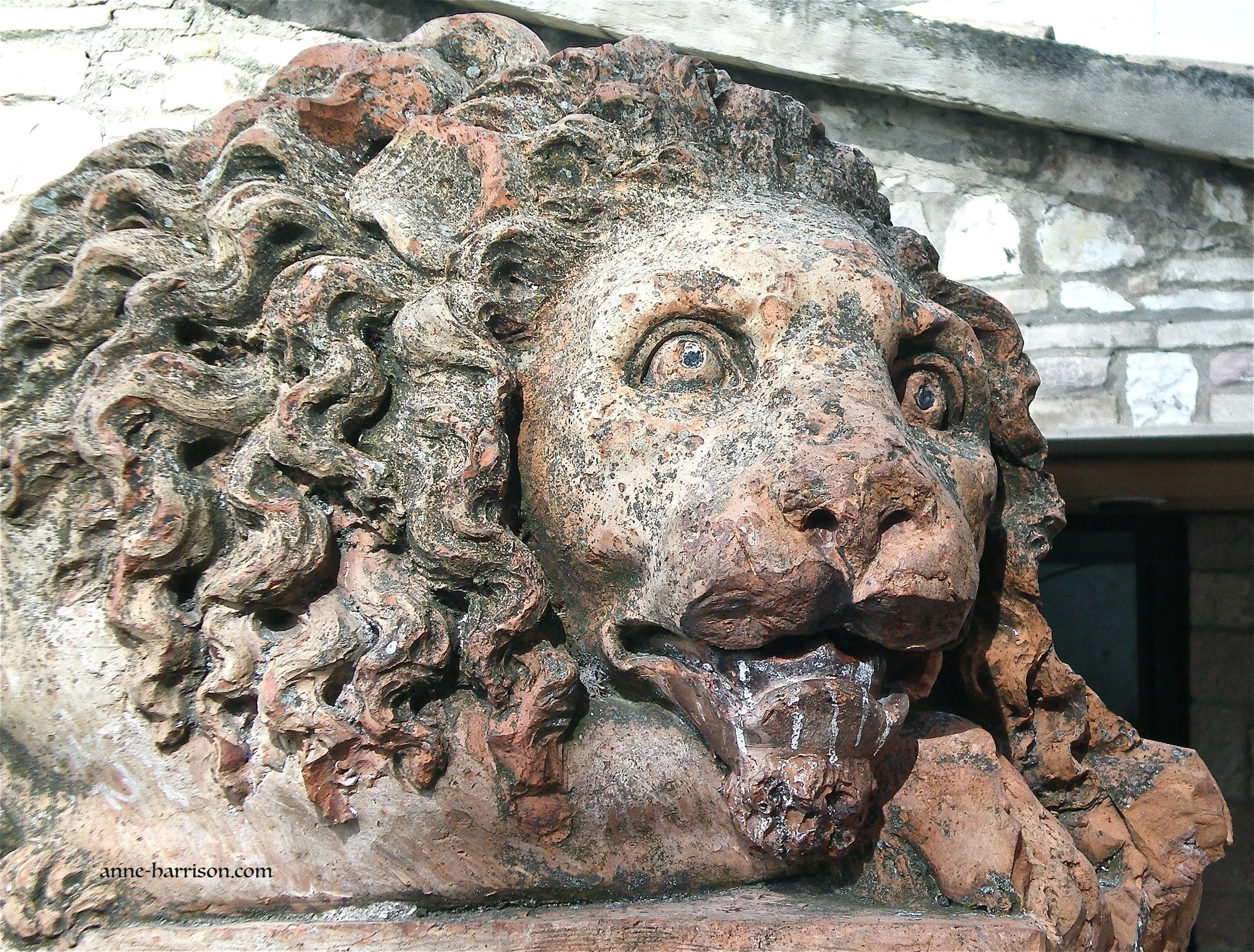
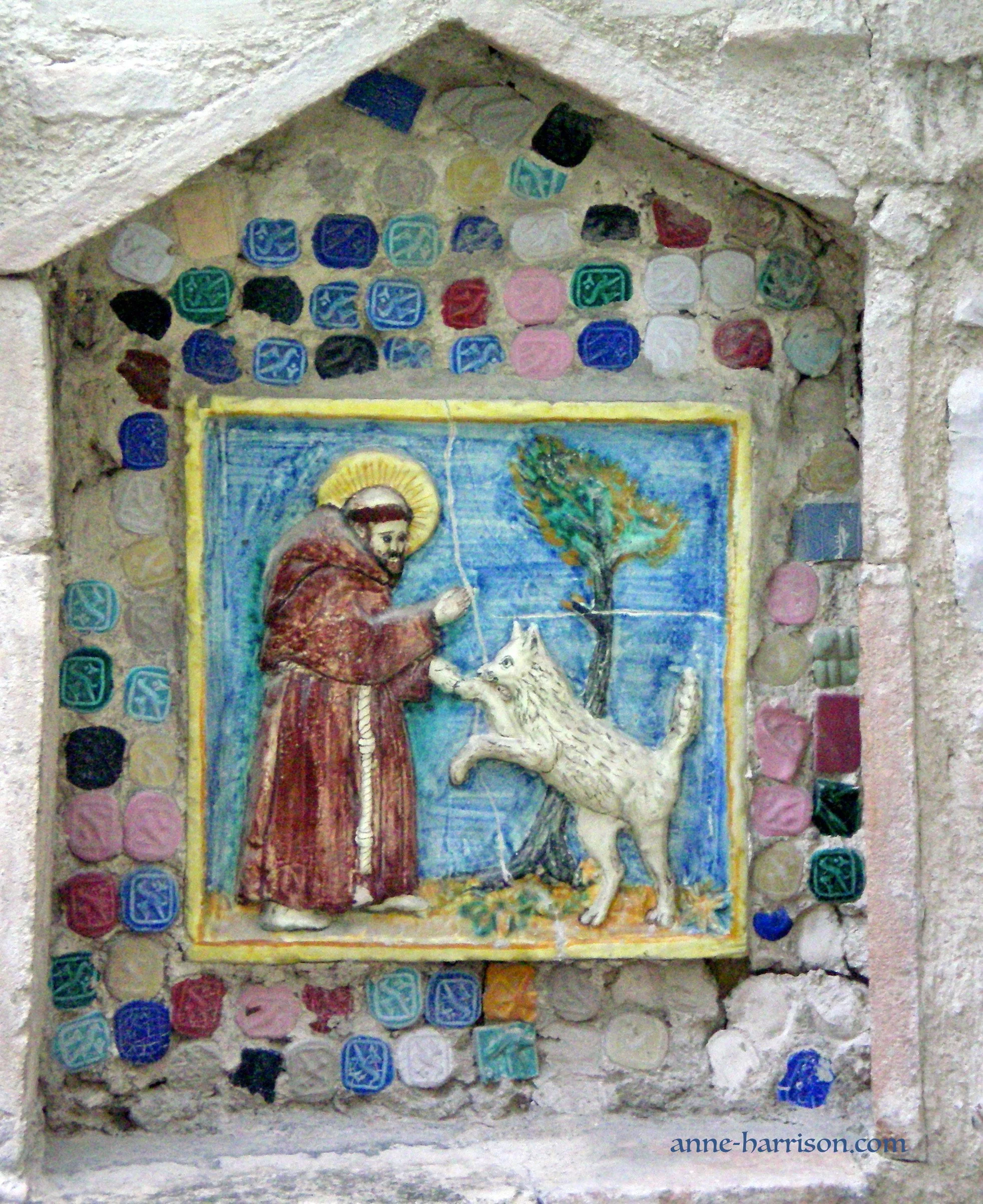
A not so scary lion © A. Harrison
Within the crypt are remnants of early frescoes, a Roman wall, as well as a Roman sarcophagus used as Rufino’s original tomb (his remains are now beneath the altar). Through glass panels in the floor can be seen parts of these ancient ruins. Near the font is the stone knelt on by an angel whilst attending St Francis’ baptism – it bears, apparently, the imprint of the angle’s knee.
Much of the St Francis’ presence in Assisi lies outside the town’s gates. From the Porta Cappuccini, a signposted lane leads to the Eremo delle Carceri, a hermitage hidden amongst the forested hills. Caves were carved into the stones here centuries before St Francis was born. He often withdrew here to meditate and pray, and to preach to his disciples. It remains home to Franciscan friars, who happily show visitors the cell where St Francis prayed, complete with the rocky bed on which he slept. There is also the place where he caused water to gush from the rocks, the site where he tossed a demon back down to hell, and an ancient tree, supported by iron crutches, where he preached to the birds. (All these events are depicted in Giotto’s frescoes in the Basilica.)
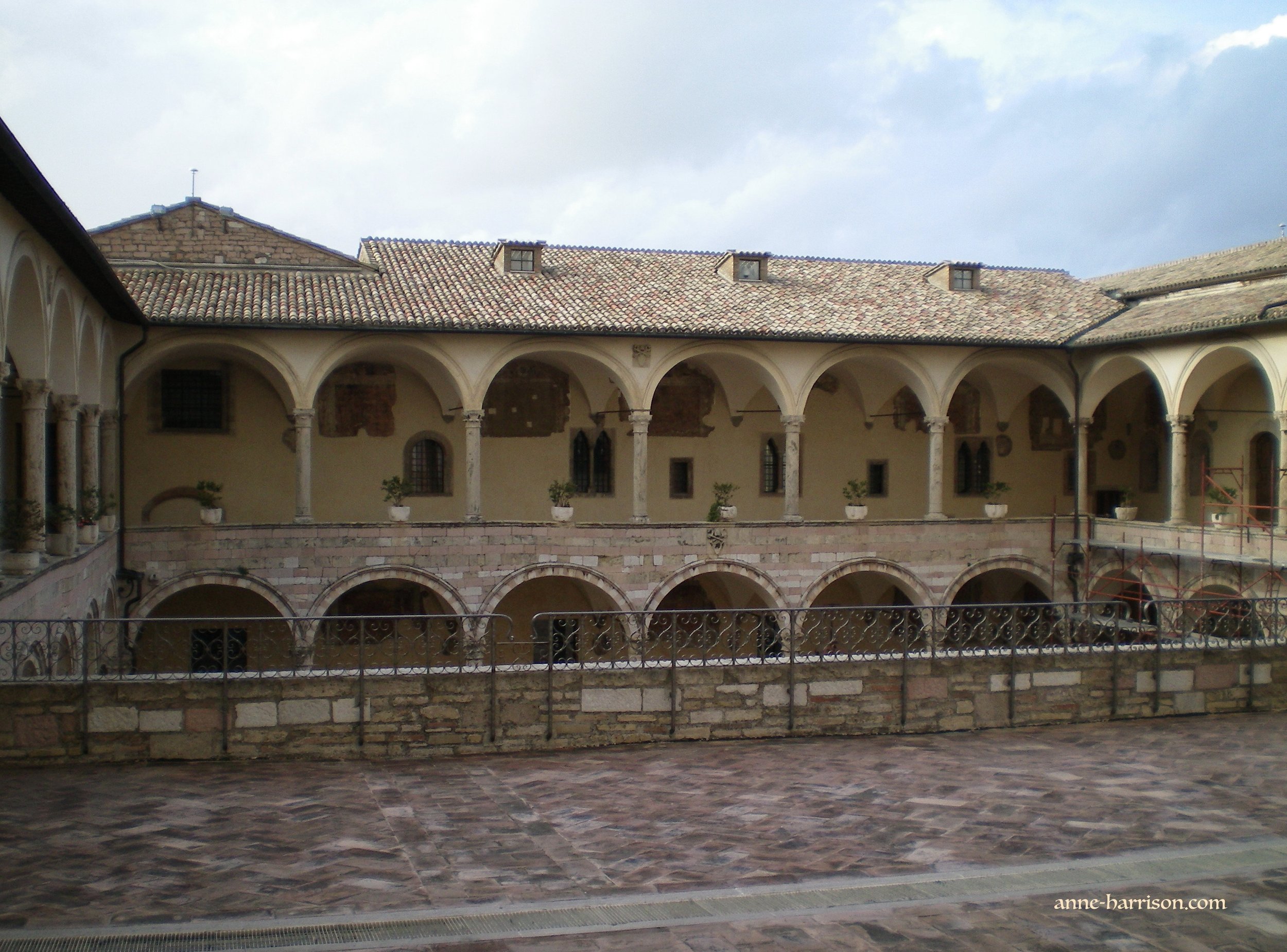
A fifteen minute stroll along the Via San Damiano is The Church of San Damiano. It was here the talking crucifix commanded St Francis to ‘go forth and rebuild my church’. It is also where, towards the end of his life, he composed The Canticle of the Sun. St Clare founded her order here, remaining as Abbess until she died. On the small balcony above the entrance she held aloft the Holy Sacrament, thus turning back an Saracen army which threatened Assisi.
Finally, in the new town at the bottom of the hill, is the domed Basilica di Santa Maria Degli Angeli, which marks the spot of the Oratorio di San Francesco. Here is the Porzuincola, or little portion, a small chapel used by St Francis. The stone cell is where he lived, and where he died in 1226. Here he converted St Clare. In the garden are descendants of the rose bushes into which St Francis threw himself whilst grappling with temptation; they became thornless after contact with his holy flesh.
Most importantly, when in Assisi, walk everywhere. Walk along the quiet streets and winding alleyways, and find forgotten corners; enjoy the peace of the mountains, and look over the rows of olives in the valley below. Rise early in the morning and watch the mist drift across the church spires. Sit and sip a coffee while listening to the bells calling the faithful to Mass. And, like St Francis, take pleasure in the sound of the birds, and the beauty of the natural world which abounds around Assisi.
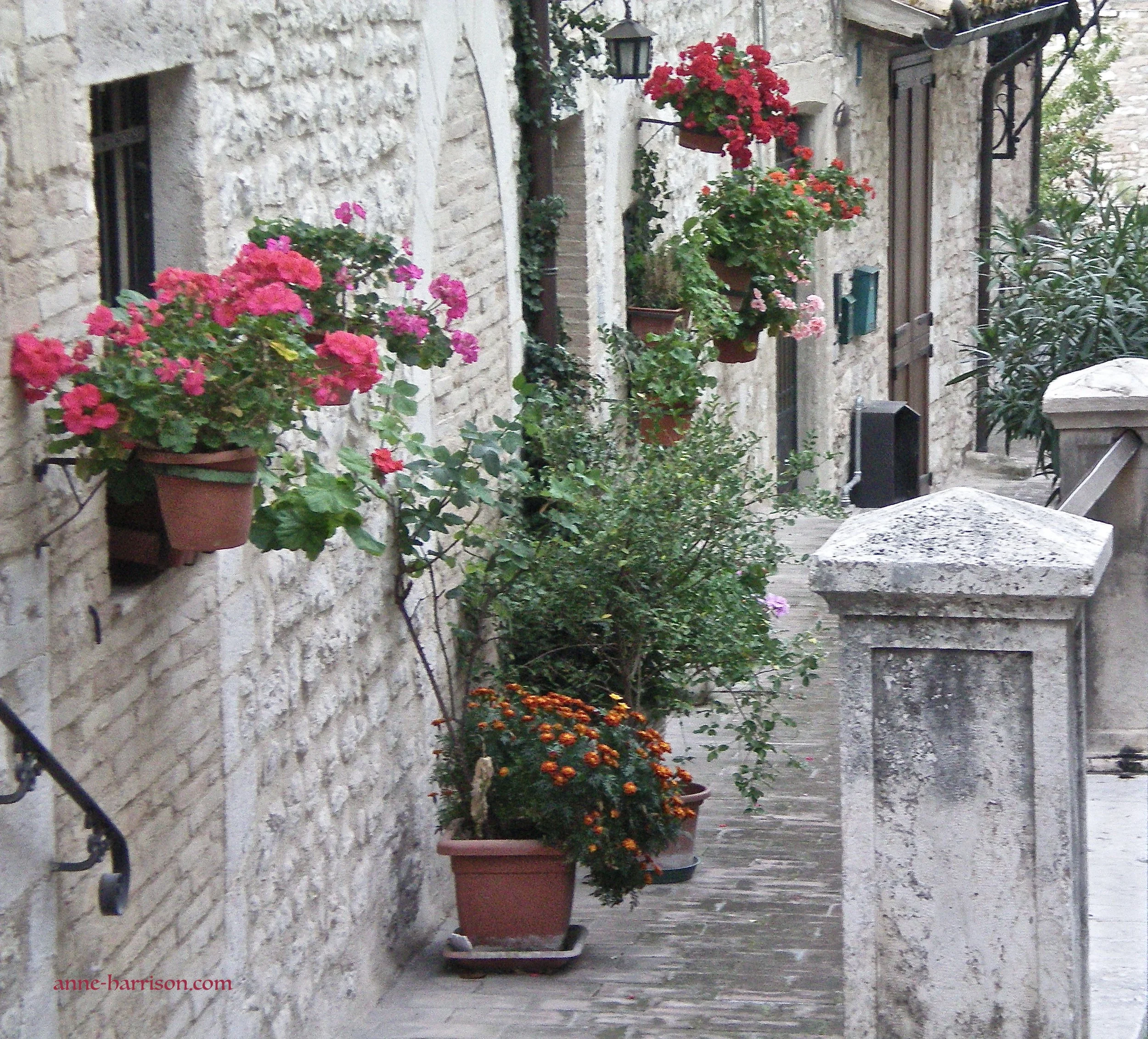
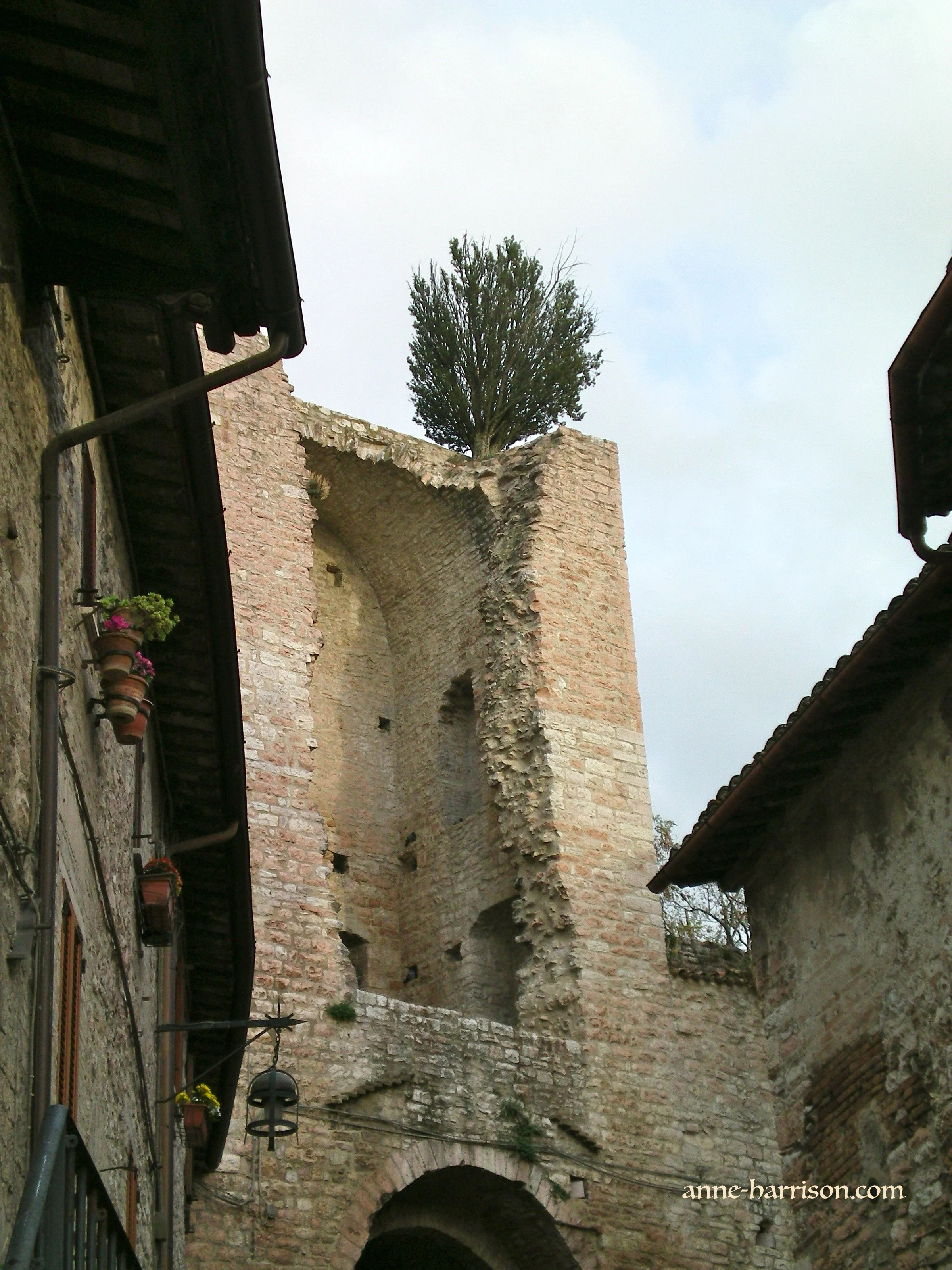
The beauty of a quiet street © A. Harrison
Enjoy my writing? Please subscribe here to follow my blog. Or perhaps you’d like to buy me a coffee? (Or a pony?)
If you like my photos please click either here or on the link in my header to buy (or simply browse) my photos. Or else, please click here to buy either my poetry or novel ebooks. I even have a YouTube channel. Thank you!
Plus, this post may contain affiliate links, from which I (potentially) earn a small commission.
Some of my other writing you may enjoy:

The marble quarries above Carrara have been mined from before the Romans. Both the Roman Forum and Michelangelo’s David used marble from here.