
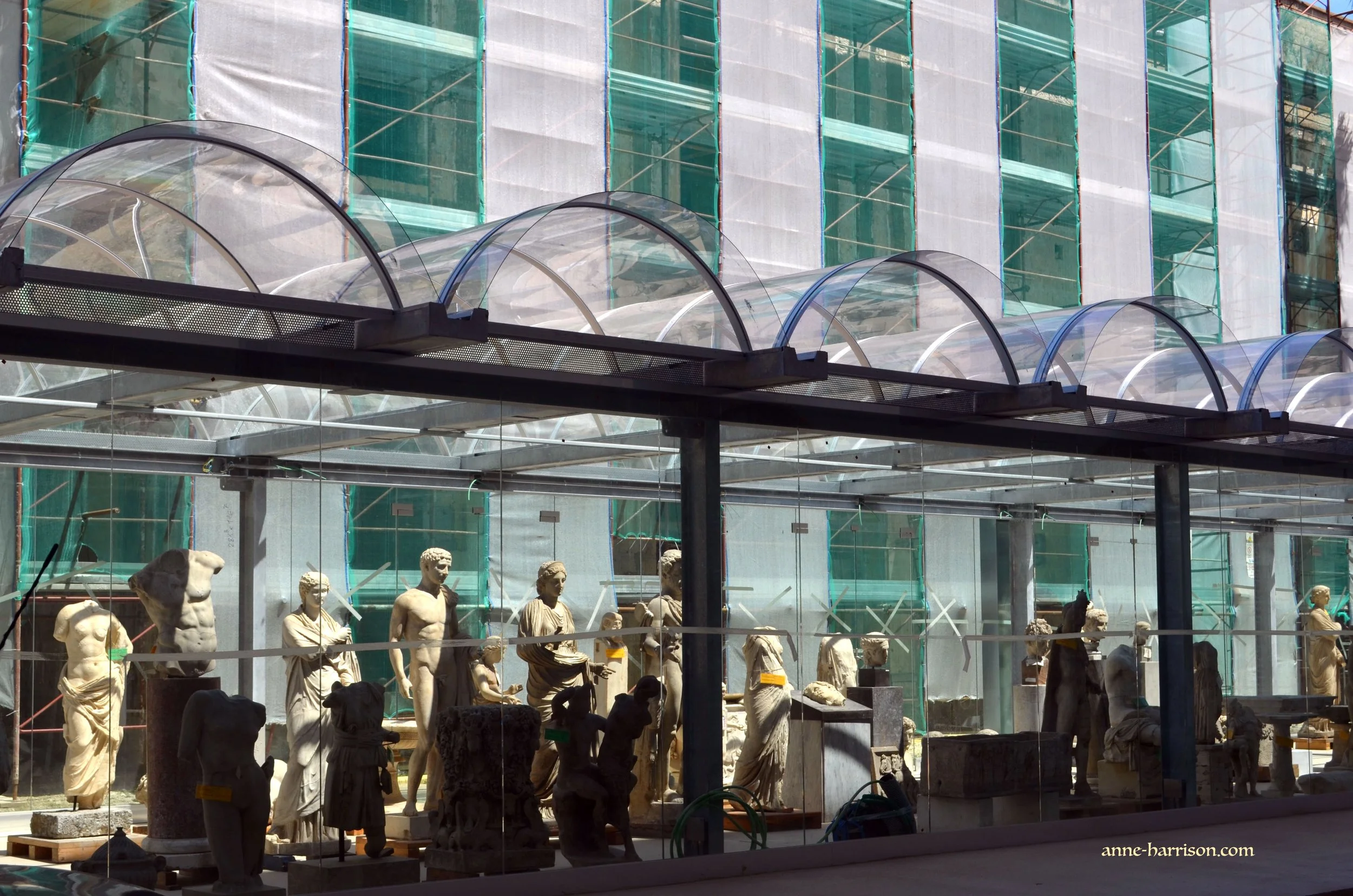
A delightful route to the bathroom © A. Harrison
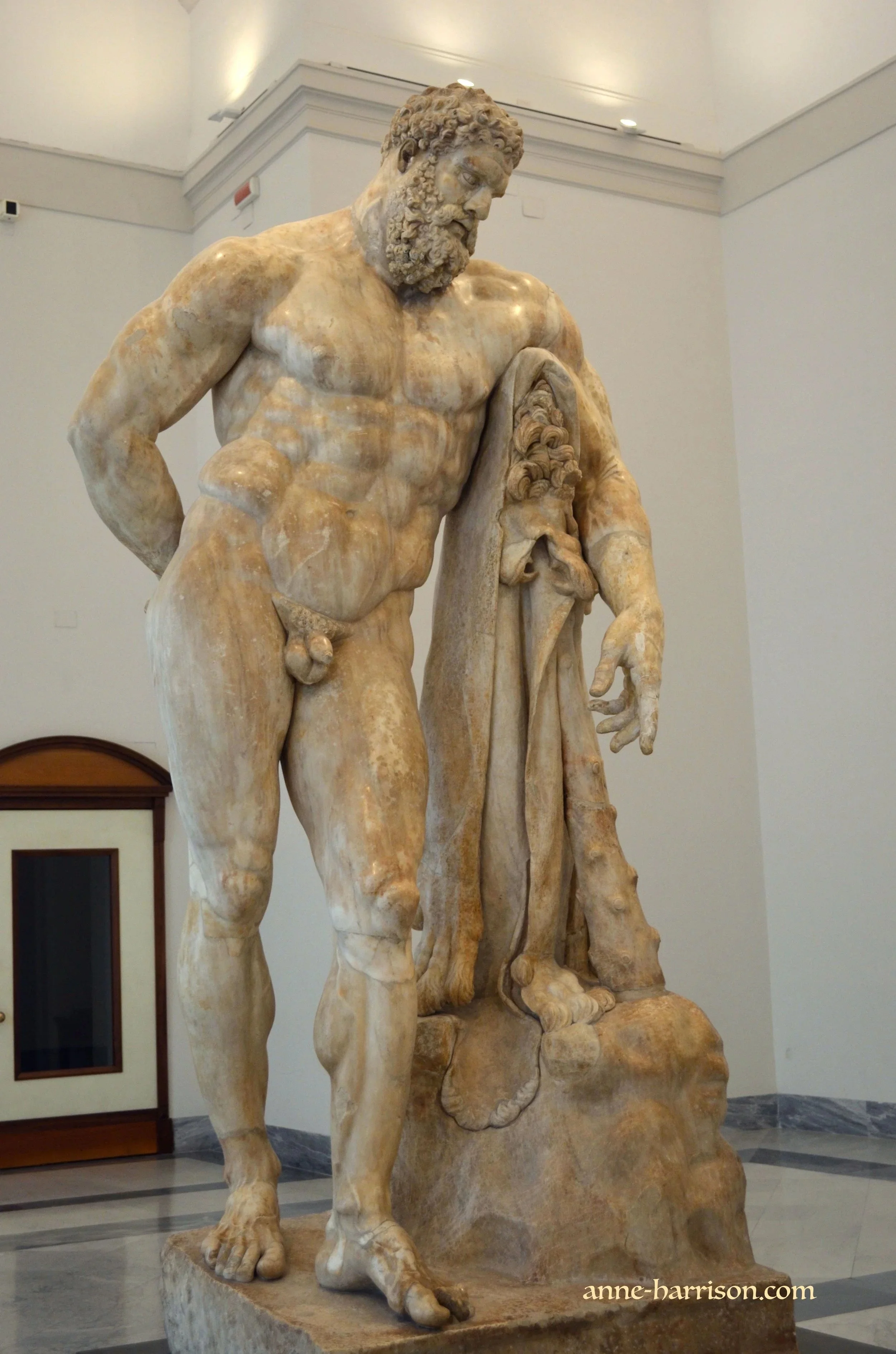
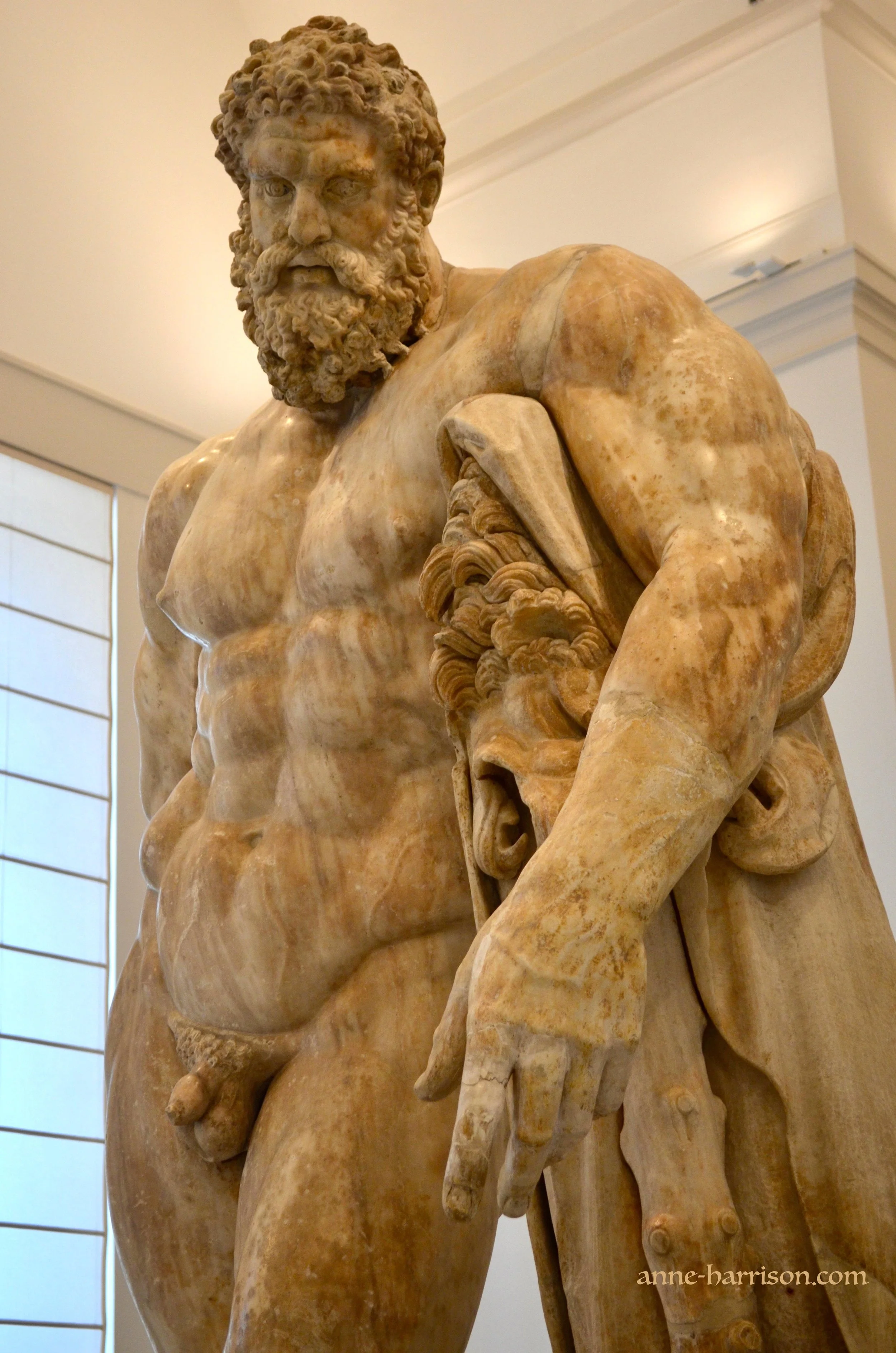
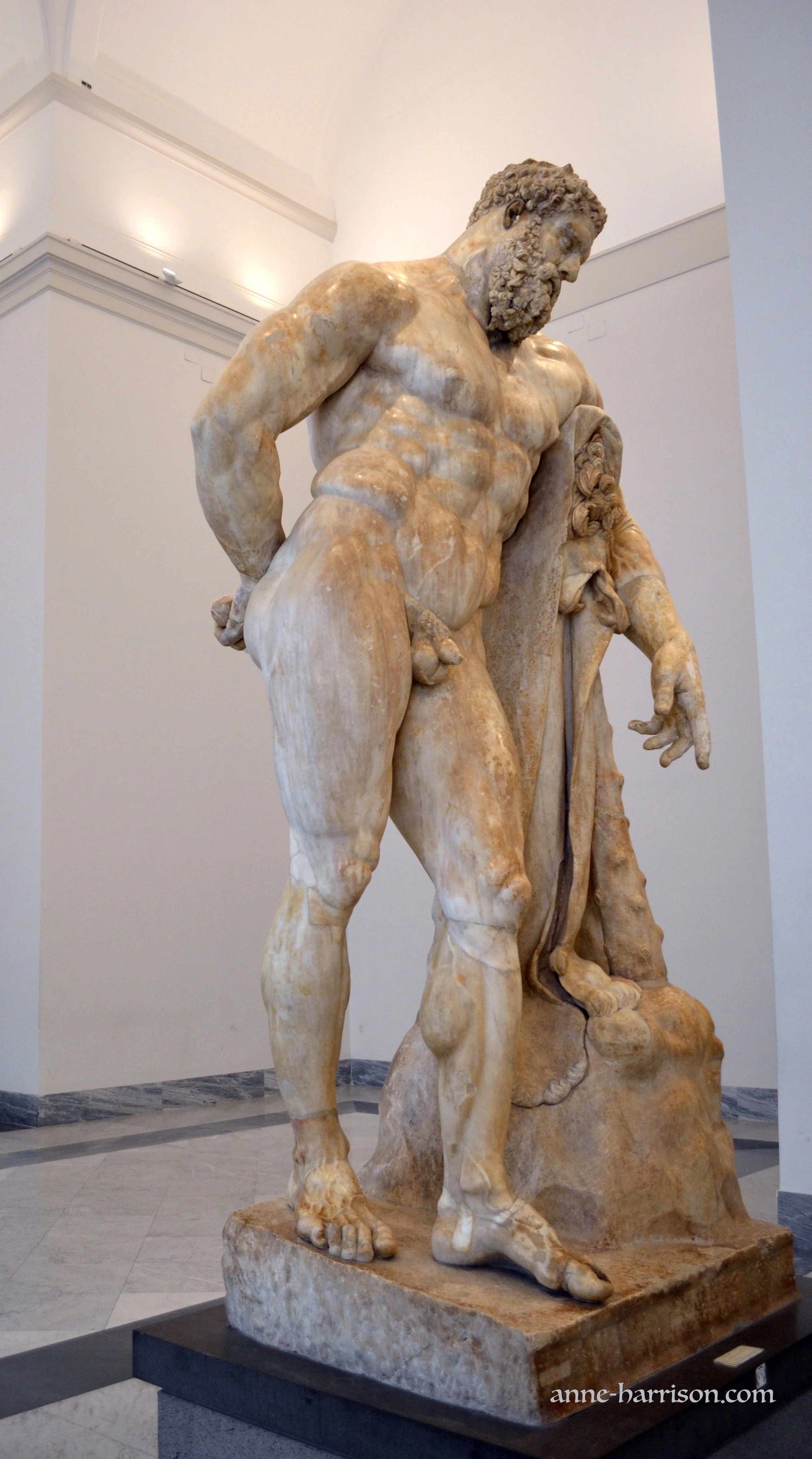
In a museum boasting a staggering collection, the Farnese Hercules dominated the room. I kept walking around him, wondering how such a work of art is even possible. How can such tension and flow, such a range of textures, be captured in a single piece of marble?
There is obviously more to Naples’ Archeological Museum than Hercules. Much of the Farnese Collection has ended up here, as well as works recovered from Pompeii and Herculaneum. Along with an extensive Ancient Egyptian collection, the museum has a large collection of Greek and Roman art, plus gems collected by the Medici. There is also the titillating ‘Secret Room’ which displays an extensive collection of erotic items, largely from Pompeii. Once considered to be so decadent that the room was walled up in the hope it would fade from memory, the collection has only been opened to the public since 2000.
Wandering around Naples I couldn’t help but think this is how Rome should be, or perhaps how Rome once was during those idyllic days of The Grand Tour. The streets were busy but not over-crowded, enough for the place to feel alive but not congested with tourists. We were the only ones having coffee at the Bar Mexico (possibly the best coffee in Italy). Despite being the height of summer, there were no queues, and the marble entrance of the museum proved deliciously cool after the heat of the day. Although barely mid-morning, the footpaths had already soaked up the offerings of the summer sun, and every surface radiated heat.
The Farnese Collection dates back to Pope Paul III (1534–1549). As Cardinal Alessandro Farnese, he began an extensive collection of classical artworks. At the time such artefacts were frequently being rediscovered throughout Rome and Italy, often unburied as land was farmed or excavated for development. With his wealth and connections the cardinal bought, was given or simply confiscated other collections. Michelangelo even designed the display area in Palazzo Farnese for the cardinal’s prize pieces.
The collection passed down the generations to Charles III of Bourbon, King of Naples from 1734 (his mother was Elisabeth Farnese). Despite both family and papal protest he transferred much of the collection to Naples, pairing it with recent discoveries in Pompeii and Herculaneum.
For me, the Farnese Hercules takes pride of place. It’s a Roman copy of a bronze Greek statue created by Lysippos in the 4th C BC. This copy, made in the early 3rd C AD for the Caracalla Baths in Rome, is signed Glykon. Little is known of this man. The statue depicts a weary Hercules leaning on his club, over which is draped the skin of the Nemean Lion. Behind his back Hercules holds the Apples of Hesperides, and so both his first and last of his twelve labours are represented.
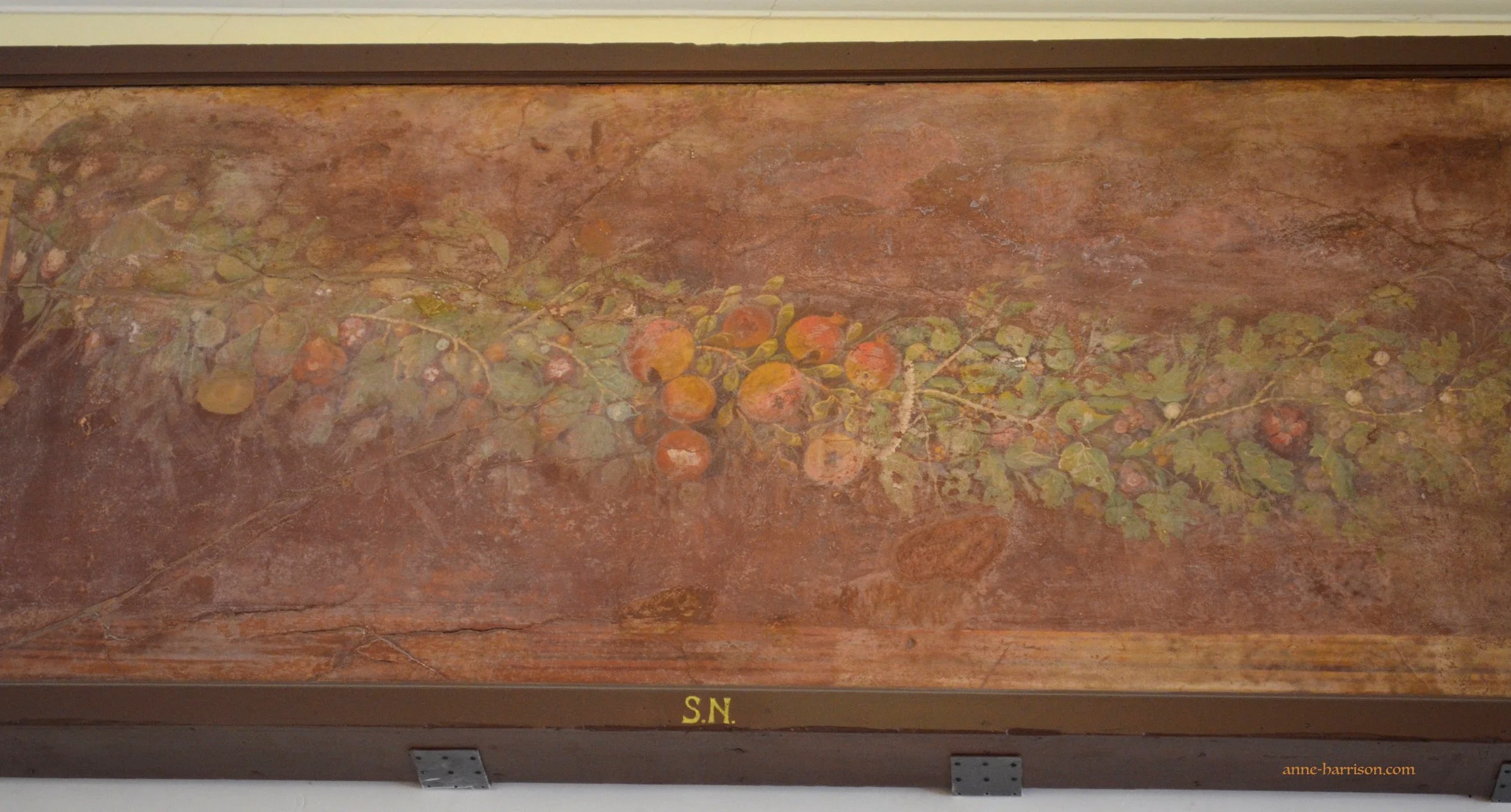
A delicate fresco from Pompeii © A. Harrison
When discovered in 1546, Hercules was missing his legs (and also his head, which was later found in a well). A student of Michelangelo’s, della Porta, made a replacement pair of legs which were so well regarded that when the originals were discovered in the Borghese Collection, such were the aesthetics of the time that many critiqued them for being too muscular. (The replacement legs hang on the wall behind Hercules, a spare pair should he ever require them.)
Taking my time to peruse the Pompeii Collection, I felt incredibly sad for a world so abruptly and devastatingly lost. Even the tiniest of artefacts boast incredible detail and workmanship. Many are so obviously very personal, and I felt quite intrusive looking at them. The frescoes portray such an individuality of a character, often overlaid with a gentleness, plus a use of perspective neither of which were to be seen again until the masterpieces of Giotto. The overall impression is of an artistic, wealthy, creative city.
Finally, despite being in the bowels of the building, even the toilets proved exquisite. Perhaps they were also designed by Michelangelo. Opposite the entrance, a collection of spare statues rested in a glass-walled room. Like me, they were just waiting for the day to cool a little, so they could adventure out to discover some local wines and nibbles.
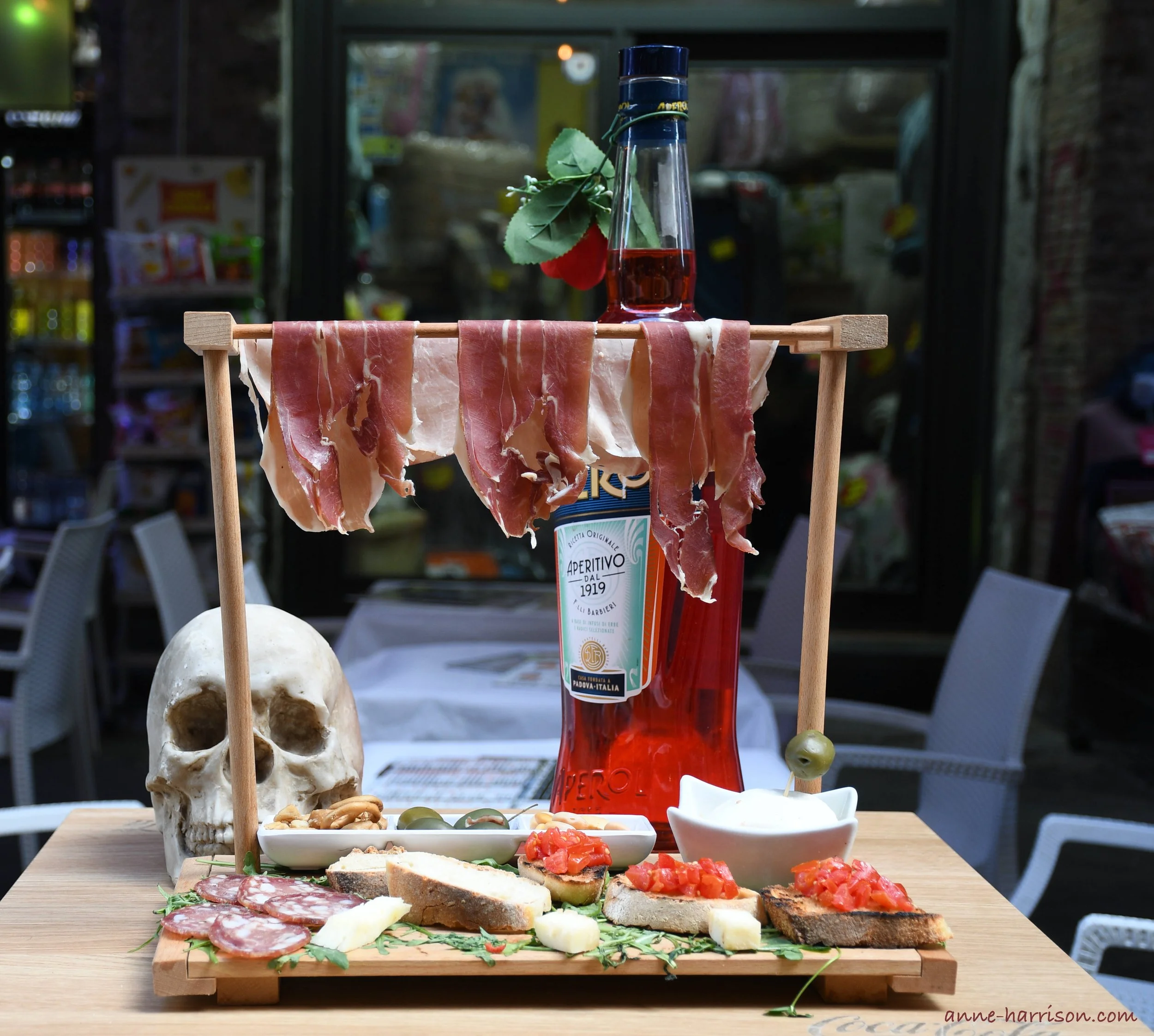
An intriguing display ourside a restaurant © A. Harrison
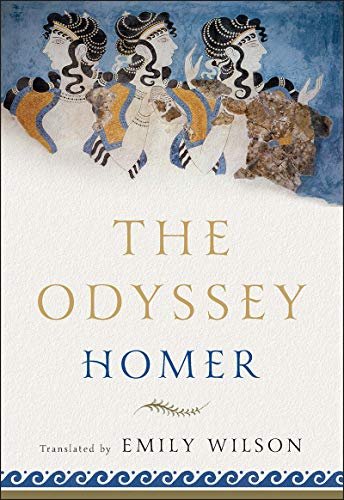
The Literary Traveller
What else to read when in Naples but Homer’s Odyssey? After all, this is one of the places where the sirens are believed to have lived and taunted Odysseus with their song.
Composed perhaps as long ago as the 8th C BCE, it has been argued that between the creation of the earlier The Iliad and The Odyssey one can see the evolution of human consciousness.
The Odyssey is a tale full of tales, around the enduring theme of what it means to be human and how to best fulfil one’s place in society, even when dragged in different directions by conflicting forces of society, family honour and individual needs (and, in Odyssey’s case, an angry god or three.)
Emily Wilson’s translation does justice to this poetic epic. The backdrop of the Mediterranean, her lands and her peoples, floods Homer’s writings – making it a perfect read when travelling in Southern Italy.
Enjoy my writing? Please subscribe here to follow my blog. Or perhaps you’d like to buy me a coffee? (Or a pony?)
If you like my photos please click either here or on the link in my header to buy (or simply browse) my photos. Or else, please click here to buy either my poetry or novel ebooks. I even have a YouTube channel. Thank you!
Plus, this post may contain affiliate links, from which I (potentially) earn a small commission.
