
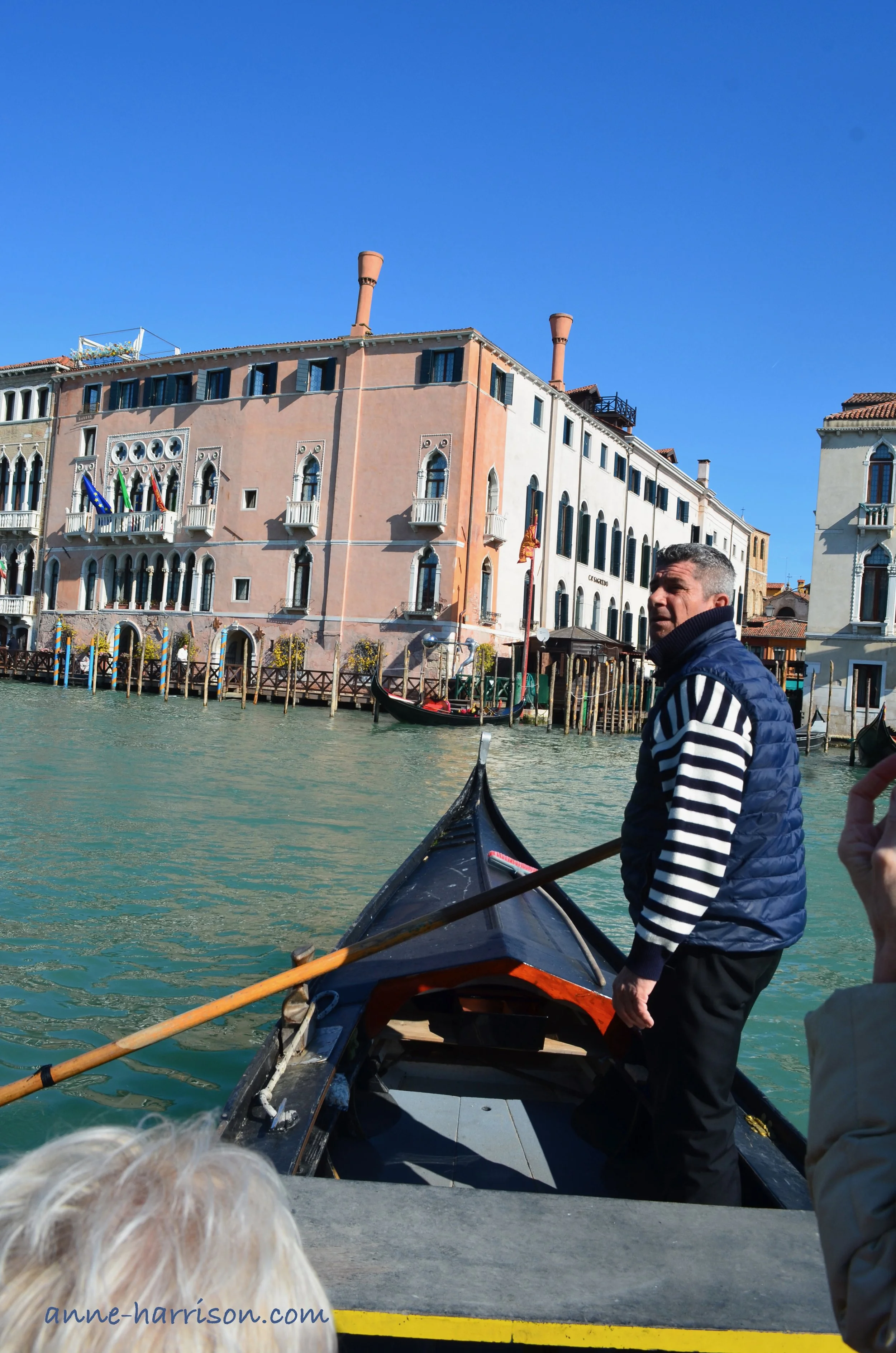
Crossing the Grand Canal © A. Harrison
One sunny morning when travel was possible and Venice was open to the world, I braved a traghetto. Wandering an ally near the Rialto I saw a sign marked 'traghetto' with an arrow pointing the way. I had no choice; I simply followed where it led.
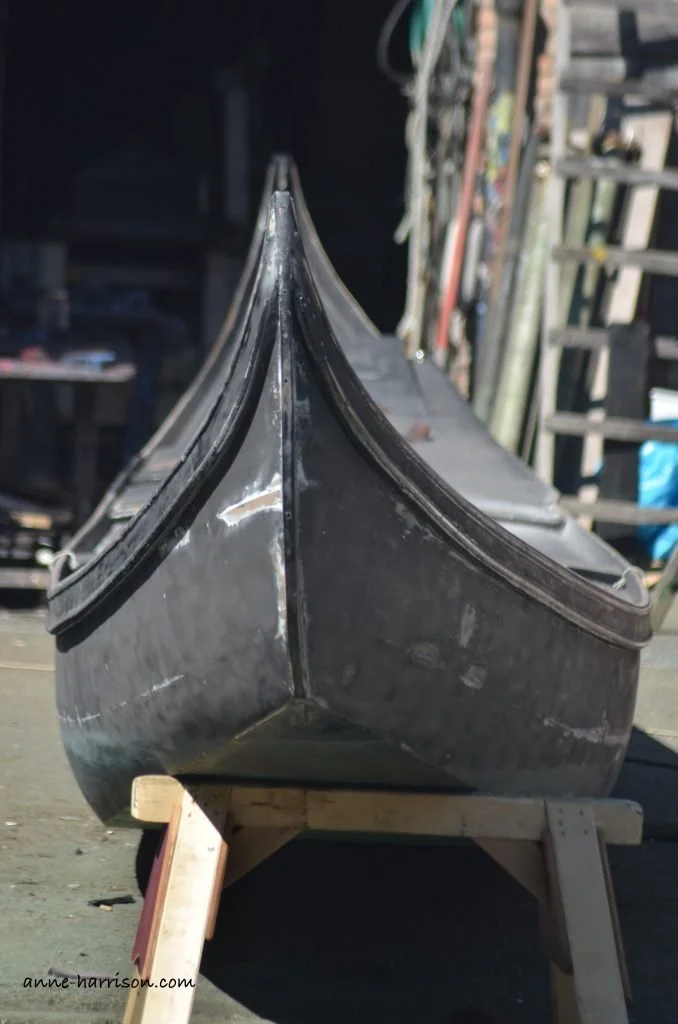
A gondola under repair © A. Harrison
Only four bridges offer pedestrians a way across the Grand Canal — up until 1854, the Rialto Bridge was the only one. Then the Accademia Bridge was built. The wooden structure was meant to be temporary with a stone bridge planned to replaced it, but its popularity enduring popularity means it remains today.
The traghetti offer an alternative. Gondolas are prohibitively expensive, but traghetti, which are gondolas without the frills, offer a quick trip across the Grand Canal for a few Euros.
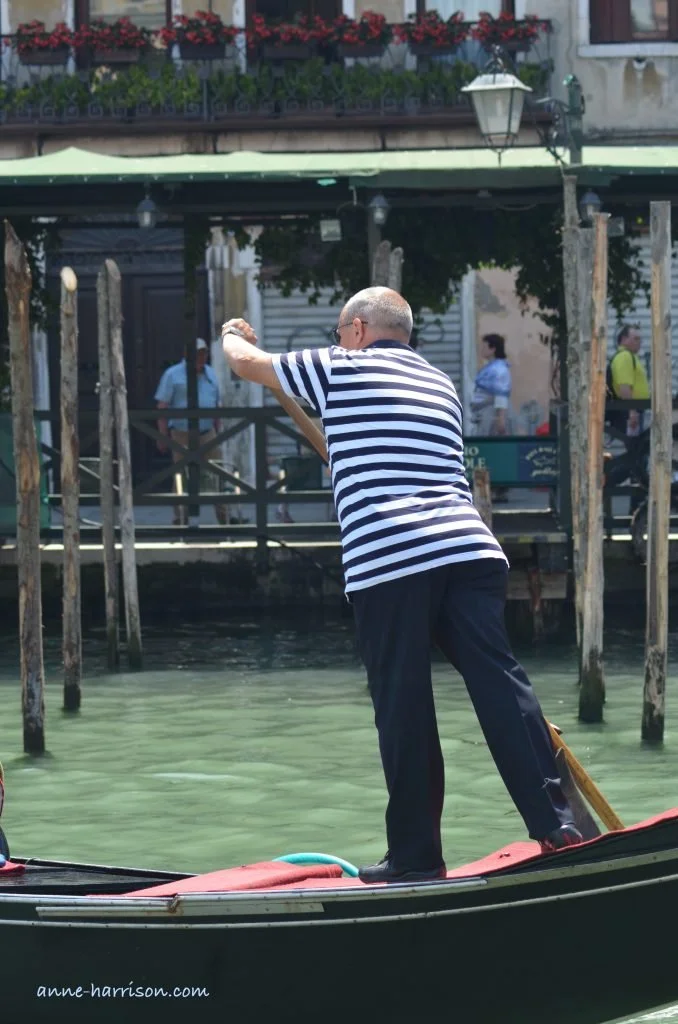
The skill of the (always male) gondolier (c) A. Harrison
Finding them is half the fun (as is finding anywhere in Venice! I have been known to leave a piazza by one corner and re-enter ten minutes later by another). They are marked as straight lines across the canal on a map, but maps and Venice rarely correlate. If you spy a boat going back and forth, and some people waiting on a small wooden platform, go for it.
Unlike a gondola, on a traghetti there is a boatman at either end. Another part of the adventure: although some people sit down, most locals stand. I suggest you try it, just for the fun of trying to take a photo standing in a boat rocking in the wash from other passing vessels (hence my rather crooked first photo!)
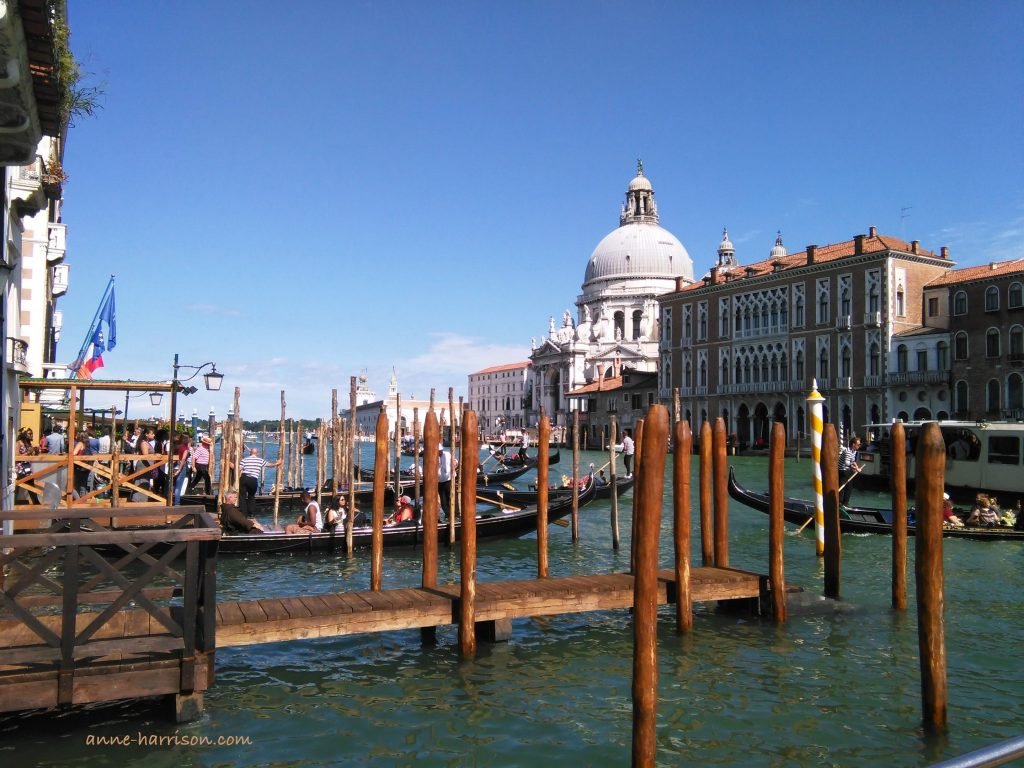
The magic of the Grand Canal © A. Harrison
Enjoy my writing? Please subscribe here to follow my blog. Or perhaps you’d like to buy me a coffee? (Or a pony?)
If you like my photos please click either here or on the link in my header to buy (or simply browse) my photos. Or else, please click here to buy either my poetry or novel ebooks. I even have a YouTube channel. Thank you!
Plus, this post contains affiliate links, from which I (potentially) earn a small commission.
Some of my other blogs you may enjoy:
The marble quarries above Carrara have been mined from before the Romans. Both the Roman Forum and Michelangelo’s David used marble from here.