
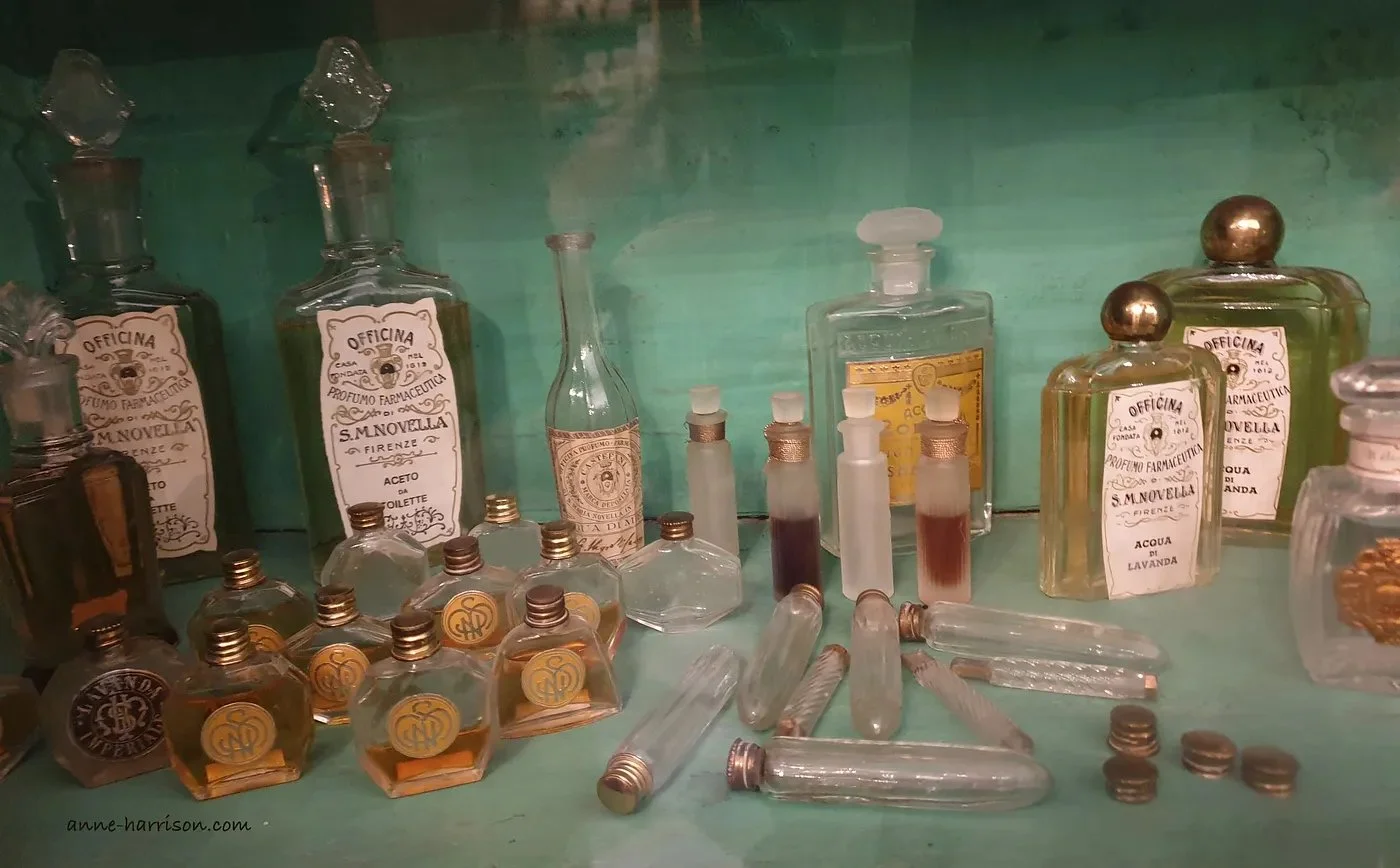
Old bottles and vials on display © A. Harrison
It took me two days to find the Profumo — Farmaceutica di Santa Maria Novella. Admittedly, I was jet-lagged, and the search was confounded by the fact four places on the one street have the same address — little wonder I gave up that first day.
In true existential fashion, however, I found the place next morning by heading off to find somewhere else completely different.
It was worth the effort. The oldest pharmacy in Italy, and possibly the oldest still-operating pharmacy in the world, the place was stunningly beautiful from the moment I pushed open the hard-to-find door to be bathed in perfumed air. (The third oldest pharmacy in Europe is the Franciscan Pharmacy in Dubrovnik dating to 1377; I’ve no idea where the second oldest pharmacy is. If anyone knows I would love to be enlightened.)
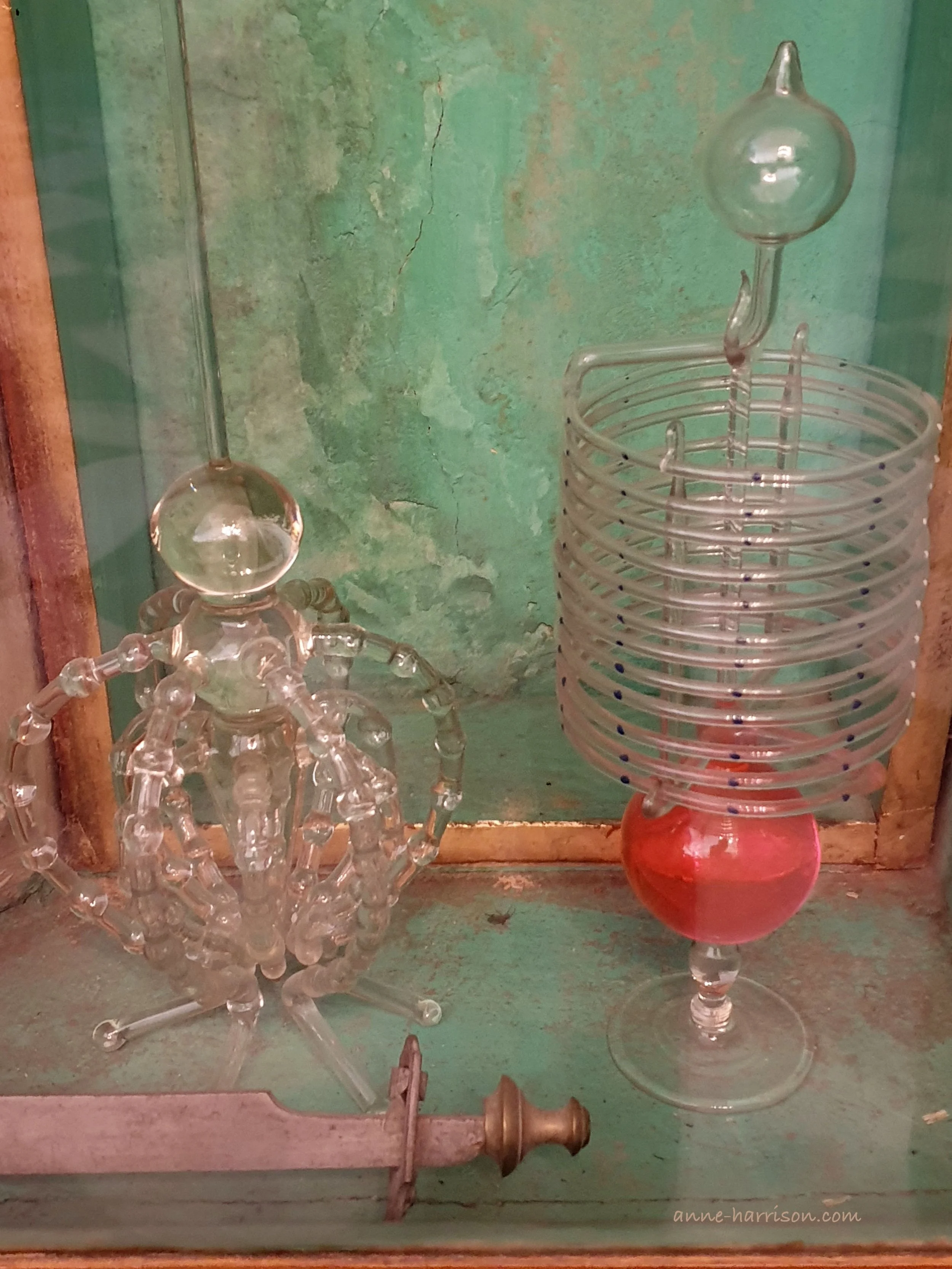
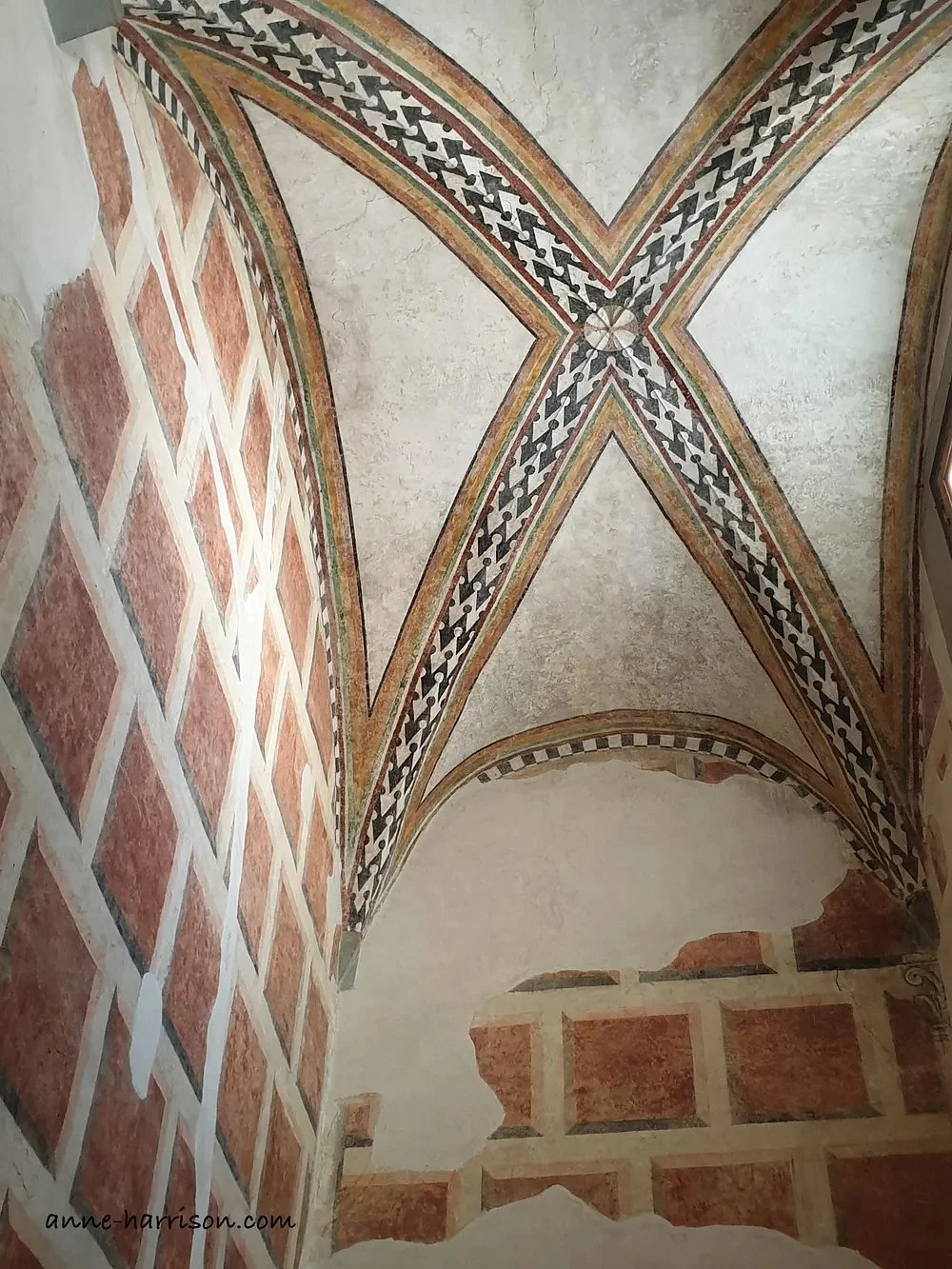
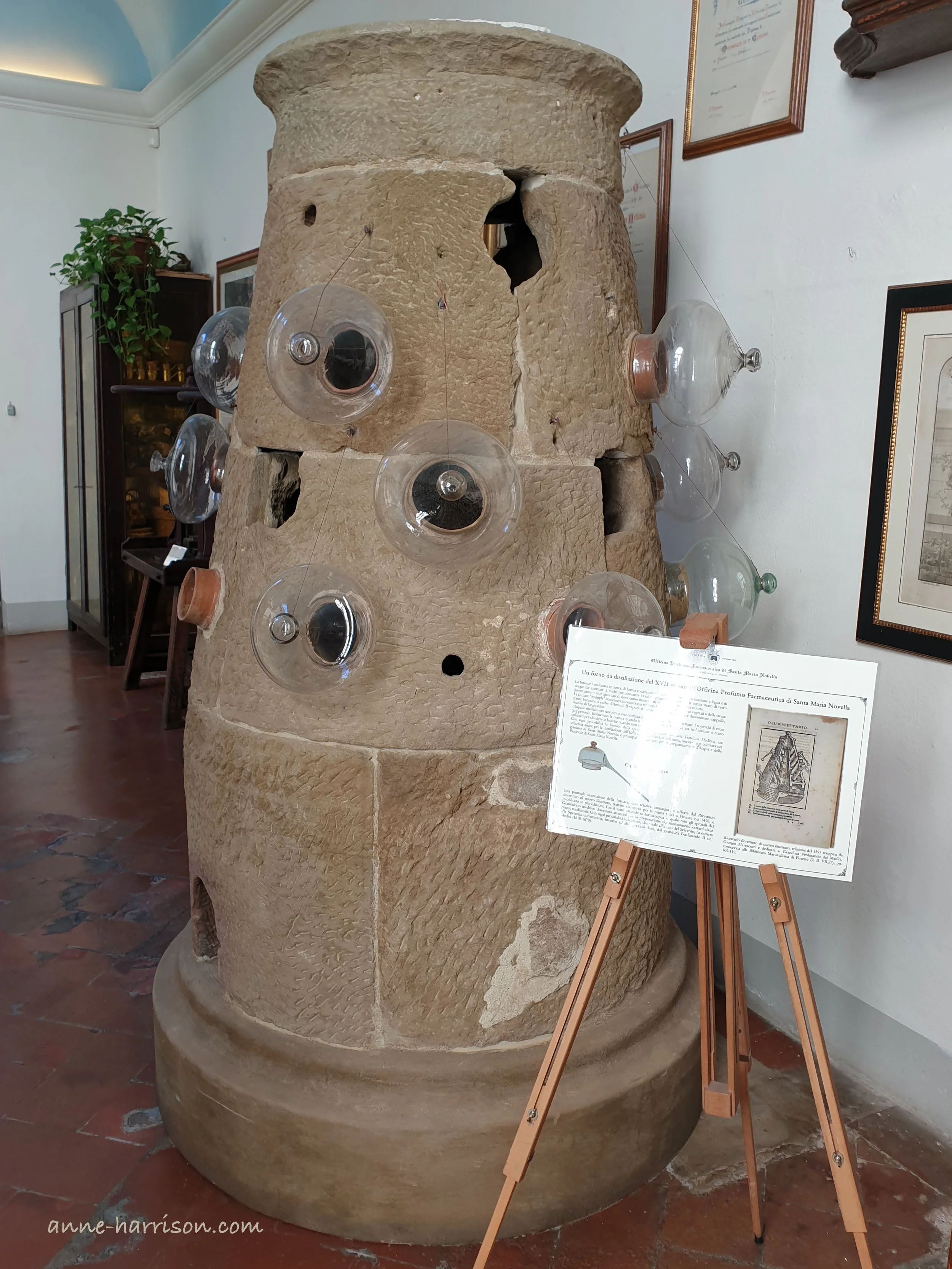
Typical for a medieval pharmacy, the Profumo — Farmaceutica di Santa Maria began life in a monastery, the Basilica of Santa Maria Novella. Marble floors stretch through a series of rooms, with high vaulted ceilings, stained glass windows, and fading frescos covering the walls and ceilings. One room displays old apothecary equipment; another has a section dedicated to treatments for our four-legged friends.
The Dominican monks of Santa Maria Novella began the pharmacy in 1212. On arriving in Florence, they converted the church (known then as the Santa Maria Delle Vigne) into a monastery, and some fifty years later commissioned the Basilica. They became famous for the lotions and salves made from the herbs, spices, and flowers growing in their medicinal garden and used in their infirmary, but it was not until nearly 400 years later that a shop for the public was opened, in 1612.
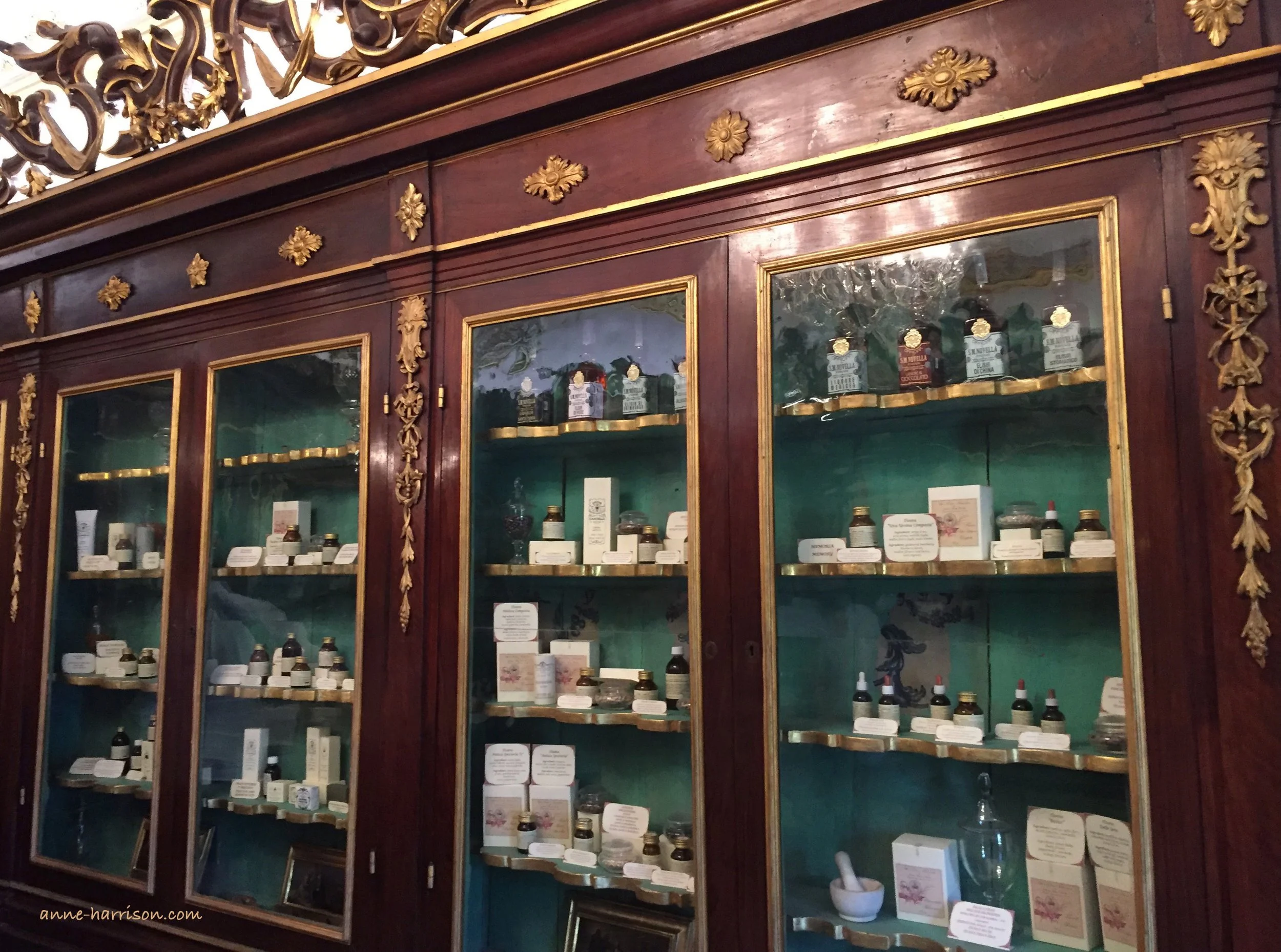
A beautiful old display case © A. Harrison
In between these times came the Black Death, when an estimated 70% of the population of Florence died. The monks made a rosewater distillate for ridding homes of the dreaded disease — the Acqua di Rose is still for sale as a perfume and a skin toner. They also distributed the Aceto dei Sette Ladri — the Vinegar of the Seven Thieves (sold as smelling salts). The name is derived from a group of seven men who doused themselves in vinegar before robbing corpses, believing the strong vinegar would protect them from the miasma thought to spread the plague.
More fame arose when the monks created a special perfume for Catherine de Medici to commemorate her marriage to Henry II. The result was Acqua Della Regina (Water of the Queen) — for the first time alcohol, and not vinegar nor olive oil, was used as the base for the perfume.
What I loved most were the rows of jars and bottles, many filled with lotions of different colours. There is one called Alkermes which is bright scarlet in colour — courtesy of dried and crushed ladybugs. Once given to new mothers to help recover from labour pains (possibly aided by the alcohol content) it is now used as natural food colourant, especially for deserts such as Zuppa Inglese.
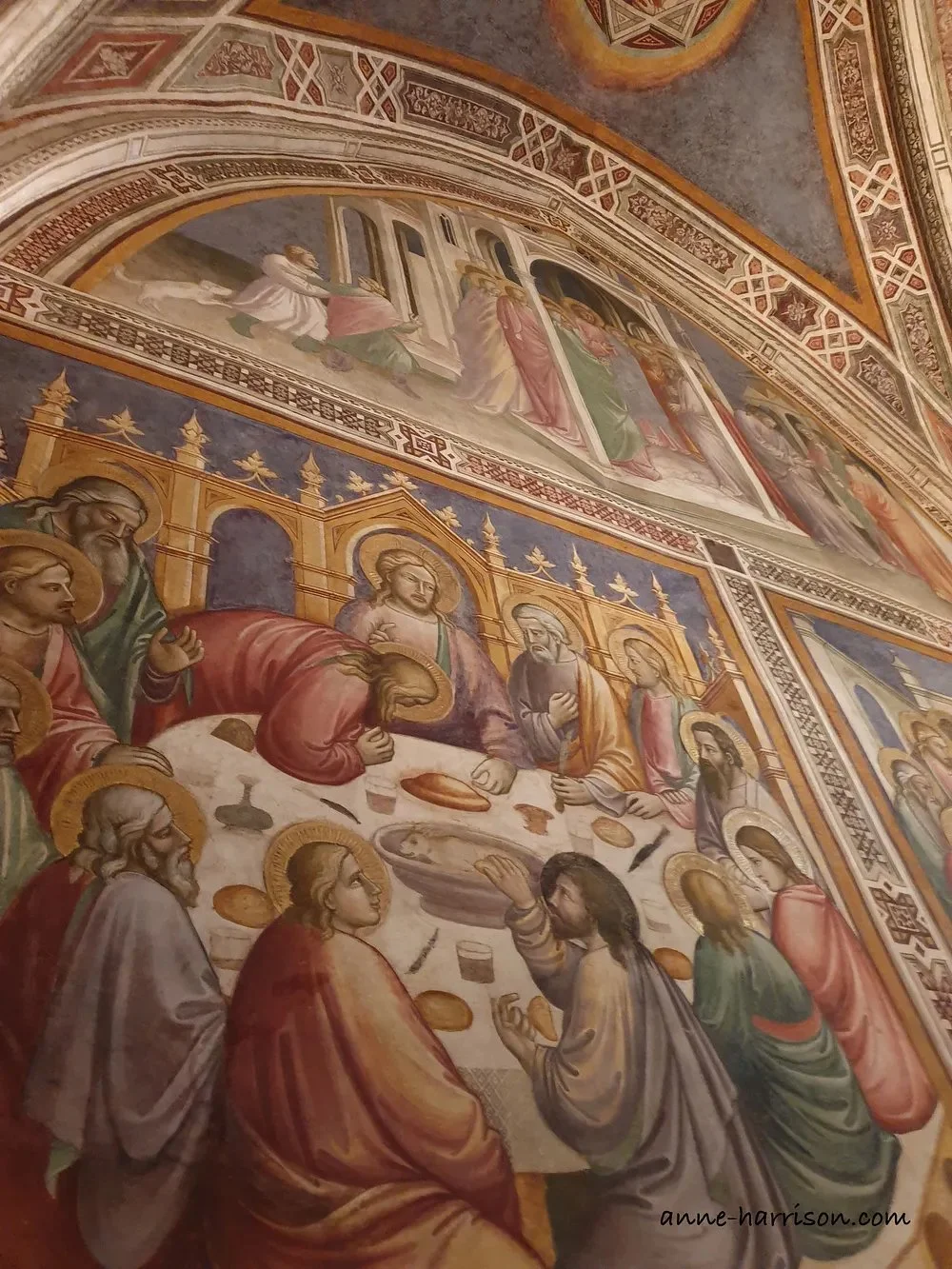
Another potion is a delicate golden colour — the Elisir di China — used to treat malaria, once the scourge of Italy. (The liqueur contains quinine.) Now it doubles as a post-dinner digestif.
Today, the Profumo — Farmaceutica di Santa Maria Novella retains an international fame and customer base which began with Catherine de Medici in the seventeenth century. It is no longer under the control of the monks, for in 1886 the Italian State confiscated church property. It passed to the nephew of the last Dominican who ran the farmaceutica, and remains within the family to this day.
Just keep an eye out for the door. The Profumo — Farmaceutica di Santa Maria Novella is at Via Della Scala, 16, near the Basilica. Three other doors along the street bear the same number, but there is a small sign (which proved of no help!) My advice — just keep walking. You’ll find it eventually, along with many other places along the way.
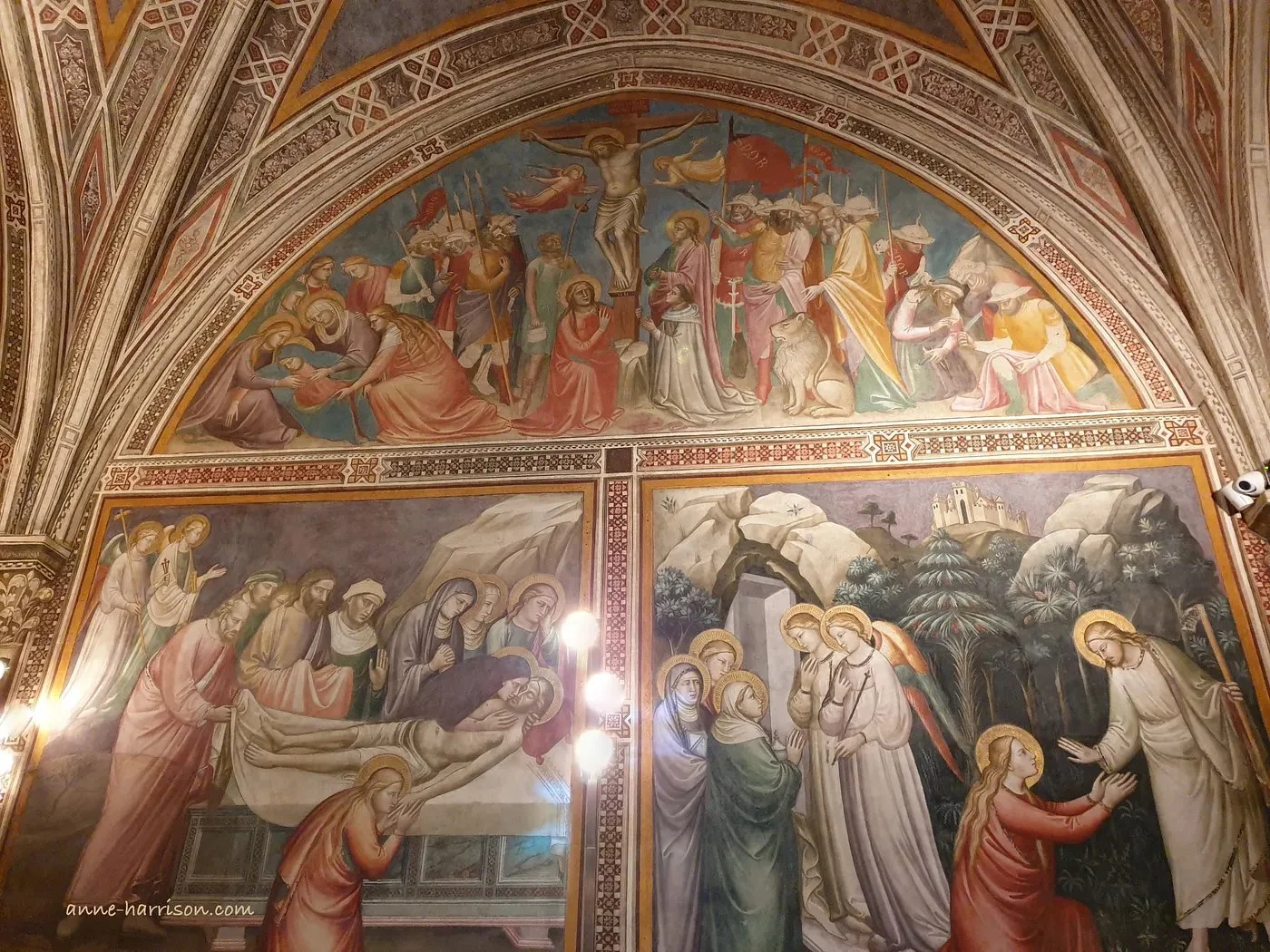
Fresco by Mariotto di Nardo, who painted much of the monastery from 1385- 1405. I love the well-behaved lion! © A. Harrison
Enjoy my writing? Please subscribe here to follow my blog. Or perhaps you’d like to buy me a coffee? (Or a pony?)
If you like my photos please click either here or on the link in my header to buy (or simply browse) my photos. Or else, please click here to buy either my poetry or novel ebooks. I even have a YouTube channel. Thank you!
Plus, this post may contain affiliate links, from which I (potentially) earn a small commission.
Some of My Other Blogs on Florence You May Enjoy:


Florence’s Profumo — Farmaceutica di Santa Maria Novella is Italy’s oldest pharmacy, and possibly the oldest still operating pharmacy in the world. Dating to 1221, it rose to prominence after creating a perfume for Catherine de Medici. which is still for sale.