
Lost on the Mekong Delta
A journey through my own heart of darkness
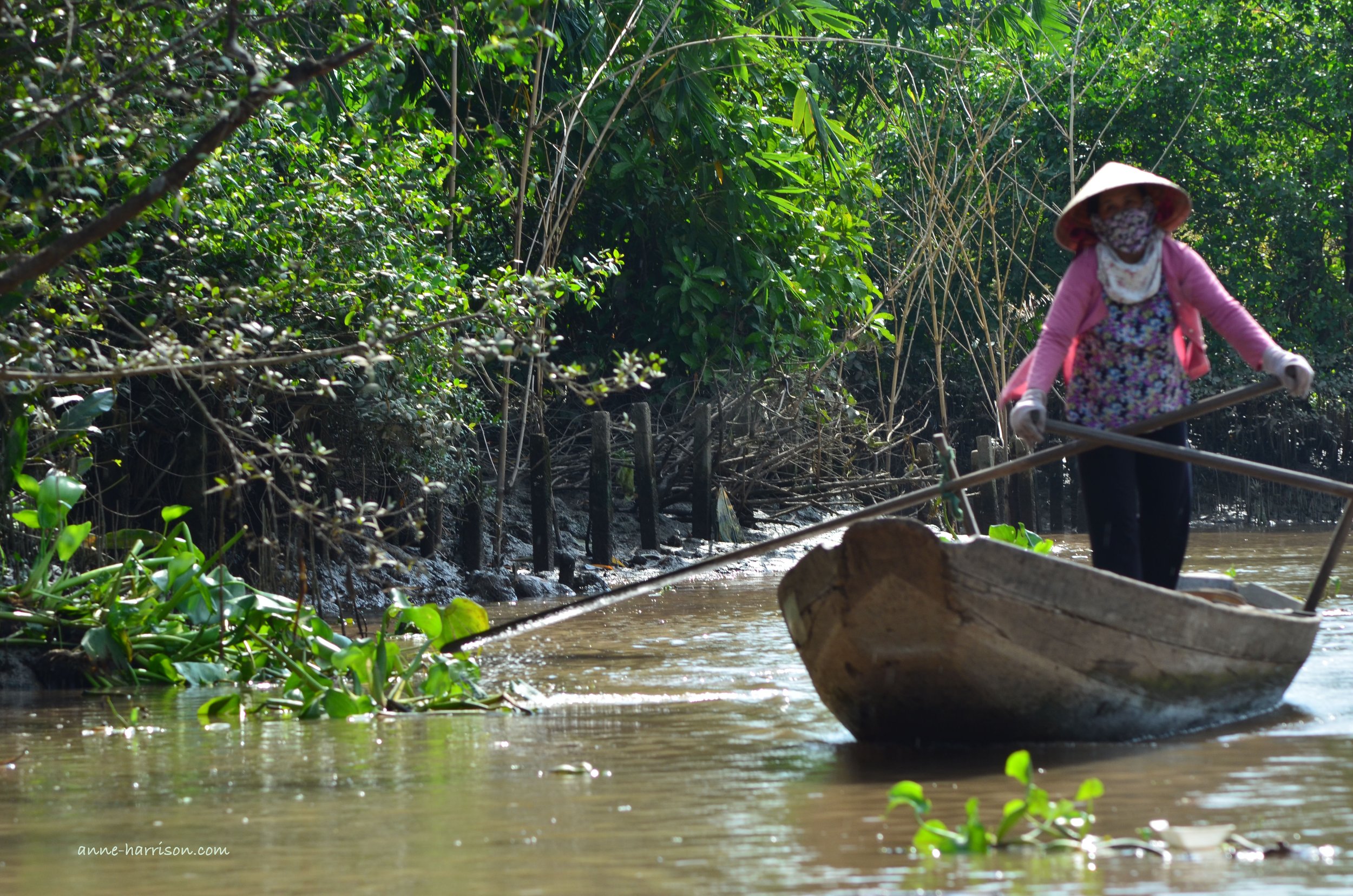
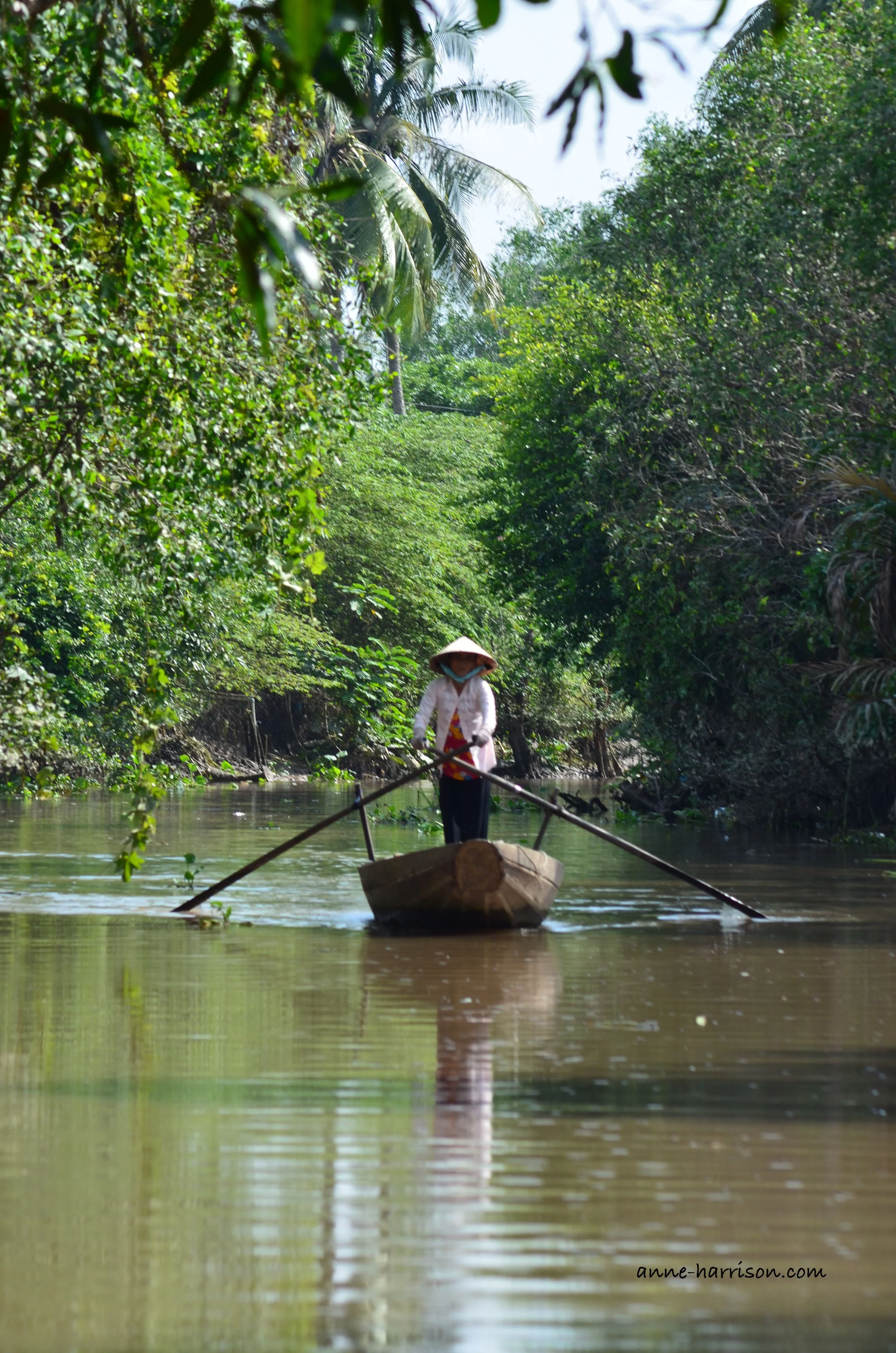
Patiently rowing a boat along a small backwater ©A. Harrison
The river washed away the humidity of the wet-season. A soft breeze drifted over the waters of the Mekong Delta, granting some relief from the heat. Our little wooden boat putted further and further upstream as a wall of green closed around us. Civilization seemed far away.
Only that morning I’d been wandering the chaos of Saigon. Before dawn the bikes start their chorus of horns. Even at that hour the streets are busy, and the place simply bursts with energy. It is a city totally alive — and totally exhausting with its humidity.
Now lush rice paddies stretched towards the horizon. In a scene unchanged with the centuries, water buffalo pulled plows as farmers in their conical hats bent under the sun, planting rice seedlings. Colourful ancestral shrines stood amongst the verdant fields.
Beside the road, all manner of things were for sale. Food, cold drinks, clothes; there were even places for repairing cars and motor bikes. We passed row upon row of stalls in the middle of apparently nowhere, and vast open sheds filled with people stopping for a quick bite.
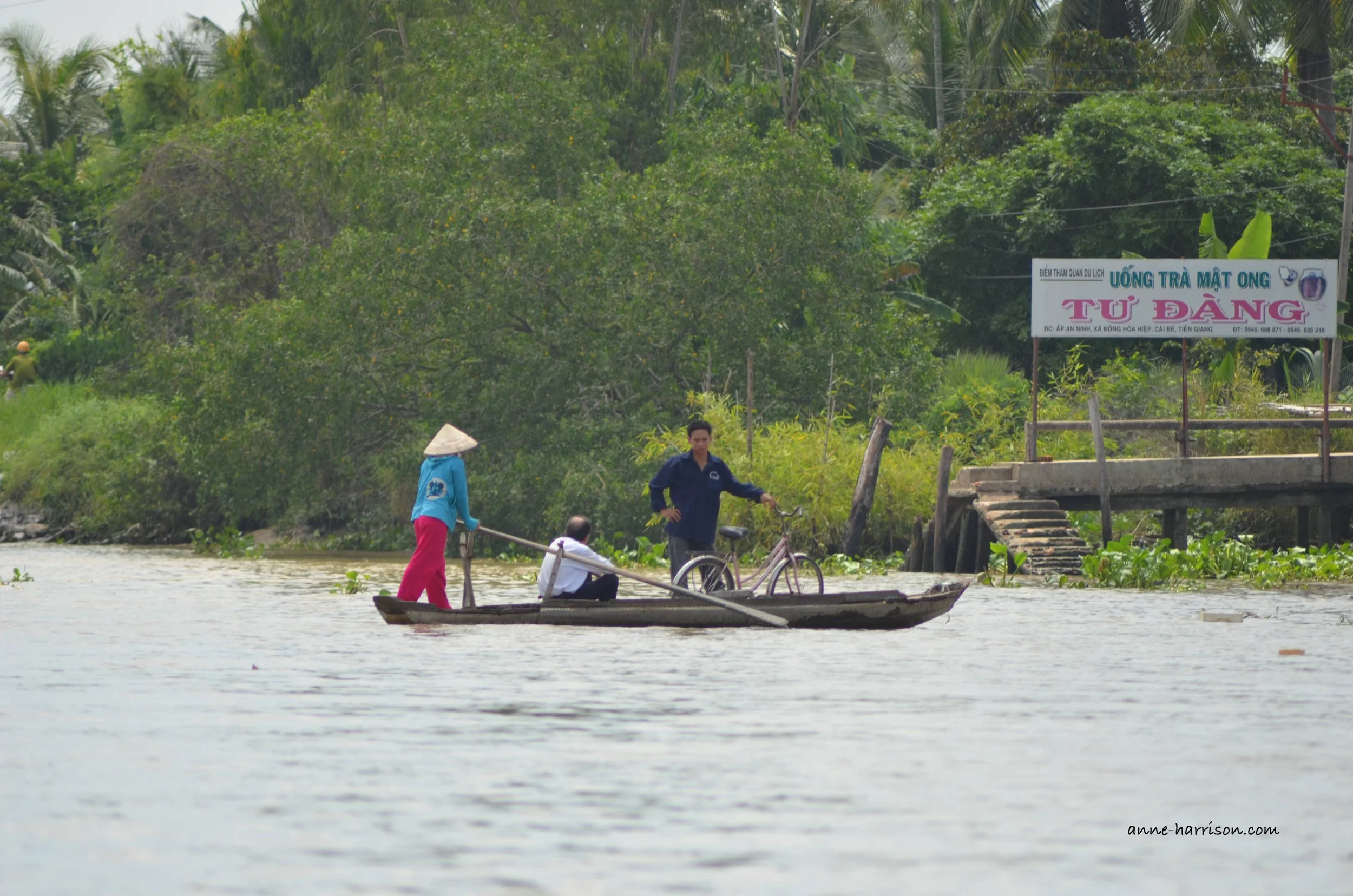
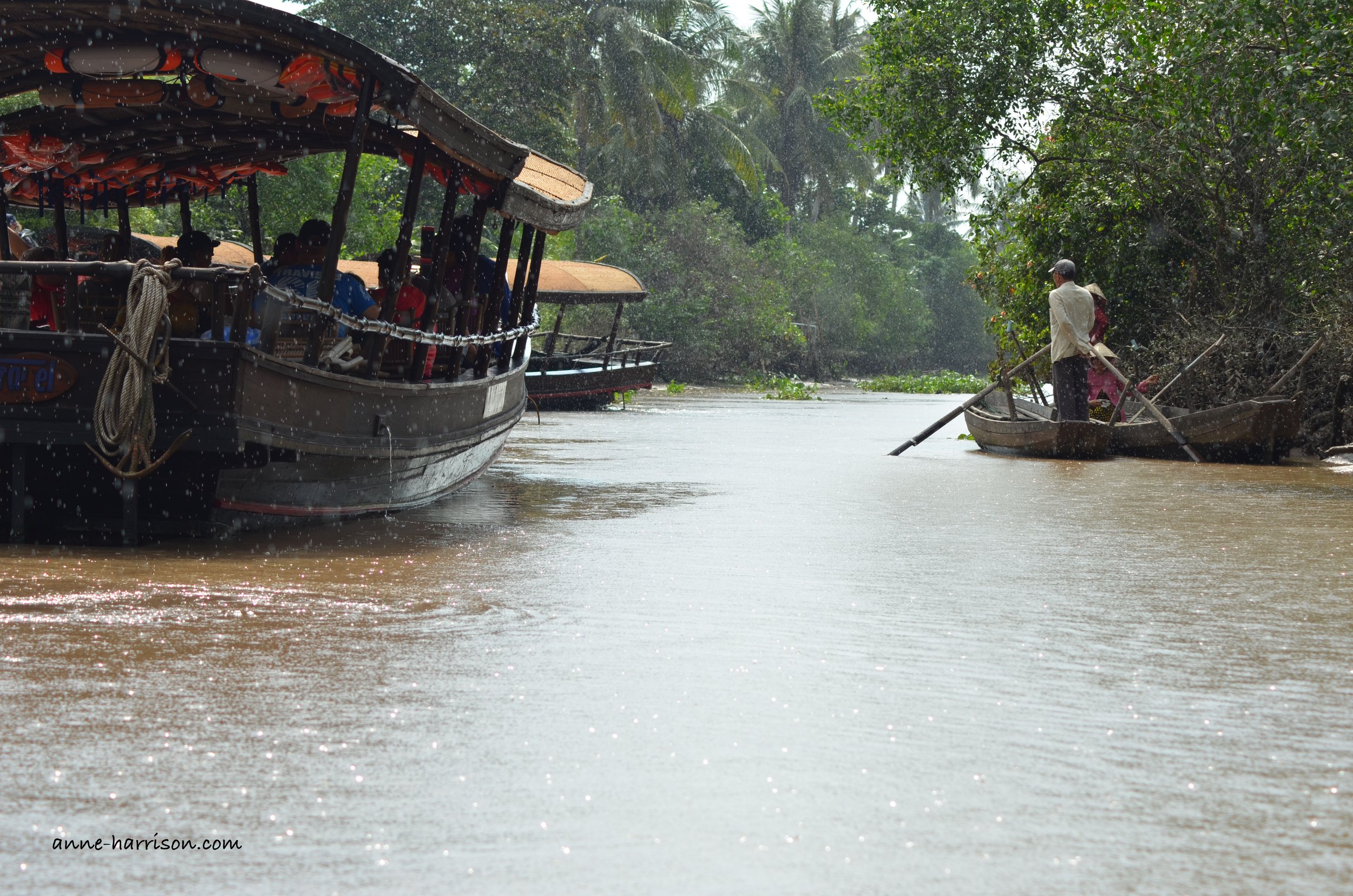
At My Tho we left the road for the water. By now the Mekong had become the Mekong Delta, a web of waterways crisscrossing some 60,000 square kms. After clambering into a long, skinny wooden boat, our driver shot us into the chaos on the water.
Soon, however, we left the main waterway behind. Local houses opened onto the water, and an occasional lane ran alongside the river. Kids splashed amongst the mangroves as women did their washing. Long boats were drawn up amongst the mangroves or tied to a hidden jetty. Not a car was to be heard. Fishing nets were strung through the water, or hung on trees, drying
The waterways became narrower and narrower. A maze of tiny fresh-nets opened off on either side of the river, leading further into the unknown. At times the river was so shallow the bottom was easily visible — hence the long, narrow boats with their shallow draft.
The heat of the day closed down around us. Aside from the river lapping against the boat, the buzz of a dragon-fly or the splash of a walking fish was all we could hear. Masses of hyacinths adorned the riverbanks, and vegetation smothered old houses and forgotten boat sheds. Kingfishers darted amongst the greenery.
We pulled up to a local nursery and met the 92-year-old owner, who showed us how to use a monkey bridge. This is essentially three poles of bamboo in the shape of a V: a narrow one for the base, and another on either side for guides. It is next to impossible to hold both handles at once, and crossing while balancing my camera bag proved a challenge! The bridges are so-called for monkeys can easily cross them — they often cover the bridges at dawn — yet larger animals, such as tigers, cannot.
I hope.
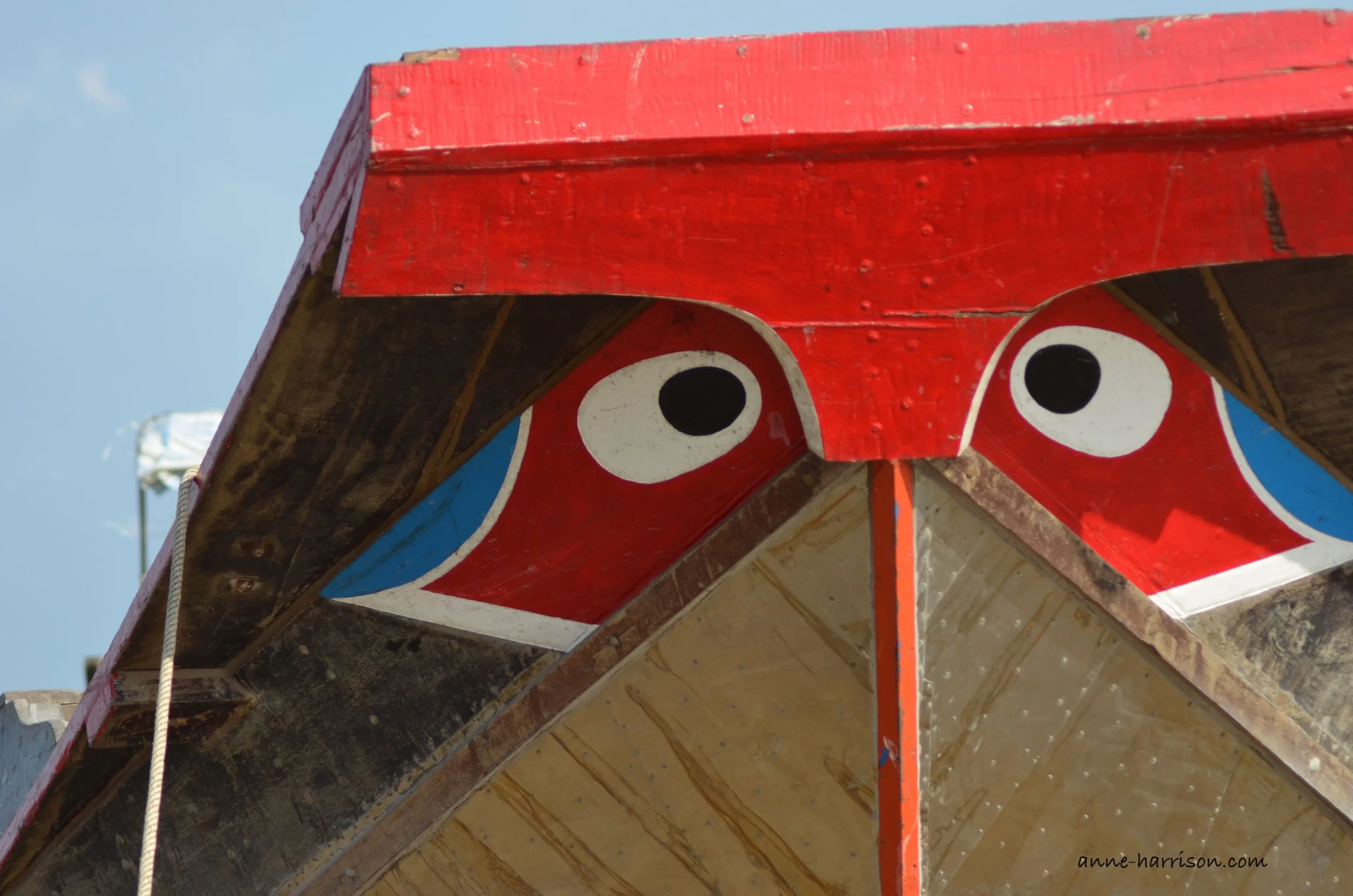
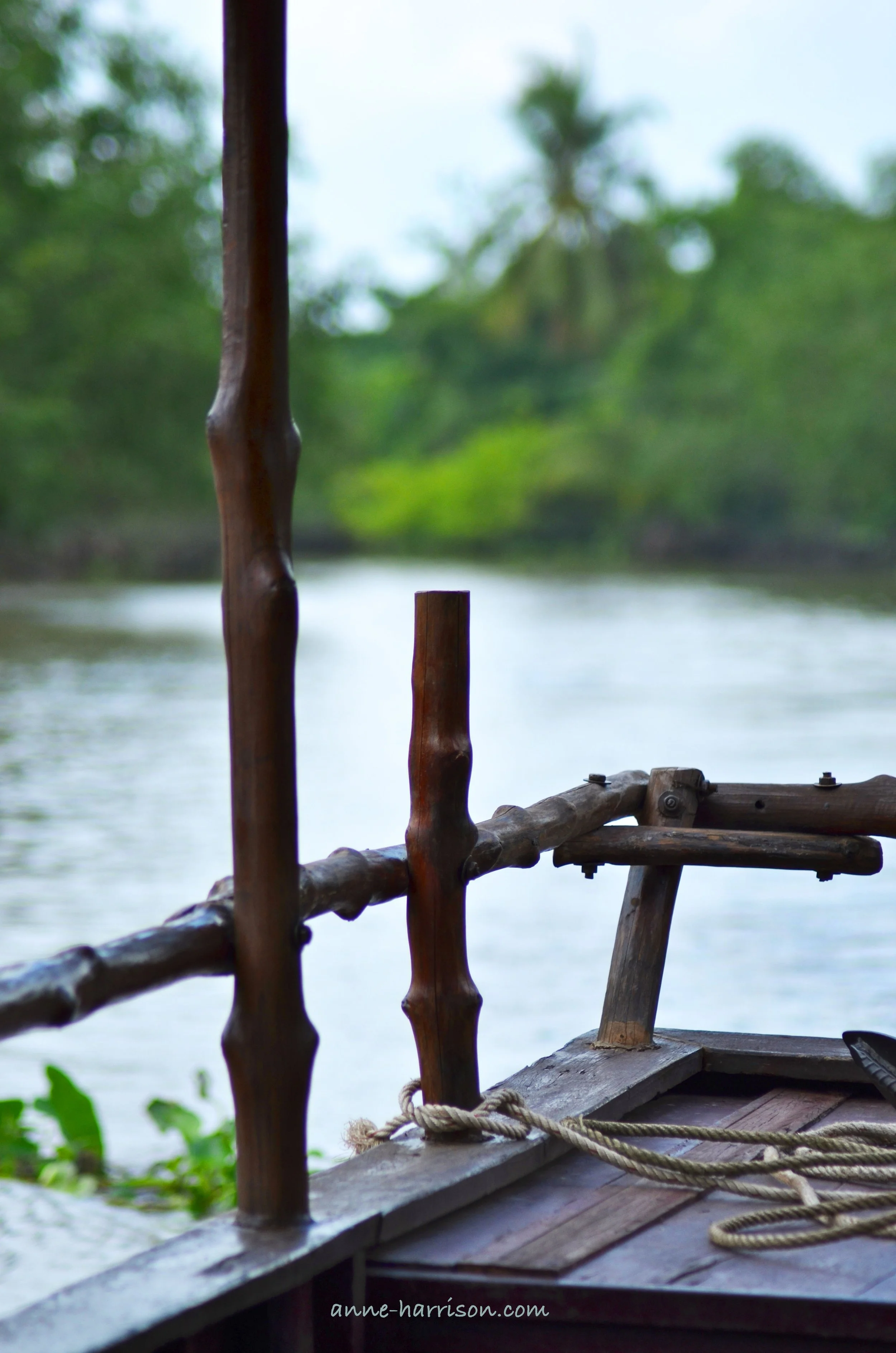
I will always find my way home ©A. Harrison
In the midst of nowhere, our boat pulled into the bank and we climbed up some stairs hidden in the undergrowth. These opened onto a wooden house where a local family had prepared lunch. Sitting on a spacious open verandah designed to catch the breezes, our meal began with deep-fried elephant fish (served upright, and held in place with chopsticks). The flesh had a very delicate flavour. Our host quickly shredded the fish with chopsticks, and used it to make rice paper rolls. Next came prawns, pork with rice, then a platter of fresh fruit.
Fully sated, we retired to some hammocks to relax for a few hours as the heat of the day faded. Half a dozen local dogs slept beneath us. As the others snoozed I went for a short stroll. Following a winding dirt path a stone’s throw from the river, I often couldn’t see the waters through the deep undergrowth. A turn in the path, and I was lost to view; it’s easy to imagine people wandering into the jungle never to be seen again.
We then headed further upstream, only this time in a tiny boat rowed by a lady who stood at the back wielding two oars, much like a gondolier. As we drifted along the heavens opened, and a tropical shower left us drenched within a few minutes. It just as quickly passed, and soon we sat steaming in the heat.
Somehow our guide led us through this web of waterways and back to the Mekong, where we came to Can Tho. Our hotel, The Victoria Can Tho, was a gracious building in true French colonial style. A water buffalo stood outside, and inside we sipped passion-fruit juice from ceramic cups.
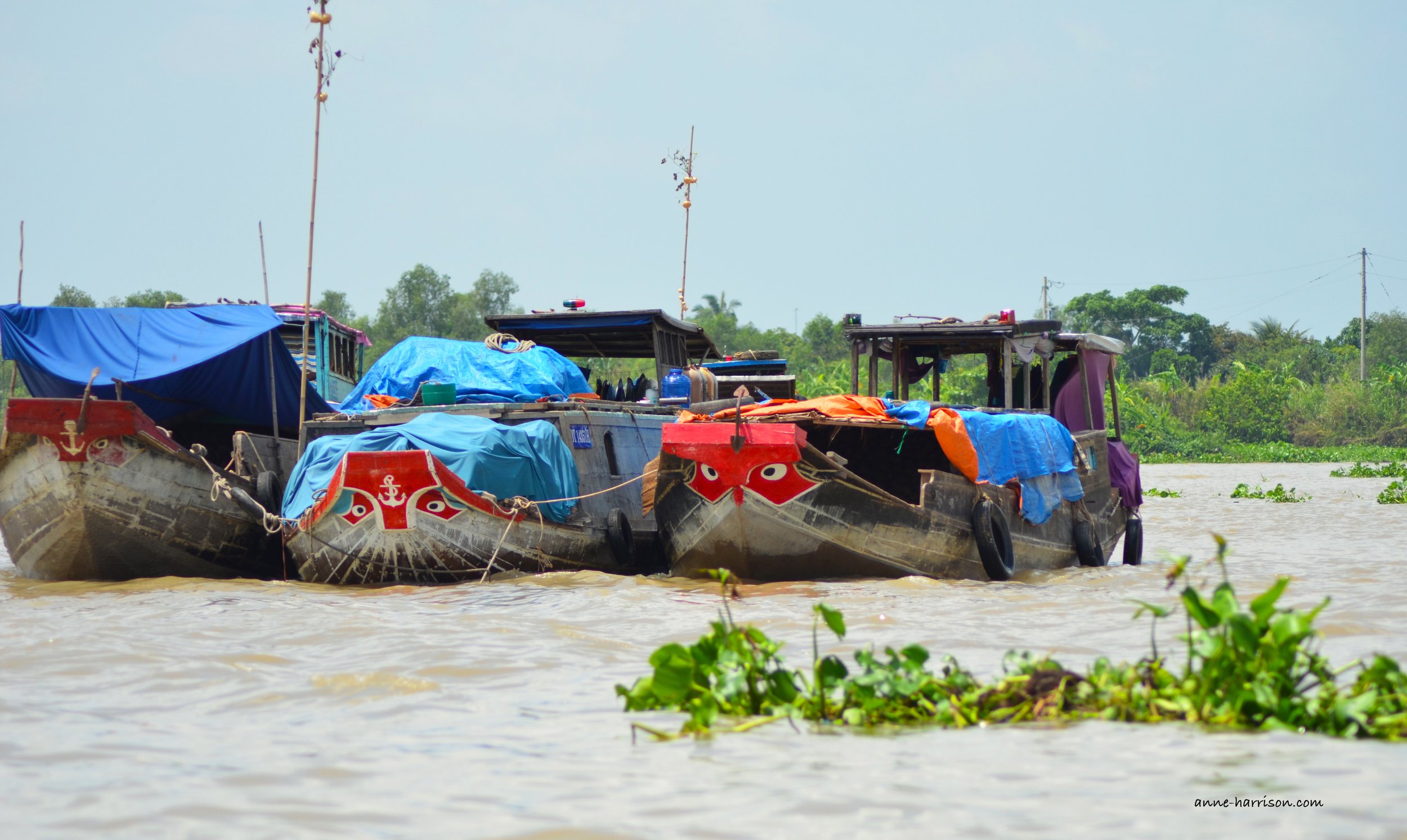
From our hotel, I strolled along the waterfront. Here the water way was impossibly wide, and boats of all sizes plied their trade. Old men stood fishing from the pier, and lovers wandered by, hand-in-hand.
As darkness fell, we caught the hotel ferry along the Mekong into town. The river was still busy. Fishing boats floated on the water, many nothing but dark shadows with no lights.
Can Tho bustles by night. The local markets stretch over a couple of streets. People pull up to the stalls on their motorbikes, buying things without ever dismounting. (Mice, apparently, a quite a speciality). Unlike larger cities, no one hassled us to buy, leaving us free to wander at our leisure. Many shops were still open, the owners sitting in the doorway eating their dinner as toddlers tumbled about their feet.
We sat on the rooftop balcony of our restaurant watching the lightning play in the distance. Soon the rain was upon us, thundering across the roof. Yet even as I sat watching the play of the tropical storm play, part of me was still in a small boat exploring the Mekong, lost in my own Vietnamese Heart Of Darkness.
Time to rest ©A. Harrison
The Literary Traveller
Heart of Darkness was written by Joseph Conrad in 1899, and has influenced the literary world ever since. Every time I read the work I’m amazed that Conrad was not fluent in English until his 20s (he was Polish), yet he remains one of the greatest writers in the English language.
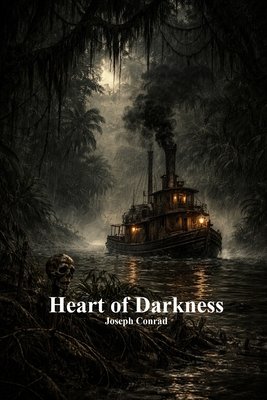
The novella follows Charles Marlow, who, while working for a Belgian company in the African interior, is sailing an un-named river in Africa. While exploring a narrow ravine, Marlow is horrified to find critically ill Africans who worked on the railroad and are now dying, forgotten. This is where he first hears of Mr. Kurtz, who is charge of an important trading post further up the river. On finally reaching Kurtz’s station, Marlow learns how the natives worship Kurtz, who has become seriously ill. As he discovers more, Marlow comes to suspect Kurtz has gone mad – a decision the reader must make for themselves.
Conrad penned Heart of Darkness at a time when Belgium was committing atrocities in their African colonies, and the novella, while contrasting the interplay between morality and power critiques not just Belgium but all European and English colonialism in Africa. Many of Conrad’s works depict the struggle for individuality in an indifferent and amoral world. While commenting on the racism inherent in Imperialsim, Conrad highlights how little difference there is between “civilisation” as perfected by England (he describes London as ‘the greatest town on Earth’), and the “savages” of Africa.
Conrad himself described Heart of Darkness as ‘a wild story’ of a journalist who becomes manager of a station in the (African) interior and makes himself worshipped by a tribe of natives.
The influence of Heart Of Darkness can be seen in the writings in a range of authors as well as other media – including the film Apocalypse Now, set in Vietnam and Cambodia
Enjoy my writing? Please subscribe here to follow my blog. Or perhaps you’d like to buy me a coffee? (Or a pony?)
If you like my photos please click either hereor on the link in my header to buy (or simply browse) my photos. Or else, please click here to buy either my poetry or novel ebooks. I even have a YouTube channel. Thank you!
Plus, this post may contain affiliate links, from which I (potentially) earn a small commission.
