
Desperately Seeking Dumplings
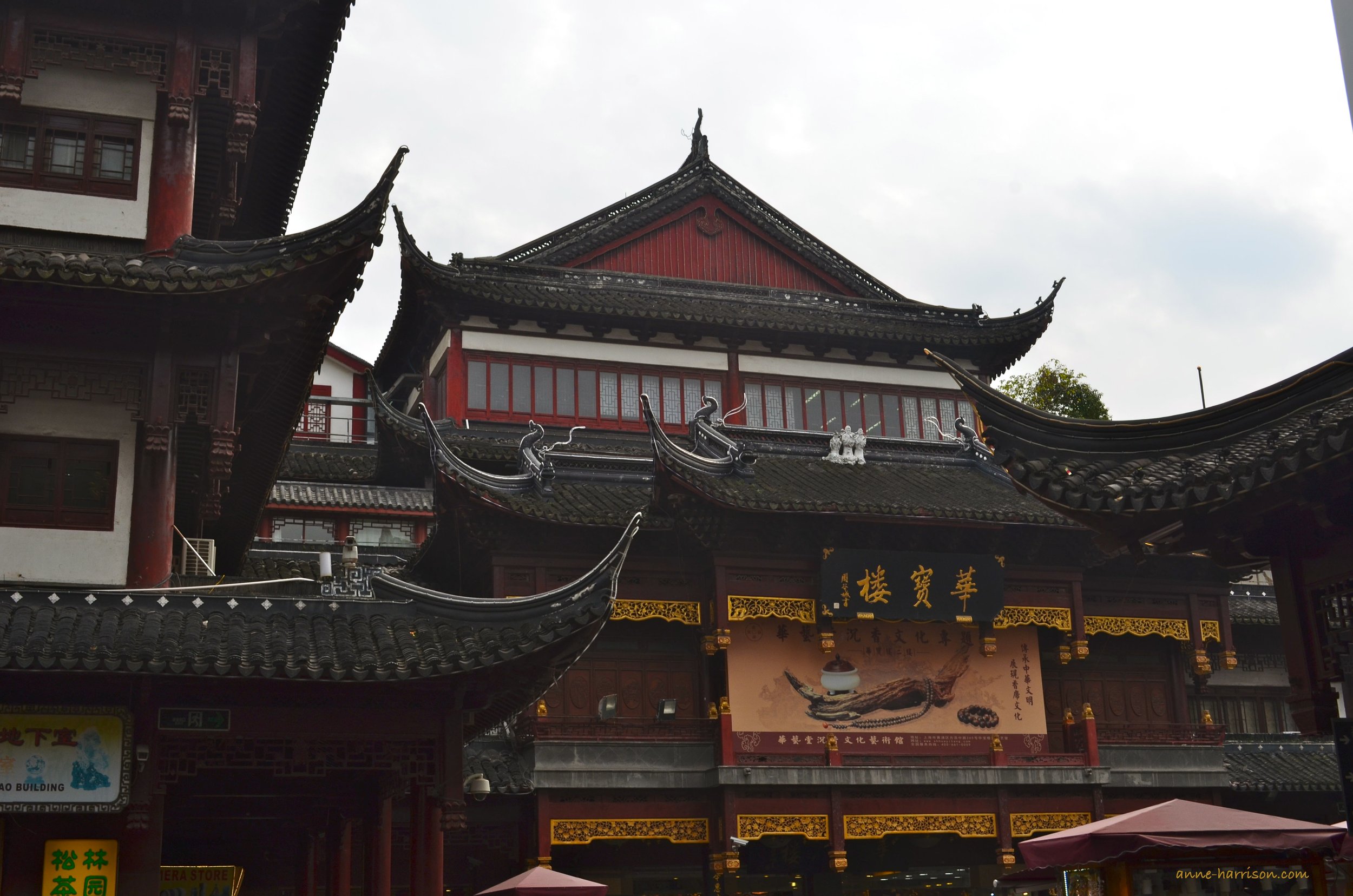
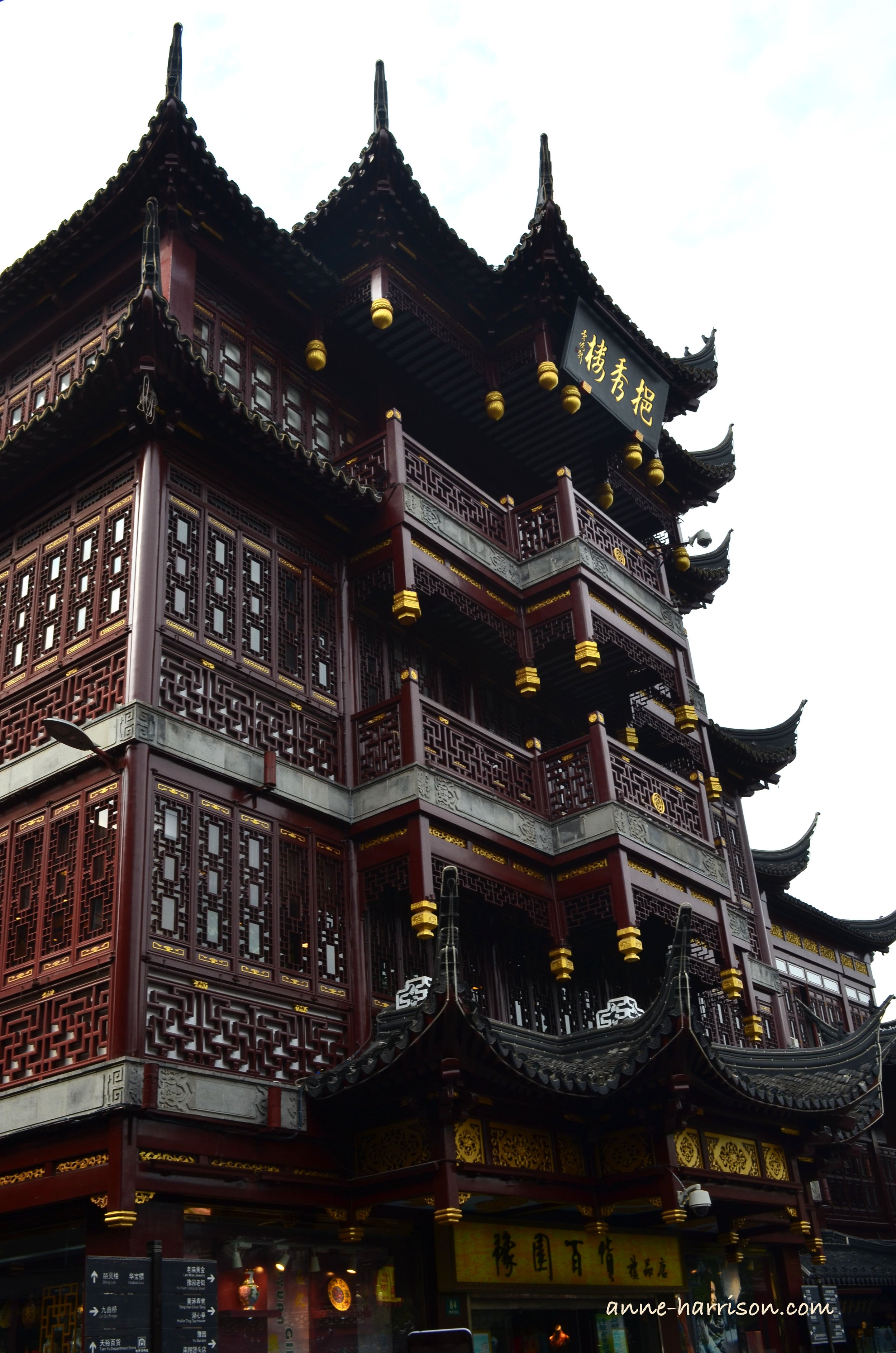
Classical buildings in the Yuyuan Bazaar © A. Harrison
The queue started a few streets away from the restaurant. In a city of 24 million, Nan Xiang dumplings reign supreme. A satellite restaurant in Hong Kong boasts a Michelin star, but the branch in the Yuyuan Bazaar encapsulates, for me, the paradox of Shanghai.
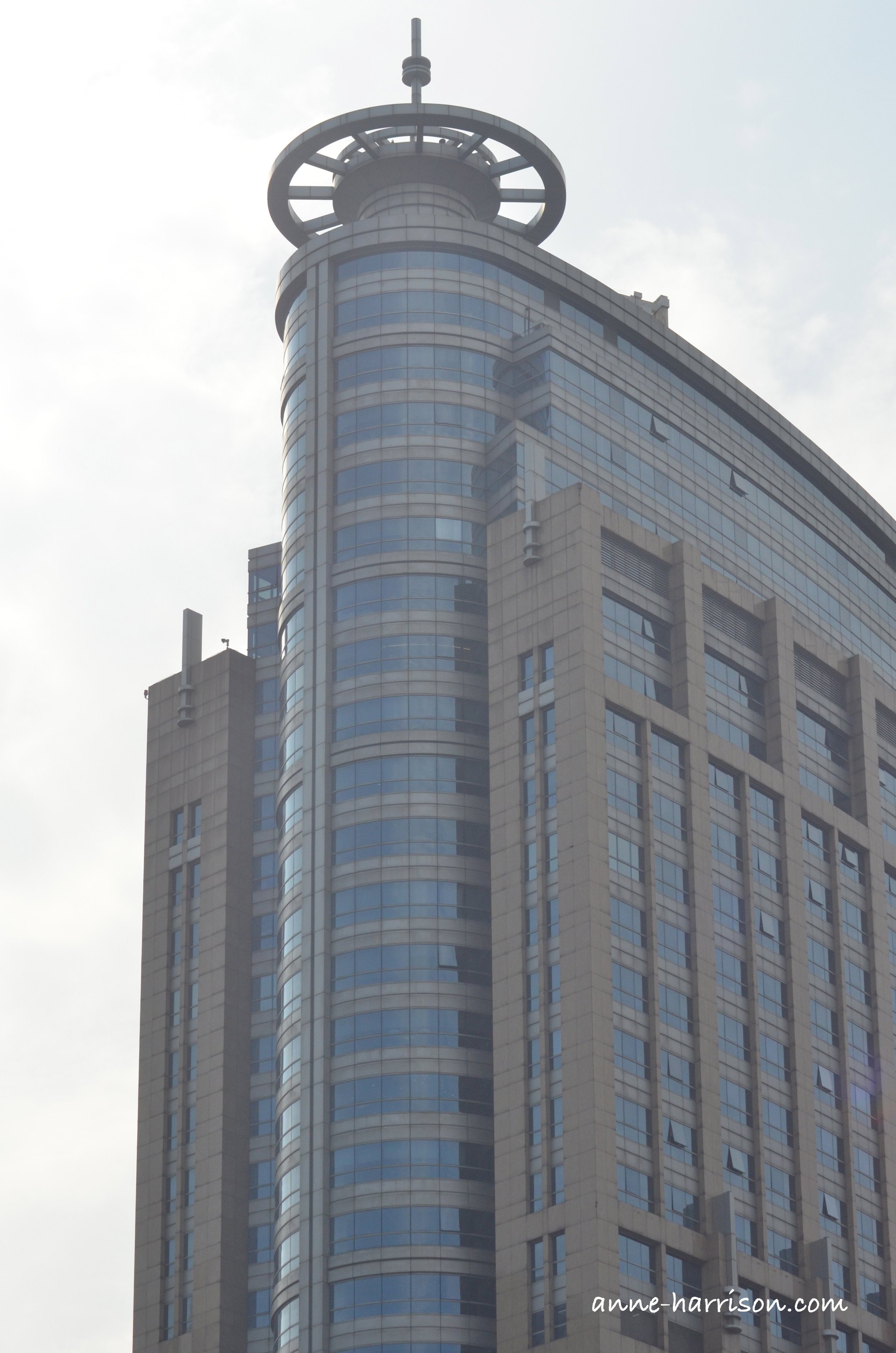
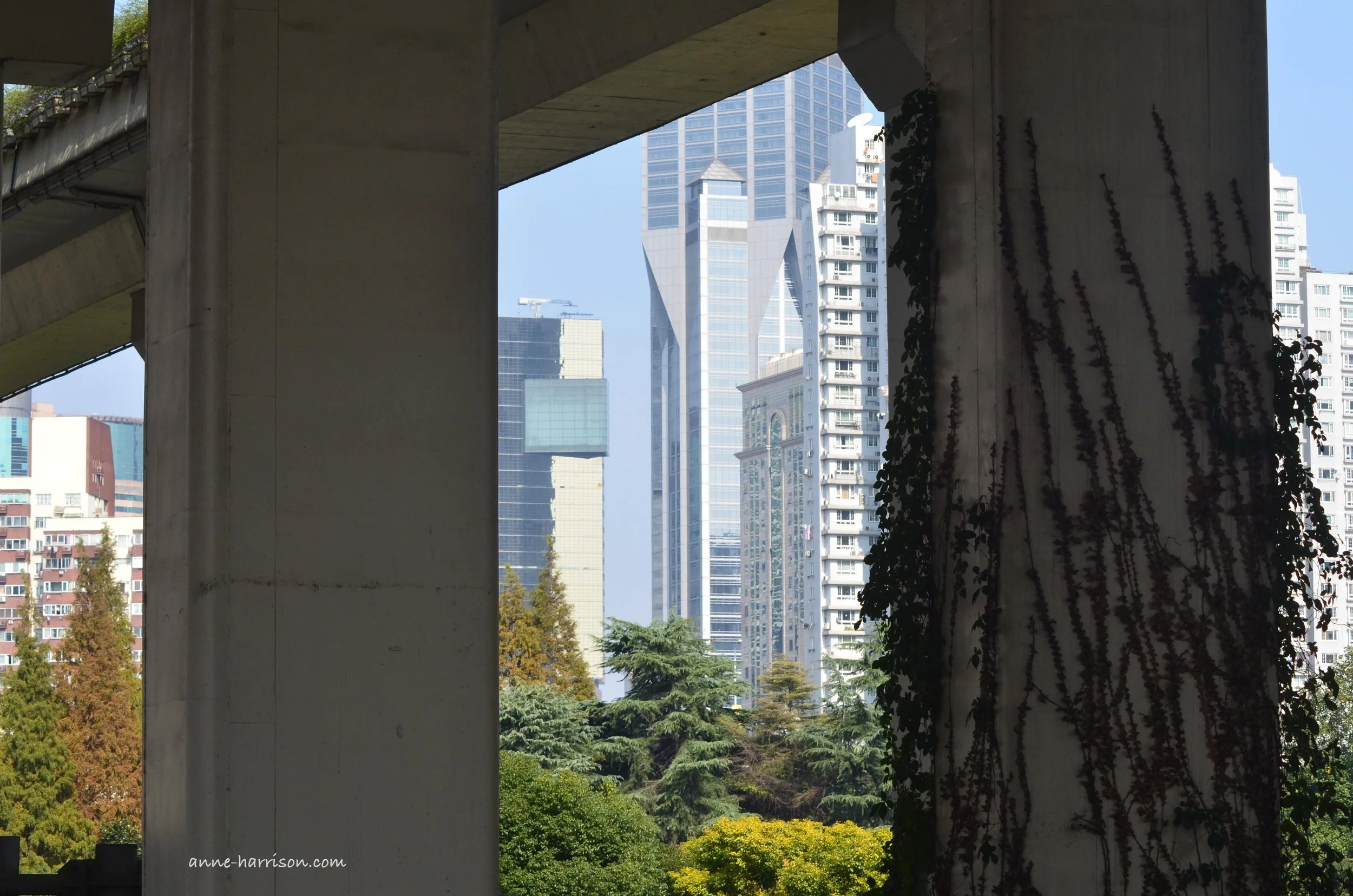
Once known as ‘The Pearl of the Orient’, I found Shanghai a meld of Blade Runner, Gotham City and The Jetsons. From the airport The Maglev, (the world’s fastest train), races at 430 km/hr into the city. The number of high-rises beggars imagination — my taxi drove through a sea of buildings scraping the sky. Multi-lane highways float through the air to merge with massive overpasses. I half-expected to see hover-jets. By midday the sun had become an orange ball floating behind a haze of smog.
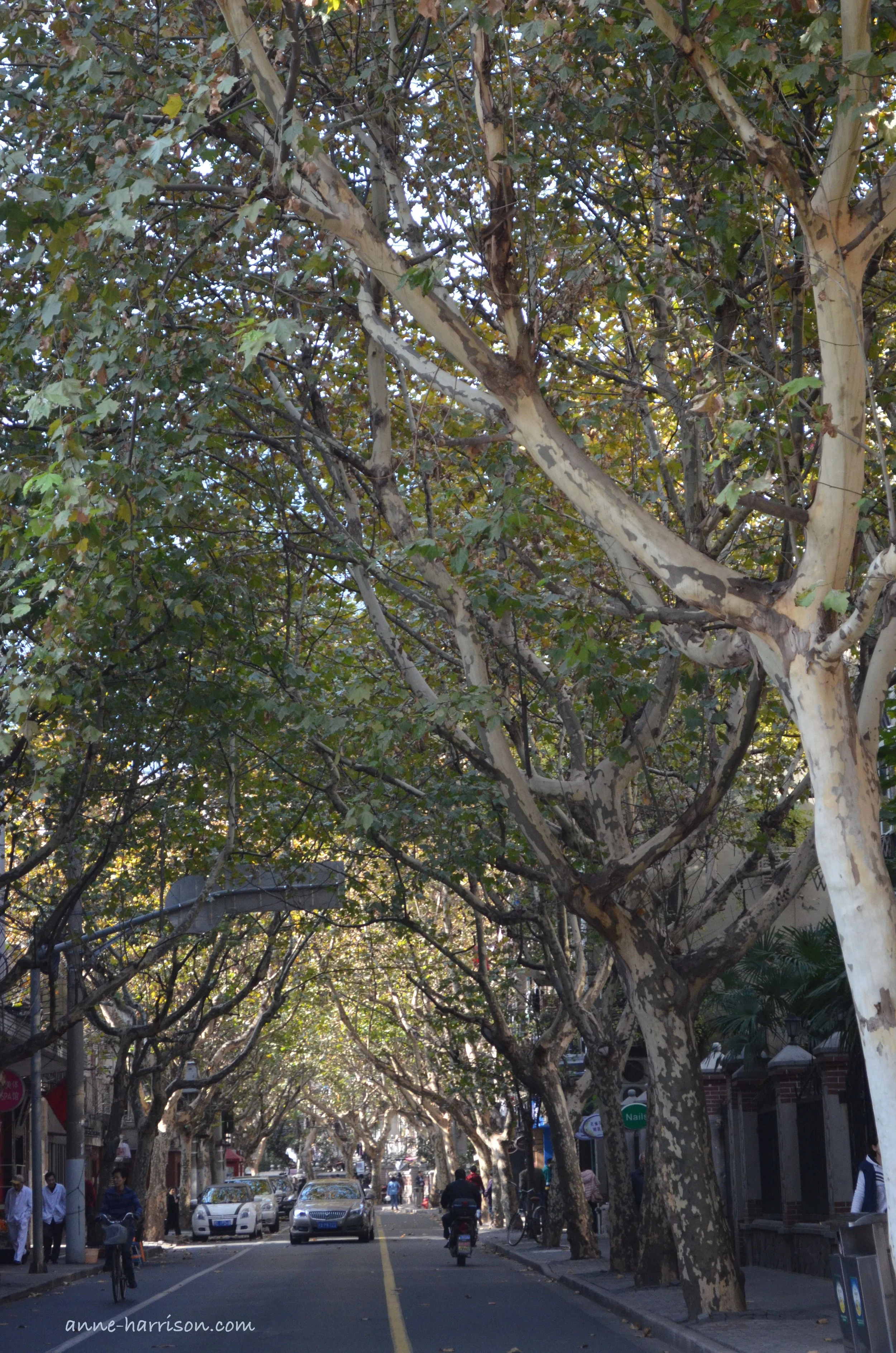
Shanghai is divided into districts, and the French Concession remains a gracious retreat amongst the modern chaos. The wide streets are lined with plane trees imported from France. Birdsong fills the air. Ruijun №2 is the main thoroughfare, from which a host of smaller streets run off into a maze of alleys. Few of these alleys appear on the map; Shanghai is so large that only the larger streets are named, and different maps show different streets. Indeed, maps prove more of a not-vary-helpful guide, with distances varying on each.
Compared to the rest of Shanghai the old buildings are tiny, standing only five or six stories high. Traffic runs at a sedate flow, and I actually managed to cross the road without taking my life into my hands. Many of the motorbikes are electrical, charged in the street via dubious extension cords connected to the myriad of wires overhead. Bike-pulled carts amble by, the driver ringing a bell for offerings of cardboard.
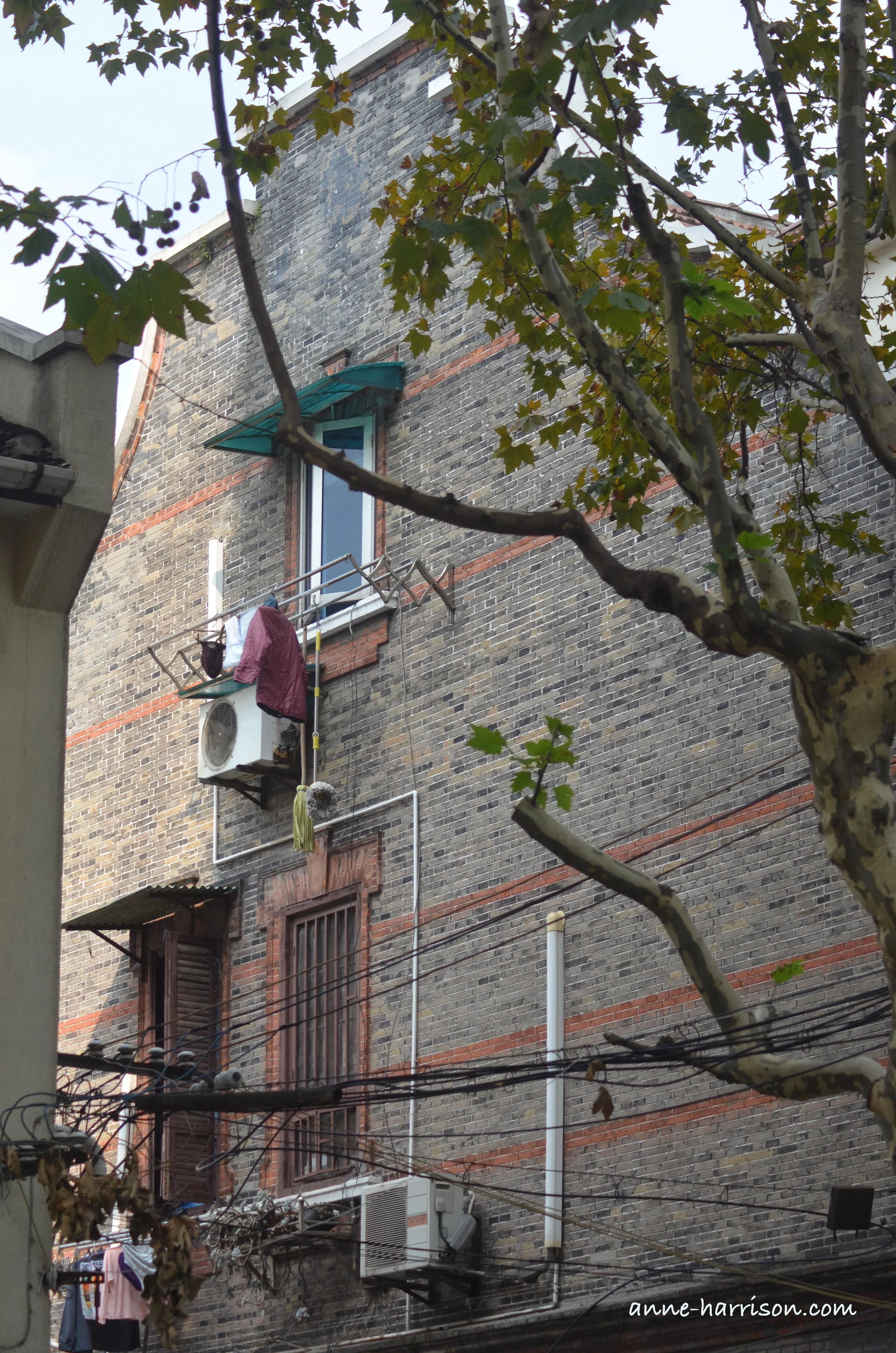
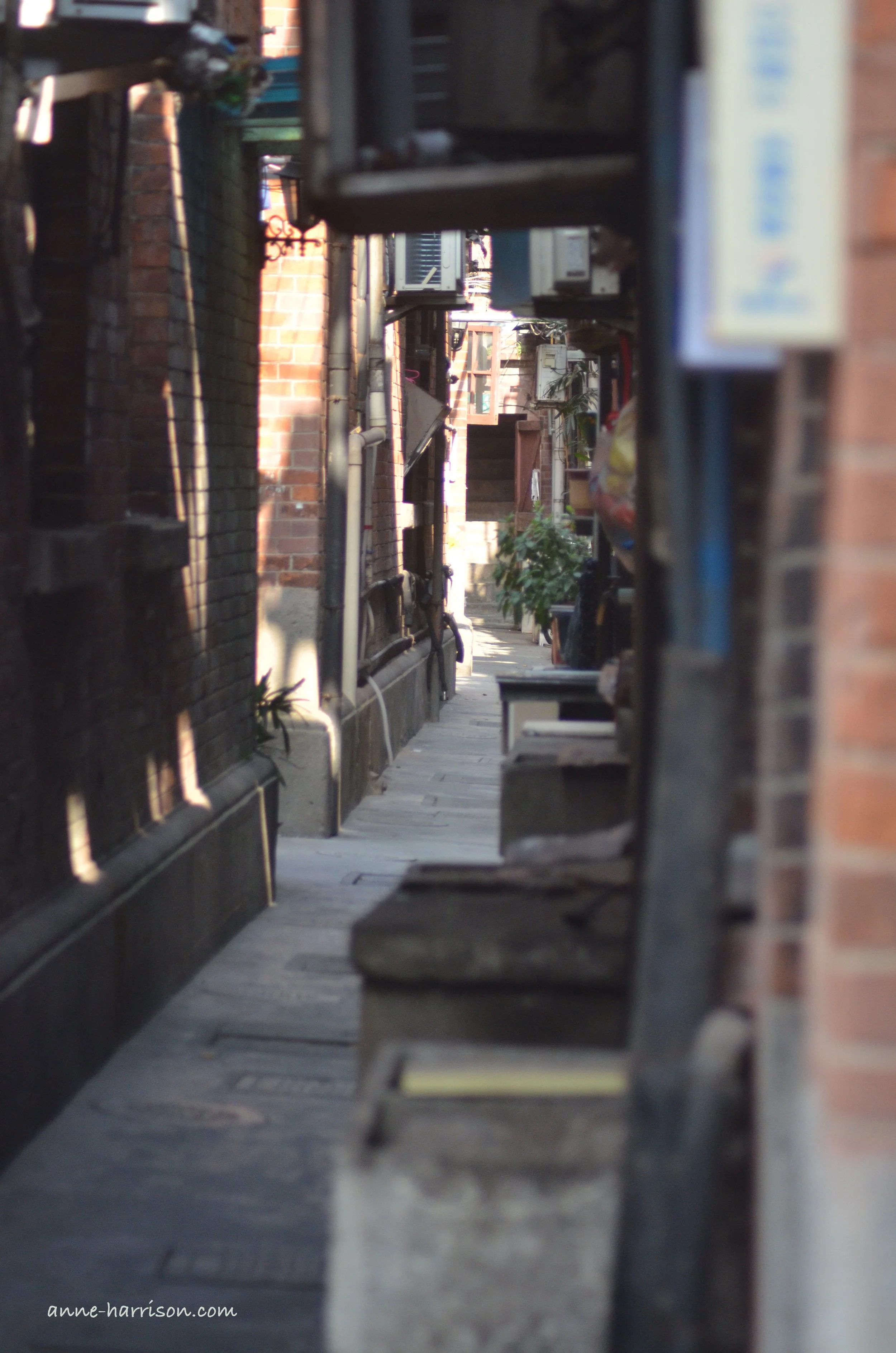
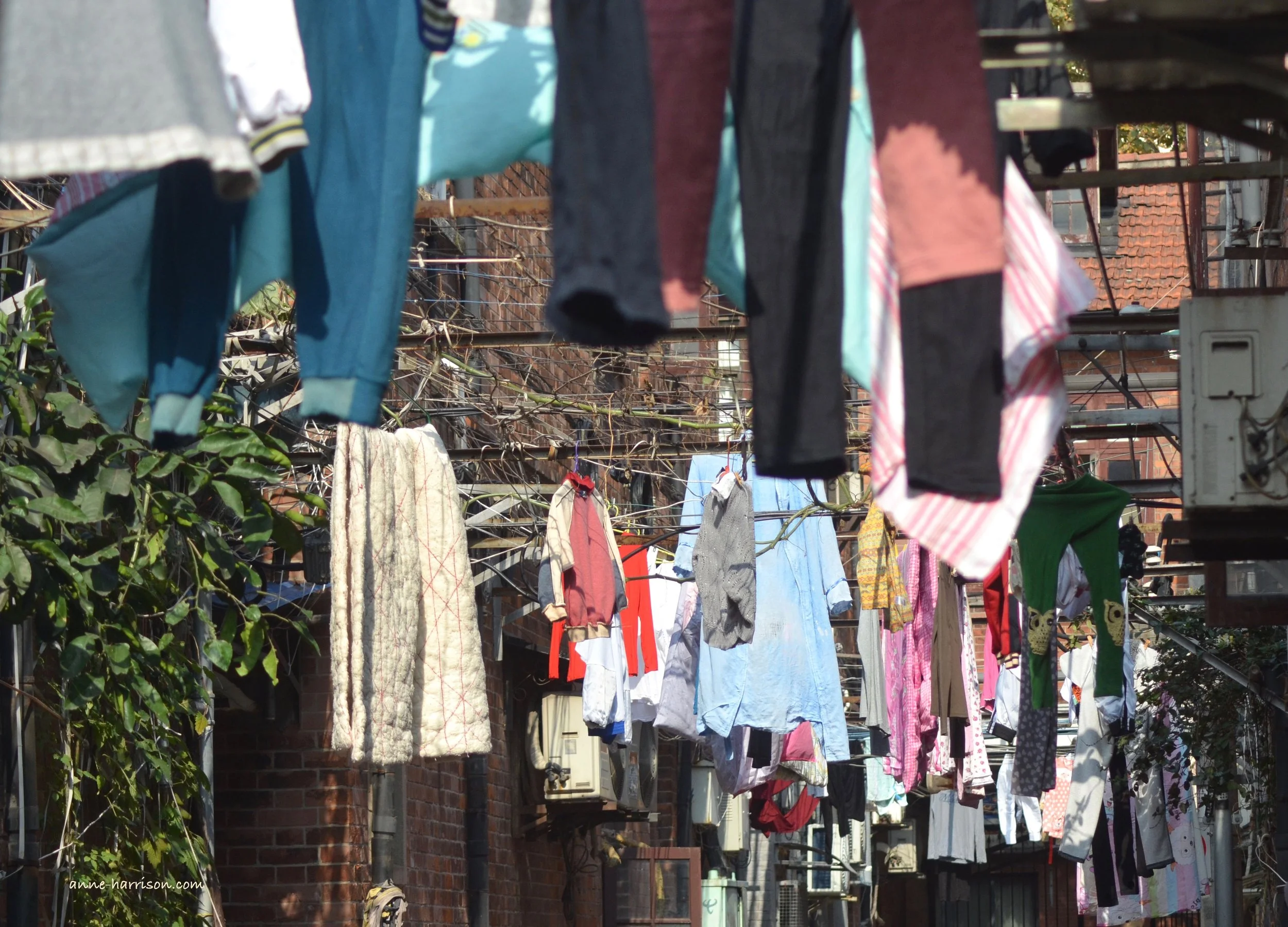
Small shops open straight onto the street. This is one of the few places in Shanghai boasting traditional Shikumen stone gatehouses, where a large wooden gate opens onto a small courtyard, which in turn leads to the shop (or house). I sat drinking coffee in one courtyard, close enough to the street to watch the world go by, but a step removed to rest in peace while enjoying the afternoon breeze.
The streets are busy, but not crowded, filled with the people who live and work here. Indeed, the whole place has a Parisian air. Of a night, with the shops still open, people are out promenading, walking their dogs, shopping, eating, gossiping. Kids run everywhere. The streets are kept remarkably clean by an army of old ladies wielding old-fashioned straw brooms.
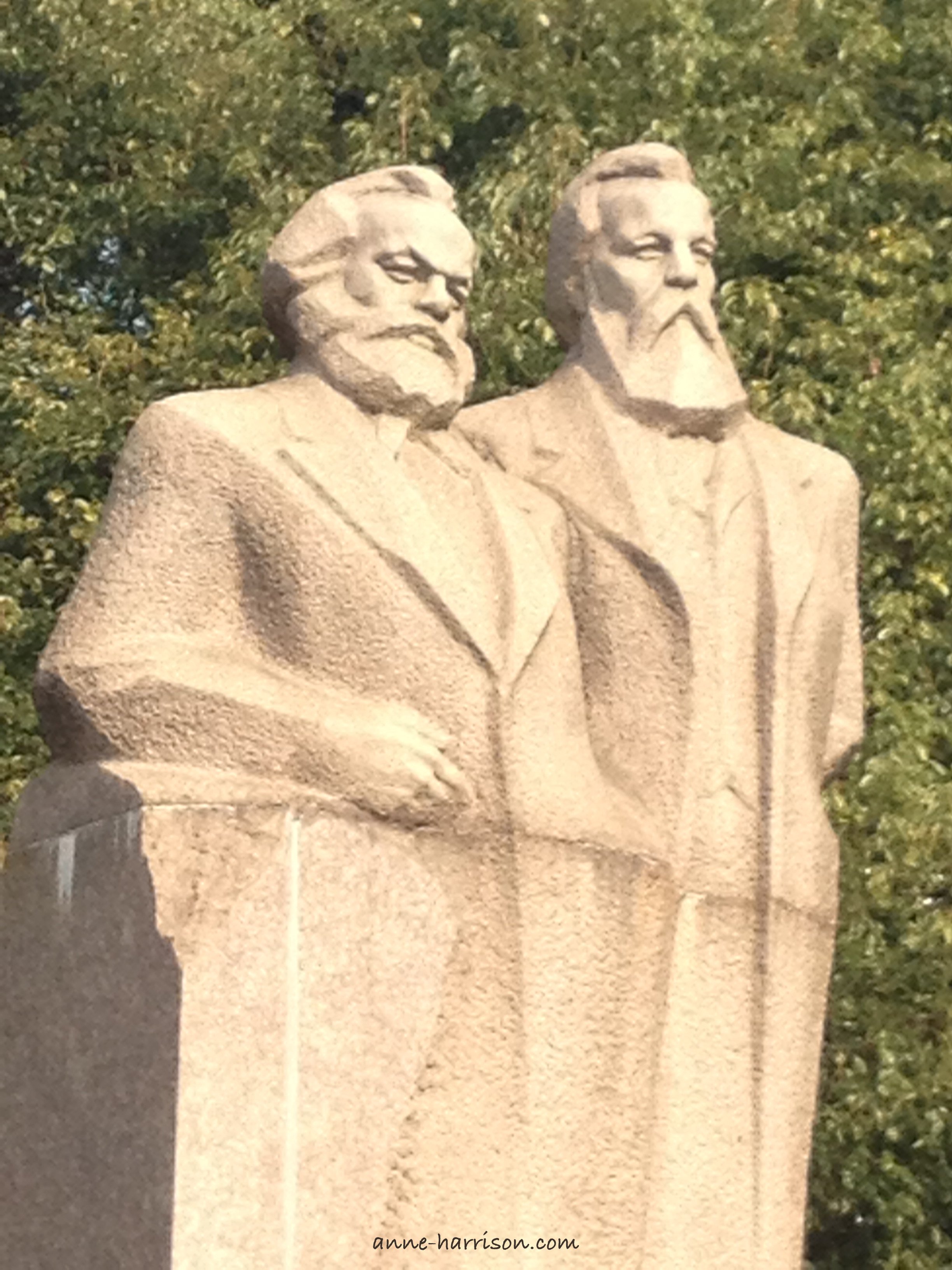
Marx and Engels enjoying the sunshine © A. Harrison
On the map Fuxing Park is tiny — on one map it was not even marked — yet in reality it is incredibly spacious, and packed with people walking, learning ball-room dancing or else practicing tai-chi or karaoke. Kids ran amongst couples having picnics; in one corner a group of men stood flying kites, which soared impossibly high in the air.
Near a statue of Marx and Engels, speakers blared out inspirational music. The sound carried every image of a communist state — yet everyone was well dressed and happy. It felt joyous simply walking through the park, and I always remember this sense of happiness when I think of Shanghai.
Tired of walking, I caught the tourist bus to the Yuyuan Bazaar. (Public transport in Shanghai can prove a challenge.) Built in the style of the Ming Dynasty, the Yuyuan Bazaar (or the Yu) is perpetually crowded, with the atmosphere of Disneyland.

The famous Nan Xiang dumplings, including soup dumplings © A. Harrison
Outside the entrance was the only place in Shanghai I was ever hassled by touts; since selling on the street is illegal in Shanghai, hawkers thrust pictures of watches, jewellery, handbags and the like in my face, promising fantastic deals were I to follow them. I still wonder where my kidneys would have ended up had I said yes.
Yet dumplings, not watches, were my goal. Impossible as it seems, the dumplings of Nan Xiang are unique in that they contain soup. Queuing for takeaway you can watch them being made freshly through the window. I instead chose the restaurant: my feet were tired from walking, a table was waiting, and takeaway offers only two types of dumplings to try.
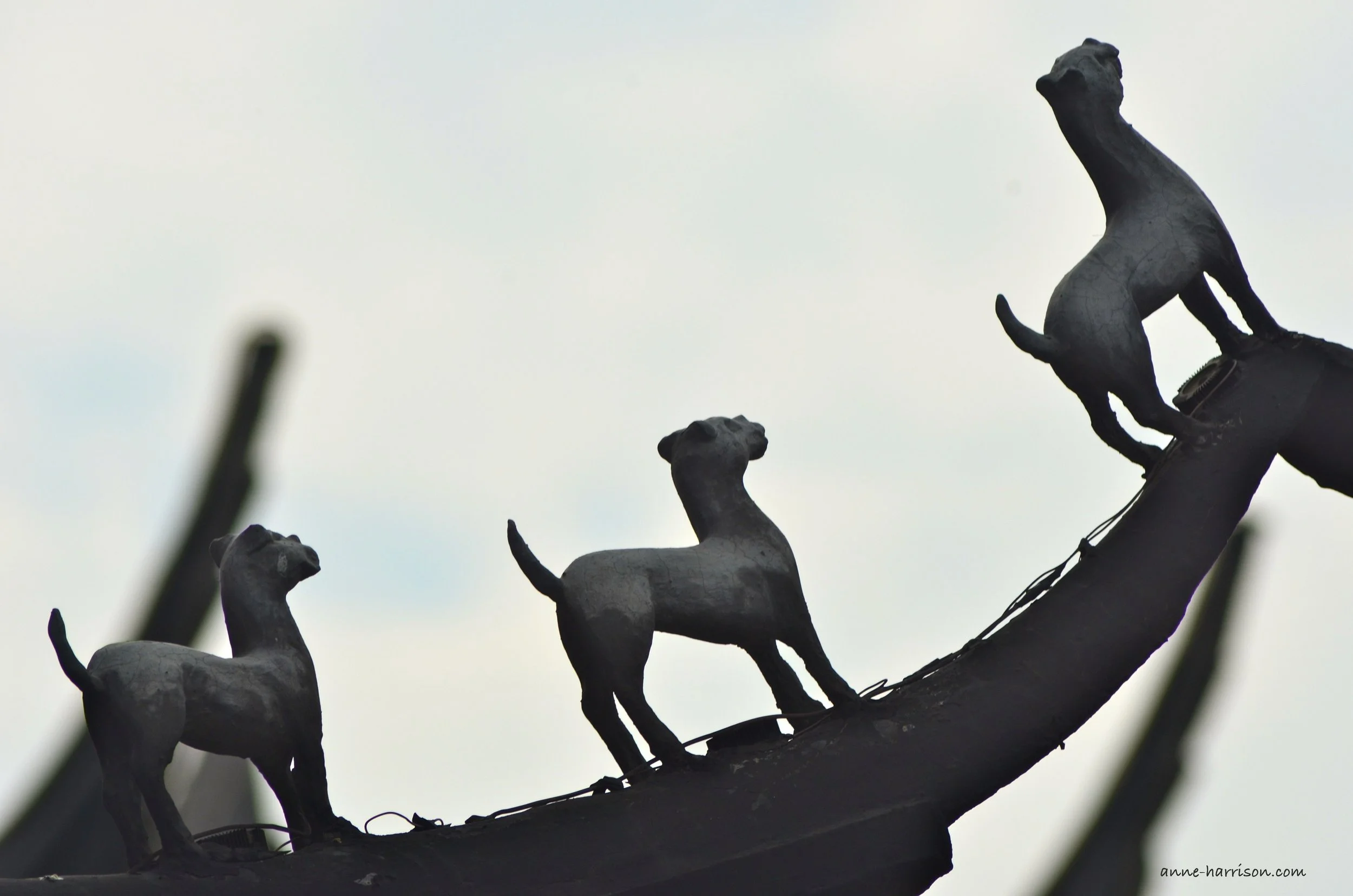
A gorgeous roof detail © A. Harrison
The dumplings truly are little puffs of soup. The trick to eating them is to first pick up a dumpling with chopsticks and rest it in your spoon, before making a tiny hole with a chopstick to let out the steam then suck out the broth (carefully, as it will be hot). Finally, eat the dumpling; they are simply delicious, and incredibly light. The soup base for each was different, whether it be crab and prawn, beef, chicken, or any of the myriad of fillings. The shark-fin and abalone came in its own pot, complete with straw so as not to waste any juice.
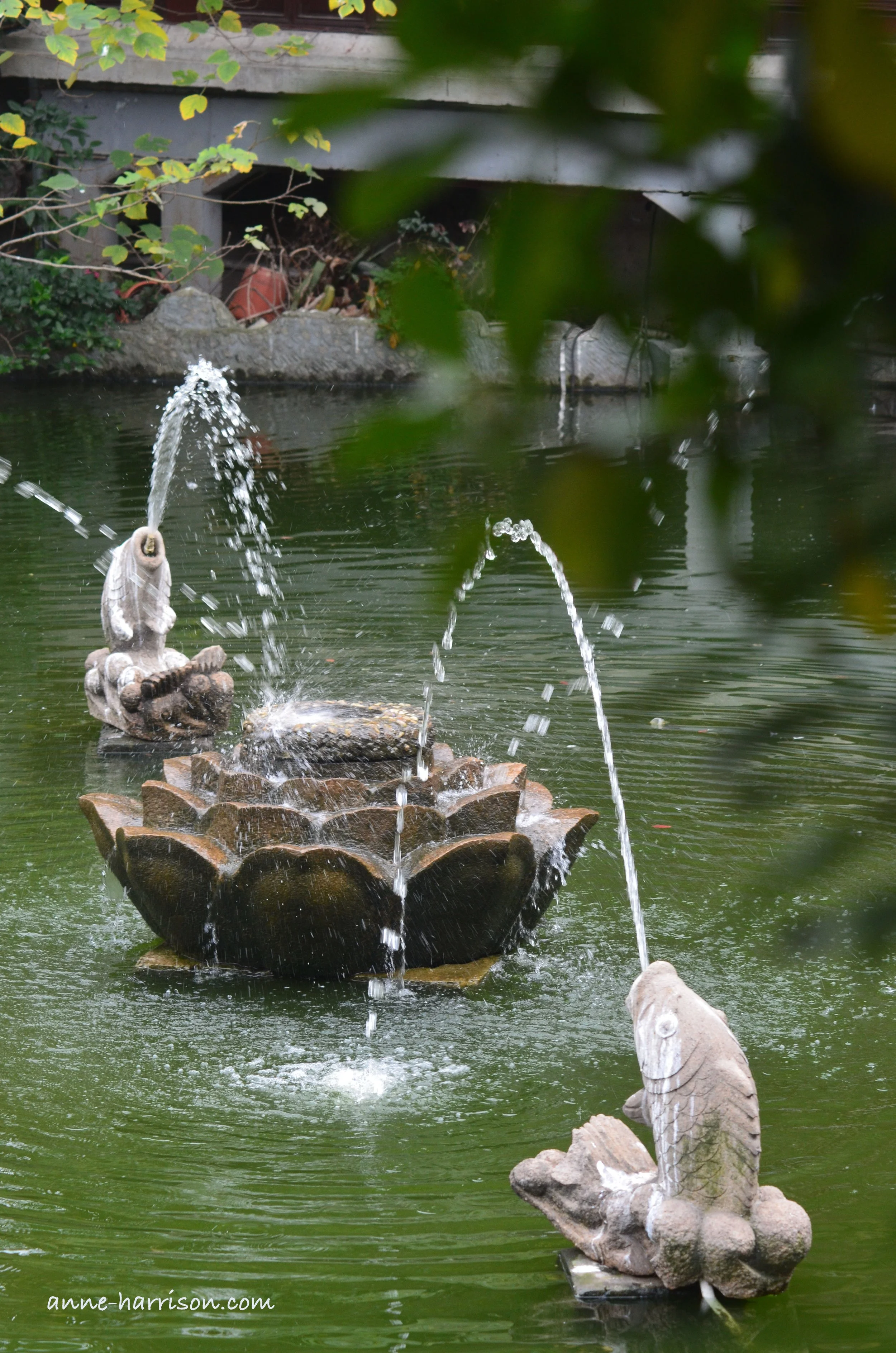
As I ate I gazed through the window to the Huxinting Teahouse (frequented by Bill Clinton and The Queen), floating serenely on its emerald pond. It’s reached by the zigzag bridge (or Bridge of Nine Turns), designed to deter ghosts and evil spirits who can travel only in straight lines. The bridge was so crowded they didn’t stand a chance.
For a taste of how Shanghai once was, after finishing my dumplings I left the Yuyuan Bazaar and headed towards Old Shanghai Street (the name was a bit of a hint!), which in turn opens into a maze of lanes filled with old homes and shops. Once a fishing village, this area dates back some 2000 years. When Shanghai was divided into foreign compounds, the locals retreated behind their walls (which no longer remain) into Old Shanghai. These walls had been built in the early 1600s to ward off Japanese pirates.
This part of Shanghai is rapidly vanishing. Like the French Concession, the buildings are only a few stories high, with houses and apartments and shops nestled atop one another. The streets are only a few steps wide, many filled with markets which sprawl the length of the street. In the wet markets the whole carcass is cut up and displayed, including lungs, liver and all bits imaginable. The head is proudly displayed, to show the type of meat on offer. I saw live turtles, toads, even fresh fish maws.
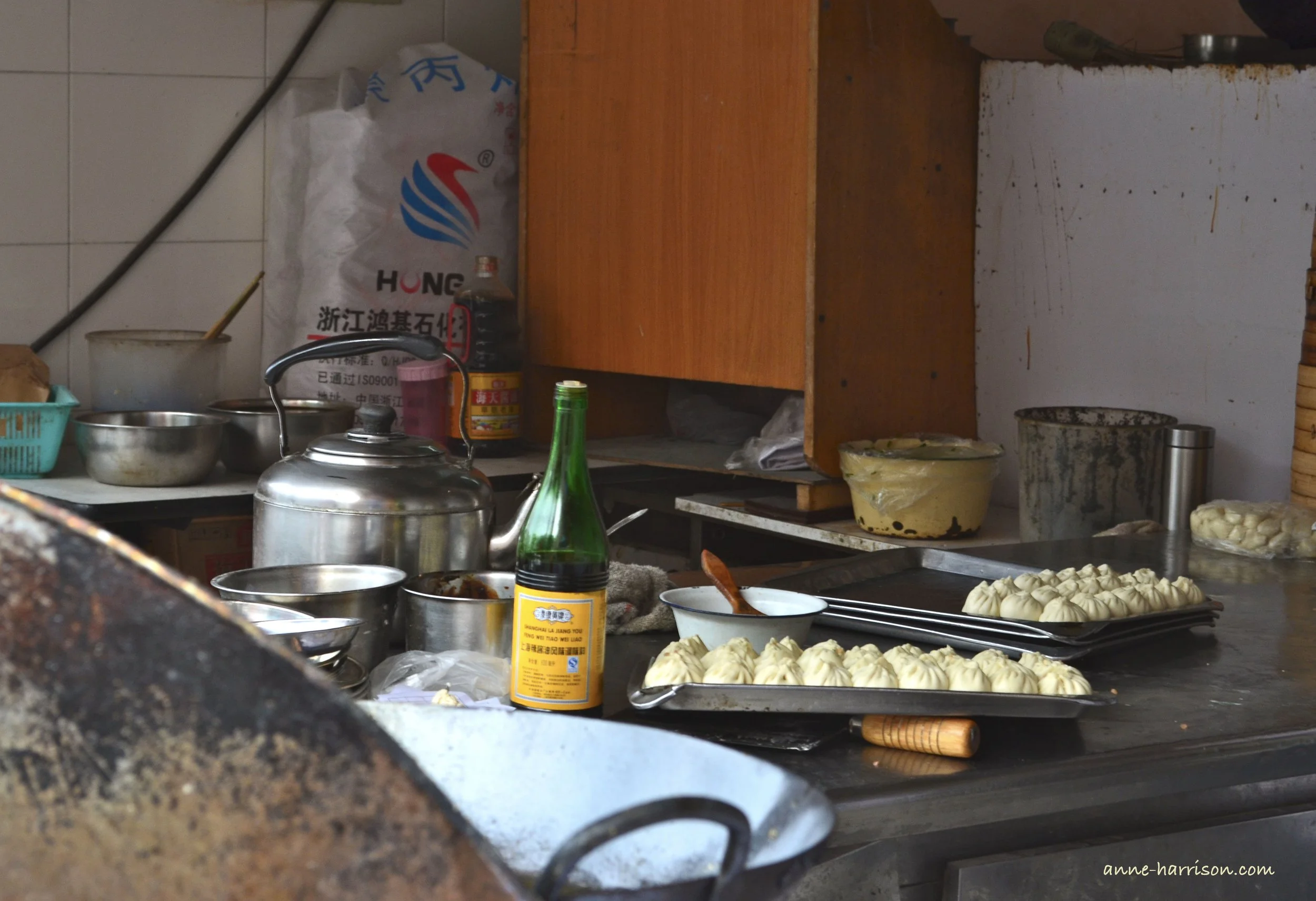
Dumplings for sale in a back street of Old Shanghai © A. Harrison
Turning down an alley I came across a man selling postcards and memorabilia of Old Shanghai. His thumbnail was long and yellowed with age, filed to an elegant point, in the manner of Mandarins of old.
I headed home as darkness fell, a cool breeze blowing in from The Bund. There was still much of Shanghai to discover, but at least I’d tasted both dumplings and Old Shanghai, before both disappear forever.
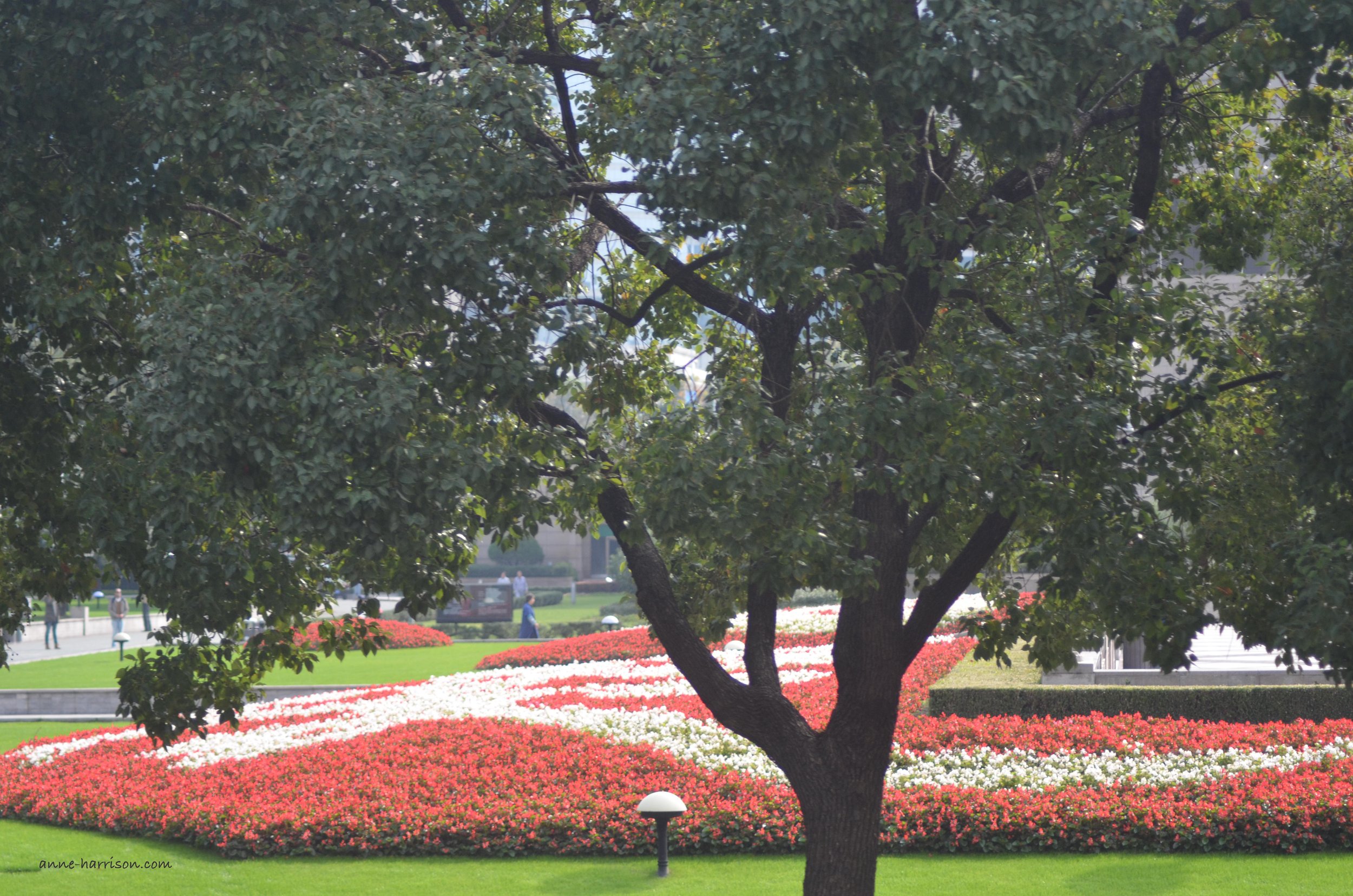
The tranquility of the parks © A. Harrison
Enjoy my writing? Please subscribe here to follow my blog. Or perhaps you’d like to buy me a coffee? (Or a pony?)
If you like my photos please click either here or on the link in my header to buy (or simply browse) my photos. Or else, please click here to buy either my poetry or novel ebooks. I even have a YouTube channel. Thank you!
Plus, this post may contain affiliate links, from which I (potentially) earn a small commission.
The Literary Traveller
The Romance Of The Three Kingdoms
It is a general truism of this world that anything long divided will surely unite, and anything long united will surely divide
Opening of The Romance Of The Three Kingdoms.
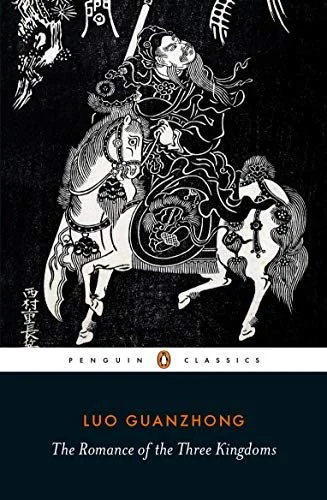
The Romance Of The Three Kingdoms is one of the great works of Chinese literature and as such is essential reading for any visitor with a taste for history. Combining Classical Chinese with the vernacular, the novel had a significant influence on both Chinese and Asian literature.
Myths regarding the Three Kingdoms existed long before the work was penned in the 14th century by Luo Guanzhong. As the name suggests, it covers the turbulent period of The Three Kingdoms, opening in 169 AD as the Han Dynasty fails in 169 AD, until the end of The Three Kingdoms in 203 AD.
Many of the characters (and the work rivals many a Russian novel with having over 1000 personas) are historical figures. Being a mixture of history, legend and myth, The Romance Of The Three Kingdoms deals not only with the politics of these three power blocks, but also explores the role of intrigue, duty and loyalty from the highest levels of power down to personal romances.
Varying from a broad brushstroke to fine detail, The Romance Of The Three Kingdoms is more than a historical drama. It explores the Chinese cyclical view of history, and also reflects those Confucian values so important at the time the novel was written. Although dealing with a time nearly 2000 years ago, it remains a great introduction to Chinese history and culture for anyone visiting China
